Rogue and Smith Rivers
Wild and Scenic. Rogue and Smith. There was never any question.
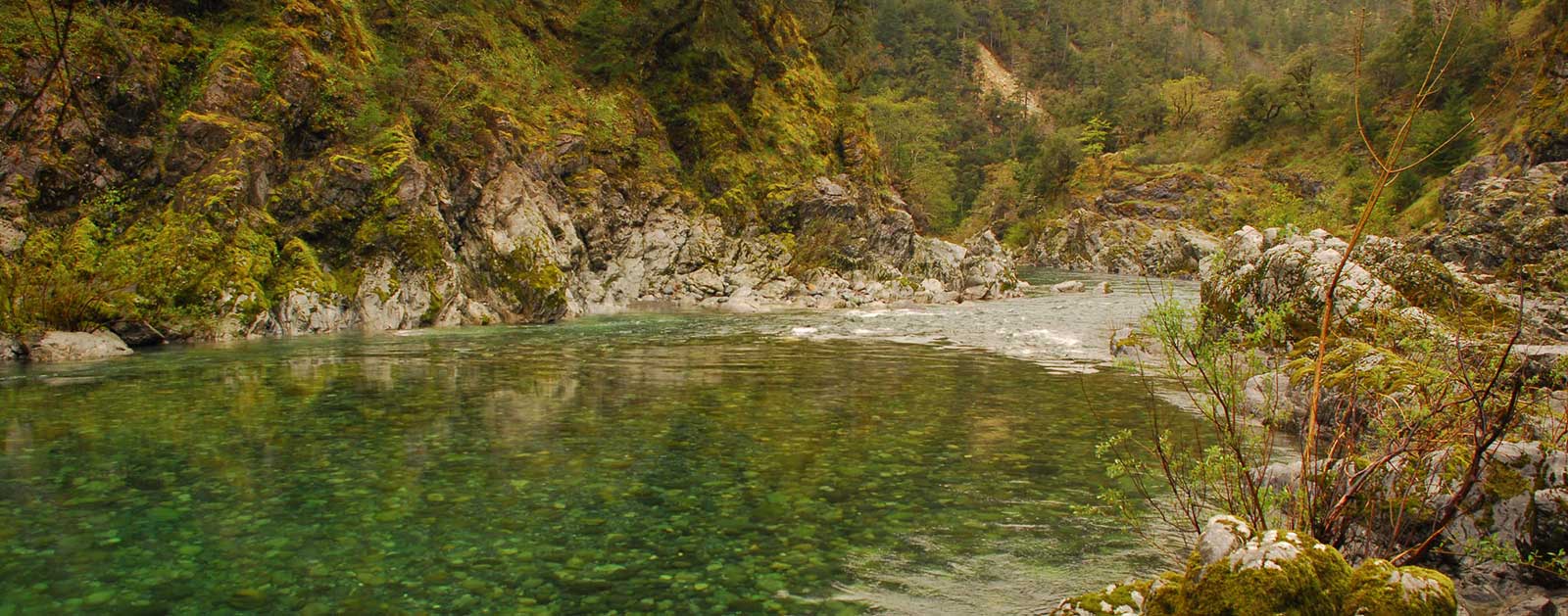
Southwest Oregon’s Rogue River is an icon among Western waterways. As one of eight charter members of the Wild and Scenic Rivers System in 1968, the 200-mile Rogue flows from the Cascade Range near Crater Lake westward to the Pacific, offering inspiring beauty, world-class recreation and abundant wildlife virtually the entire way.
Did You know?
California’s Smith River contains a 325-mile segment designated as Wild and Scenic, the longest in the U.S.
The federally-managed public lands in the Illinois Valley have the highest concentration of rare, threatened, endangered, or sensitive plants in the world.
The 345-foot-high William L. Jess Dam blocks the Rogue River 157 miles from its mouth, preventing salmon migration above that point.
WHAT STATES DOES THE RIVER CROSS?
California, Oregon
The deep green pools, sparkling waterfalls, and playful whitewater of the Rogue’s lush upper canyons have made it the most famous river trip in the Pacific Northwest. An average of 100,000 salmon and steelhead returning to the river each year qualifies the lower basin as one of the most productive fish runs on the entire West Coast (second only to the Columbia). Its largest tributary, the Illinois River, is a wild salmon and steelhead refuge for the Rogue Basin and home to the highest concentration of rare plants in Oregon.
Just to the south, the emerald-green Smith River is a free-flowing gem tumbling down the slopes of the Siskiyou Mountains in the far northwestern corner of California. As the last remaining free-flowing river system in the state, it holds the California state record for steelhead (27 pounds) and produces many of the biggest salmon outside of Alaska. Breathtaking scenery includes one of the state’s premier stands of old-growth redwoods in Jedediah Smith State Park.
Much of the Smith watershed has been protected by a 305,000-acre National Recreation Area that forms the northern border of Redwood National and State Parks. Together with the Rogue and Illinois, the threesome establishes the highest concentration of Wild and Scenic Rivers in the contiguous United States. The 325-mile segment of the Smith constitutes the longest Wild and Scenic River in the U.S.
Rogue River Listed as one of America’s Most Endangered Rivers® of 2026
The Rogue River is a beloved destination for anglers, hunters, and boaters, an engine for the local economy, and a vital habitat for salmon and wildlife. But this wild treasure is threatened by logging and mining, which would pollute tributary streams, destroy wildlife habitat, and increase wildfire risk. The U.S. Department of Agriculture must uphold existing protections under the Roadless Rule that help prevent harmful logging, mining, and road building so that the Rogue remains protected for today’s communities and future generations.
U.S. Congress must uphold existing protections under the Roadless Rule and ensure that the proposed process by the U.S. Department of Agriculture includes robust public engagement and full transparency. We must protect the existing freshwater values these areas provide.
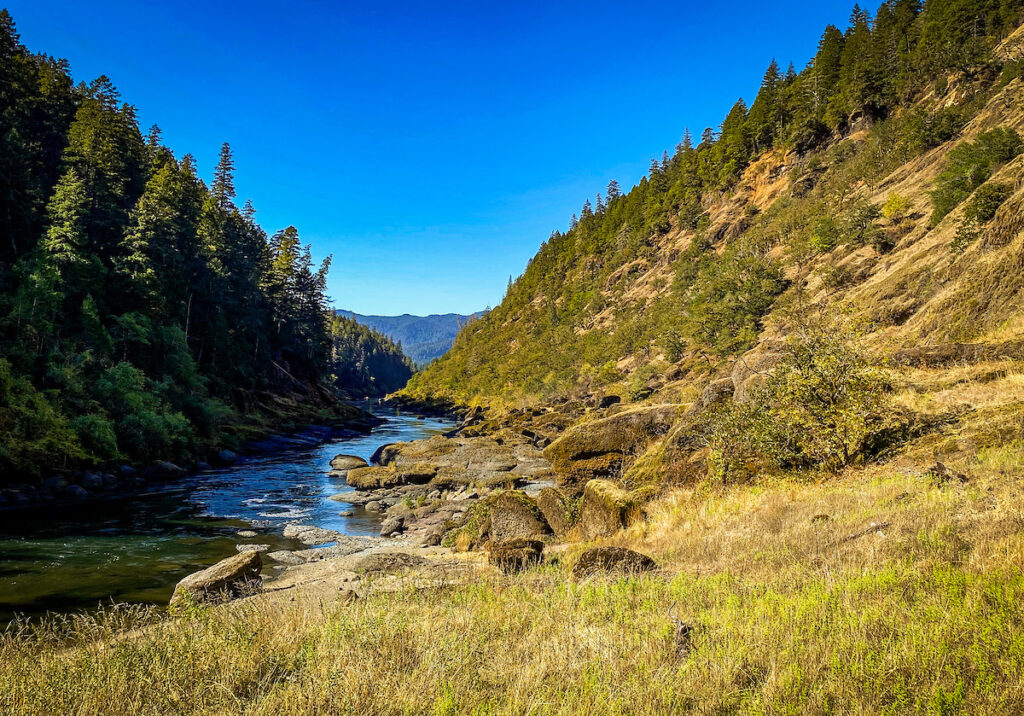
No Rollbacks – Protect the Rogue
Congress must stand up and support keeping existing protections for Roadless Areas and ensure the proposed process by the USDA includes robust public engagement and full transparency.
The Backstory
This treasure trove of outstanding scenery, inviting whitewater, ancient forests, rich biodiversity, and thriving fisheries has come under attack in recent years as mining companies have submitted plans to strip mine and drill on dozens of sites previously recommended as federal Wilderness or Roadless Areas.
The Rogue and Smith rivers were listed among America’s Most Endangered Rivers® in 2015 after nickel strip mining was proposed in the headwaters of Hunter Creek and the Pistol River, along the Wild Rivers Coast between the Rogue and Smith river watersheds. Hunter Creek and North Fork Pistol River are known for their strong native salmon and steelhead runs, designated Botanical Areas, and two BLM Areas of Critical Environmental Concern. The collection of rivers is prized by boaters, botanists, anglers, and local communities.
The Smith River watershed faces the added threat of a foreign-owned mining company’s ongoing attempt to conduct exploratory drilling at 59 sites along important tributaries across approximately 3,000 acres of the South Kalmiopsis Roadless Area. The Bush Administration recommended a portion of this watershed for Wilderness designation.
The Future
Mining for metals is recognized by the EPA as the biggest toxic polluter in the U.S. and the Forest Service has already concluded that this type of mining would have drastic and irreversible impacts in Rough and Ready Creek, one of the threatened tributaries in the Rogue watershed.
Salmon, steelhead, cutthroat, and world-renowned biologically diverse plant species are not the only things that would suffer the devastation of this precious wild area. Local communities in Southwestern Oregon and Northern California also depend on these rivers for clean drinking water, recreational and commercial fishing, and a recreational economy that generates hundreds of thousands of dollars each year.
Prompted by the threat of mining, Senators Ron Wyden and Jeff Merkley (OR) and Representative Peter DeFazio (OR) and Jared Huffman (CA) have introduced the Southwestern Oregon Watershed and Salmon Protection Act that would permanently protect these watersheds from new mining activity. Federal agencies stepped up with a temporary ban and a public process to consider a five-year ban on new mining while Congress considers the introduced legislation. The ban would prevent new mining claims and require proposed mines to meet a rigorous review process.
Immediate closure of the area to mining is the most effective way to help prevent the development of nickel strip mines from turning the pristine headwaters of the highest concentration of wild rivers in the country into an industrial mining zone. The U.S. Forest Service, Bureau of Land Management, and Department of Interior must withdraw this area from mining immediately to protect this wild treasure.