Neuse River
River of Peace
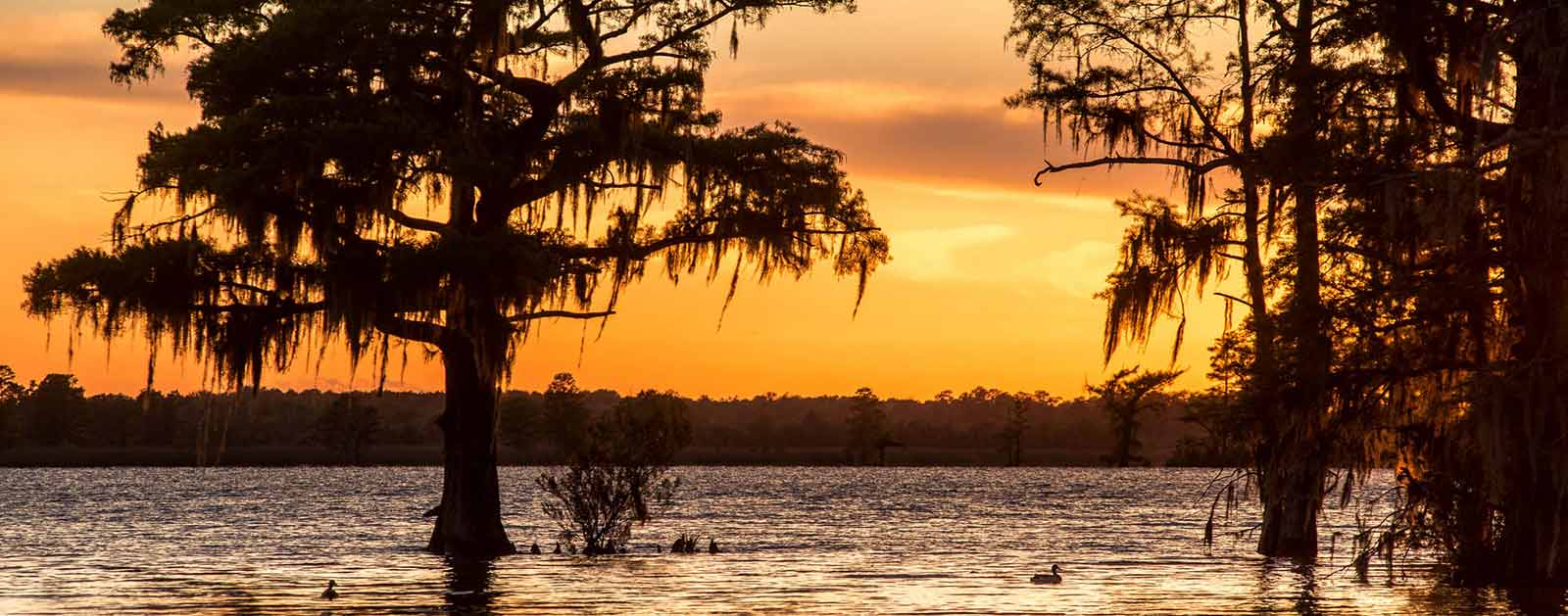
The Neuse—derived from the Native American Neusiok tribe and translating to “peace”—is an excellent river to experience. Linking North Carolina’s current capital of Raleigh to the original capital city of New Bern, the Neuse River serves as a 250-mile connection between past and future, the Piedmont and Pamlico Sound.
The action gets underway at the headwaters, where the dynamic communities of two major cities, Raleigh and Durham, remain one of the fastest-growing regions in the nation. Roughly 2.5 million people live within the river basin, most of them on this upper end. The Flat and Eno Rivers merge to form the Neuse River under Falls Lake Reservoir, Raleigh’s primary water supply, which spans more than 12,000 acres and also provides some structural flood control in the basin. The removal of the antiquated Milburnie Dam in the fall of 2017 allowed the unbridled river to glide from Falls Lake Reservoir all the way to the Atlantic, making it one of the longest free-flowing rivers in the Southeast.
The Neuse River Greenway Trail winds through wetlands on a boardwalk and courses alongside the river as Raleigh’s contribution to the state’s Mountains-to-Sea Trail that runs from the Great Smoky Mountains to the Outer Banks. In 2020, the Neuse River Blueway was launched, creating an interconnected network of paddle and walking trails. About halfway between Raleigh and the river mouth, the Cliffs of the Neuse rise up as an impressive 100-foot canyon within the coastal plain at Seven Springs. Hiking trails at the surrounding state park explore the riverside habitats and their mature forests and lead to some quiet fishing spots along the waterway.
Is the Neuse River the Longest River in North Carolina?
Yes, the Neuse is the longest river contained entirely within North Carolina.
The Neuse is considered one of the widest rivers in the U.S. at six nautical miles across at its widest point; it averages more than three miles in width between the Intracoastal Waterway and New Bern.
Established at the river mouth in 1710, New Bern is the first capital of the state of North Carolina.
At an estimated 2 million years old, the Neuse is one of the oldest rivers in the U.S. Archaeological evidence shows that humans settled around the Neuse some 14,000 years ago.
What states does the Neuse River cross?
The Neuse River in its entirety flows through the state of North Carolina.
How long is the Neuse River?
The Neuse River is 250 miles long.
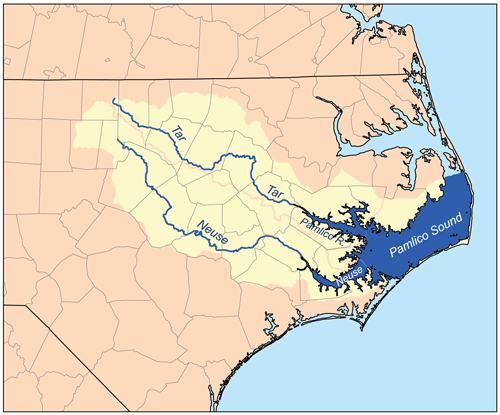
The plot thickens near the mouth of the Neuse, where the river changes to slow-moving estuary habitat before joining the Tar and Pamlico Rivers in Pamlico Sound. Easily explored by kayak, canoe or SUP, the estuary is home to a wide variety of coastal game fish as well as birds, oysters, and countless other species. Dolphins and alligators are seen regularly in the estuary, and sharks and manatees occasionally appear as far upriver as New Bern, about 35 miles from the Atlantic.
The Neuse has an excellent striper run, and is home to several species of fish that split their time between the ocean and freshwater, like shad, herring, and American eel. Many endangered species, including the Carolina madtom (a freshwater catfish), Tar River spinymussel, piping plover, dwarf wedge mussel, and loggerhead turtle, remain in the Neuse River basin. The Neuse is also home to vital populations of blue crab and oysters.
The Neuse River Basin Action Strategy
The North Carolina Department of Environmental Quality released the Neuse River Basin Action Strategy in the summer of 2026, which is a step toward long-term flood resilience involving both nature-based solutions and traditional infrastructure improvements. This is encouraging since previous management approaches relied very heavily on engineered structures and expensive, maintenance-intensive measures that often created serious environmental impacts and simply transferred flood risk farther along the channel. The strategy recommends actions that include many floodplain restoration and green stormwater infrastructure projects that both restore natural hydrologic processes and enhance flood storage capacity. The creation of this basin-wide strategy shows what is possible when local governments, stakeholders, and residents come together toward a common goal.
While the Blueprint team has demonstrated their potential to be “the backbone of the State flood planning,” successful state plans still need established state goals that are adequately funded to yield any type of result. In the 2026 North Carolina State Budget, $4.5 million was allocated toward North Carolina Blueprint Projects. While this is a start, this doesn’t even scratch the surface of what is needed to complete a single flood resilience project that was labeled as a priority.
Out of a possible 1,235 flood resilience-oriented actions considered across the basin, this Strategy identified 113 as priorities. The average estimated cost of one of these prioritized projects is over $7.5 million. So, the current allocation of $4.5 million would only fund half of one of the priority flood-resilience projects. It has been proven time and again that investments in flood resilience pay for themselves several times over by mitigating future flood damage. We are encouraged by the recognition of just how important these projects are, and also acknowledge the work to be done to continue to secure the appropriate funding to make our communities safer. As the state’s population continues to surge, the budget must reflect more investments in projects like those outlined in the Neuse River Basin Action Strategy.
Let's stay in touch!
We’re hard at work in the Southeast for rivers and clean water. Sign up to get the most important news affecting your water and rivers delivered right to your inbox.
The Neuse River Listed as River of the Year in 2022
American Rivers announced the Neuse River as the 2022 River of the Year. The Neuse has seen major progress in recent decades, with cleanup efforts improving water quality and restoration efforts improving habitat for wildlife and access for fishing and boating. The river’s rebounding health has benefited wildlife and people alike. 2022 marked 50 years of the Clean Water Act, and the Neuse illustrates how positive steps for clean water benefit both the environment and economy.
Returning a river to good health does not happen overnight, nor is it a guarantee moving forward. For us to continue celebrating the Neuse as a regional and national treasure, we have to remain diligent and pay attention to threats to the river. The growing effects of climate change are continually putting new stresses on the river and its water supplies, and we must ensure that the benefits of a healthier river are enjoyed equitably among the communities in the watershed, especially communities of color that have faced systemic environmental injustice and continue to bear the brunt of river pollution and increased flooding.