Active 150: Mapping the Future of Dam Removal in California
A new tool for accelerating dam removal and restoring free-flowing rivers
From Thousands of Dams to 150 Actionable Projects
California’s rivers contain thousands of dams and other barriers, ranging from major infrastructure to small, aging structures that may no longer serve their original purpose. California has thousands of opportunities to remove obsolete dams and restore rivers—but identifying which projects should move forward first has faced obstacles. Information about dams, fish passage, habitat, public safety, climate resilience, and restoration priorities is spread across disconnected datasets, agencies, and organizations.
The California Active 150 changes that.

California Dam Fast Facts
-
8,066
inventoried dams in California
-
72
average age of California dams
-
1,106
dams labeled “high-hazard”
-
525
inventoried low-head dams
-
190
California dams removed
-
23
fatalities at low-head dams in California
-
19
partners engaged in prioritization and beta testing
Harnessing the power of data for river restoration
One of the biggest barriers to accelerating dam removal isn’t a lack of potential projects. It is the lack of a common framework for deciding where limited restoration resources can have the greatest impact.
Led by American Rivers, the California Active 150 brings previously fragmented information together in a single, interactive, decision-support tool designed to identify high-impact, feasible dam removal opportunities across California.
The California Active 150 uses spatial analysis to evaluate more than 8,000 inventoried aquatic barriers and applies decision-making criteria developed with partners to assess the potential ecological, community, and climate resilience benefits of dam removal. The tool can also help connect different parts of the dam removal process, e.g., project identification, feasibility assessment, partnership development, funding, permitting, and implementation to create a clearer path from a potential project to a restored river.
Active 150 list considers whether a dam removal project is feasible to advance, helping decision-makers move beyond the question:
“Which dam should we remove?”
to the more actionable question:
“Which project is ready to advance now?”
The result is a shared statewide framework that allows users to explore a dam removal project’s ecological benefits, climate resilience benefits, community benefits, feasibility, and funding status in one GIS-based tool.
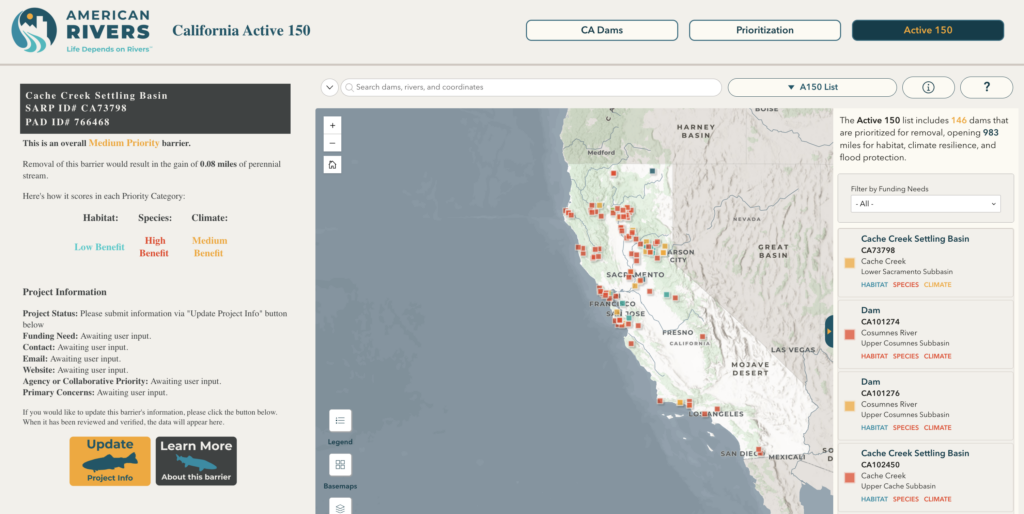
Explore the California Active 150 Tool
Discover high-impact, feasible dam removal projects to restore fish passage, reconnect rivers, improve climate resilience, and guide restoration funding across California.
Applications
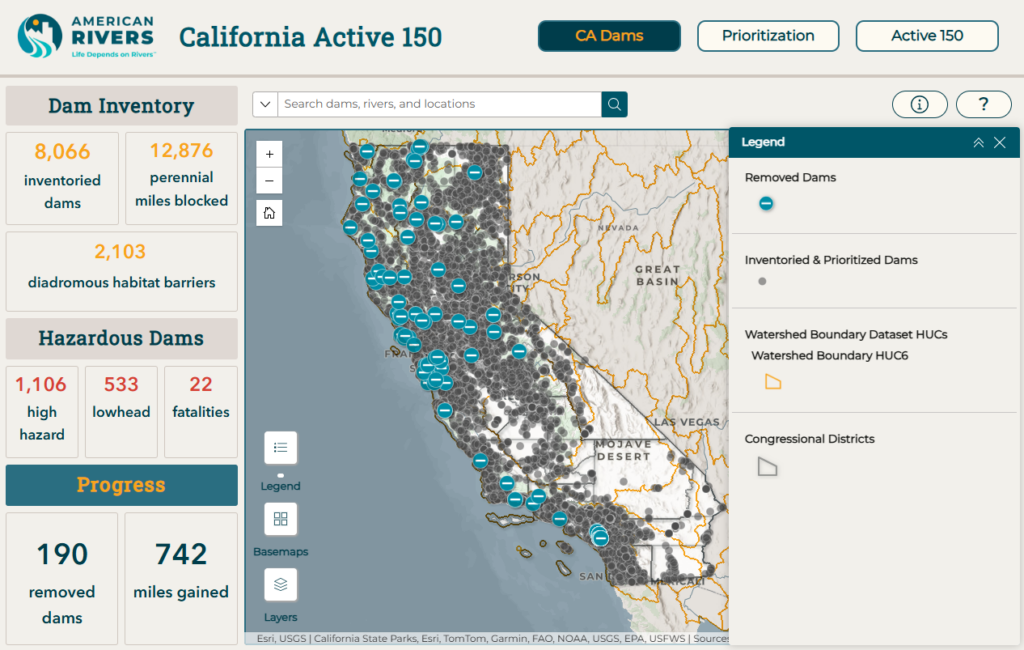
Dam Inventory and Removal Tracking
American Rivers and its partners reviewed dam inventories, evaluated ecological priorities, assessed available information about dam uses and nearby infrastructure, and considered local knowledge and landowner willingness to comprehensively identify dams and removals across the state.
Project Prioritization
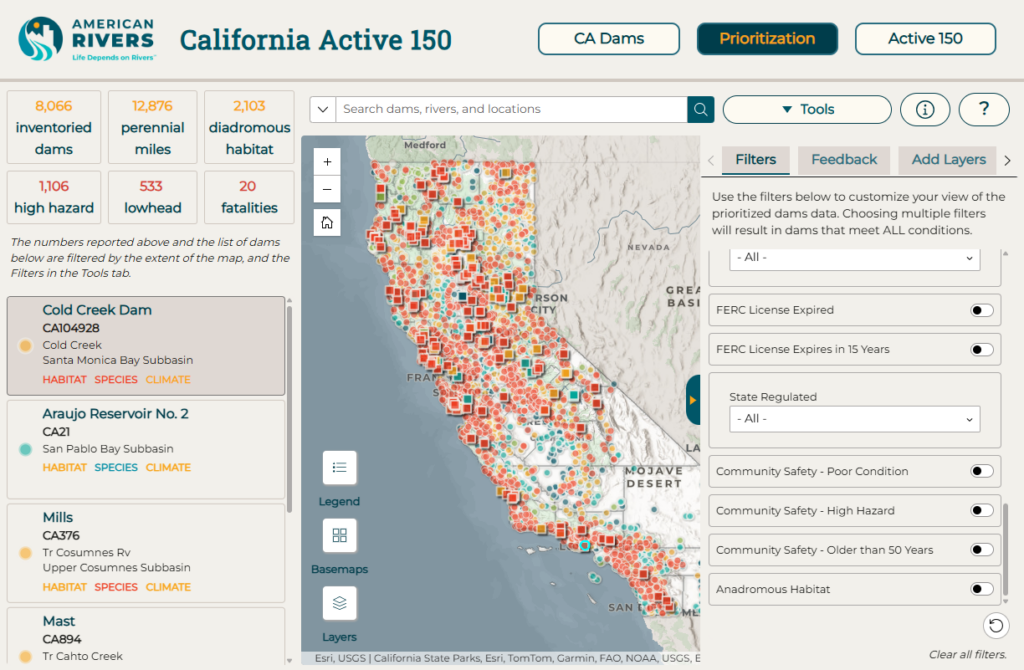
The underlying prioritization analysis evaluates potential barrier removals based on three major ecological objectives: habitat quality, restored habitat access for fish and wildlife, and climate resilience for species. Additional filters can help identify opportunities involving Tribal ancestral territories, federal lands, aging infrastructure, dam condition, regulatory status, and community safety.
California Active 150 Projects
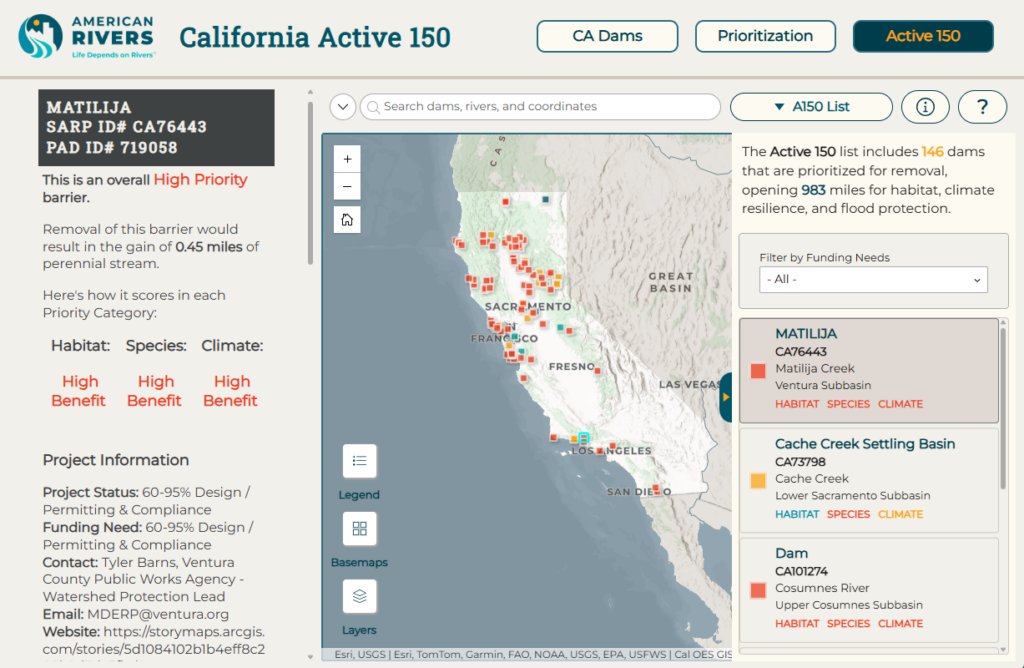
More than 2,000 structures received additional review, approximately 300 were identified for further feasibility review or landowner outreach, and that work ultimately produced a list of 150 active and potentially active dam removal projects. Of those 150 projects, 98 are located on anadromous salmonid habitat, creating significant opportunities to improve habitat connectivity for California's migratory fish. The prioritization will be updated as dams are documented, conditions and priorities change, and existing projects move toward construction and completion.
/
Let's stay in touch!
We’re hard at work in California for rivers and clean water. Sign up to get the most important news affecting your water and rivers delivered right to your inbox.