For more than the last century, the flows of the Colorado River have been managed and dictated by the demands of a rapidly growing and changing West. There are founding legal documents, and then agreements stacked on those, often known as the “Law of the River.” These agreements are between states, between sovereign nations, including Tribal Nations and Mexico; between districts and companies and branches of the US Government. It’s hard to find the appropriate metaphor for how all of these agreements work together (and at times against one another) to manage the Colorado River system. But even fraught metaphors are sometimes the only way to get through something so complicated.
Imagine the bounty of agreements and founding legal documents that guide the management of the Colorado River as a body. The 1922 Colorado River Compact would be the skeleton, the framework upon which all the other functions of the body are built. Maybe the limbs are everyone who relies on the blood (Colorado River water). The agreements that build on the framework of the Compact, such as the 2007 Interim Guidelines or the 2019 Drought Contingency Plan (DCP), act as nerves that facilitate or trigger movement and action. Perhaps the brain is the negotiators – the Bureau of Reclamation, the states, the Tribes, Mexico (to state the obvious, this is why consensus is so very important – a body with multiple brains going different directions would (will) cease to function). The blood then, of course, is the Colorado River water allocated to parts of the body.
If we continue with the body metaphor for the contemporary management of the Colorado River system, additional agreements (or the nerves that trigger certain action) were added to the body.
As of Friday, August 24, the Bureau of Reclamation released three documents outlining the future short-term management of the river, more below. You can read the Bureau’s summary doc here.
- The Final Environmental Impact Statement (FEIS): the final evaluation of the many proposed plans for how the river should be managed going forward, and outlines the preferred alternative, a 10-year framework built on operating plans of at least two years each;
- The Record of Decision (ROD): finalizes the framework for the next ten years, with operating plans being negotiated every two years. It also sets the principles and guardrails for the management of the river including how water can be stored, shortage sharing, critical infrastructure protection, consultation, and the movement of water between Lake Powell and Lake Mead; and
- Two-year guidelines: the proposed approach to management for the next two years.
While the two-year guidelines propose real numbers and real movement, the ultimate test is whether the new Guidelines, side agreements, investments, and management tools are in place and function; whether they can keep the body upright.
Six months from now, the more consequential questions will be whether the new guidelines:
- provide more certainty and transparency, including clear pathways for addressing disputes and disagreements when they arise;
- support flexible and adaptive management tools that can respond to changing hydrology and conditions;
- meaningfully include Tribal Nations in both decision-making and implementation;
- reduce reliance on emergency operations and short-term crisis response; and
- create a workable path toward long-term resilience — one that can accommodate disagreement, including litigation, without bringing implementation and collaboration to a halt.

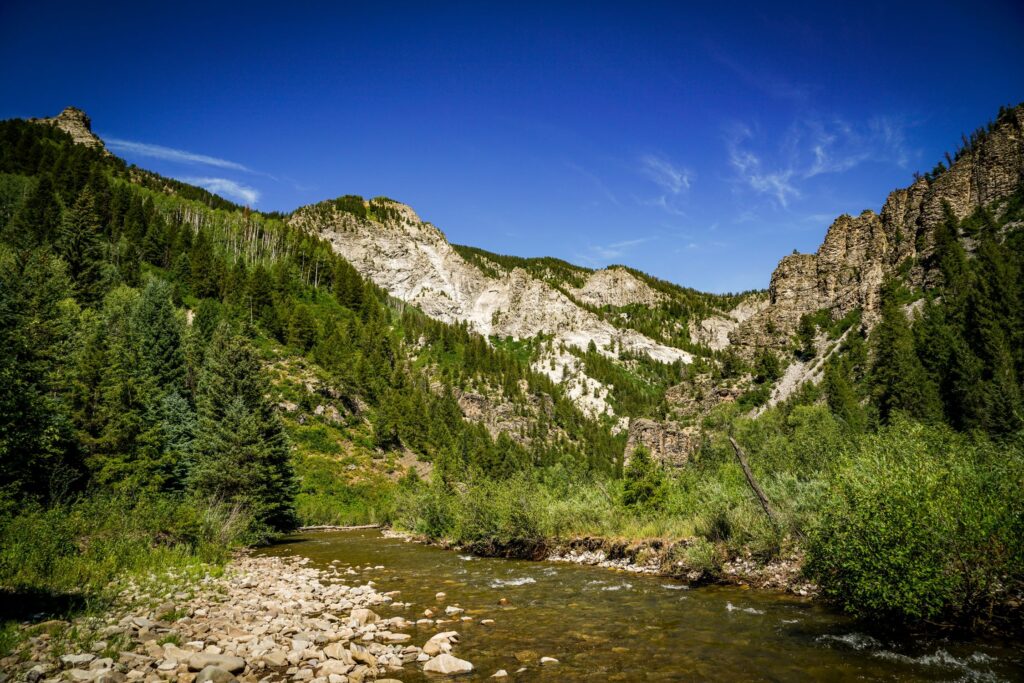
Finally, and critically, these new guidelines must recognize healthy rivers and watersheds as a core element of the Basin’s resilience infrastructure, because in the middle of all the agreements – at the core of all the collaboration and controversy, the skeleton and nerves and muscles that move it, there is a river – there is a heart; the whole reason blood moves through the system at all.
Healthy rivers and forests, connected floodplains, and intact watersheds are essential to the body, to the Basin. They support the reliability of our water supplies, reduce the risks and impacts of wildfire; they sustain fish and wildlife, support recreation, and strengthen the Basin’s ability to withstand drought and changing conditions. They are invaluable.
Which is to say, at the center of all the agreements and negotiations and collaboration and controversy, is the river. Has always been the river. And if we succeed at all in our management, if we have any hope of keeping this body upright, there will always be the river.
Let's stay in touch!
We’re hard at work in the Southwest for rivers and clean water. Sign up to get the most important news affecting your water and rivers delivered right to your inbox.