Permanently Protecting Places like the Gila River would be a Win for Bipartisanship, the Colorado River, and All Americans
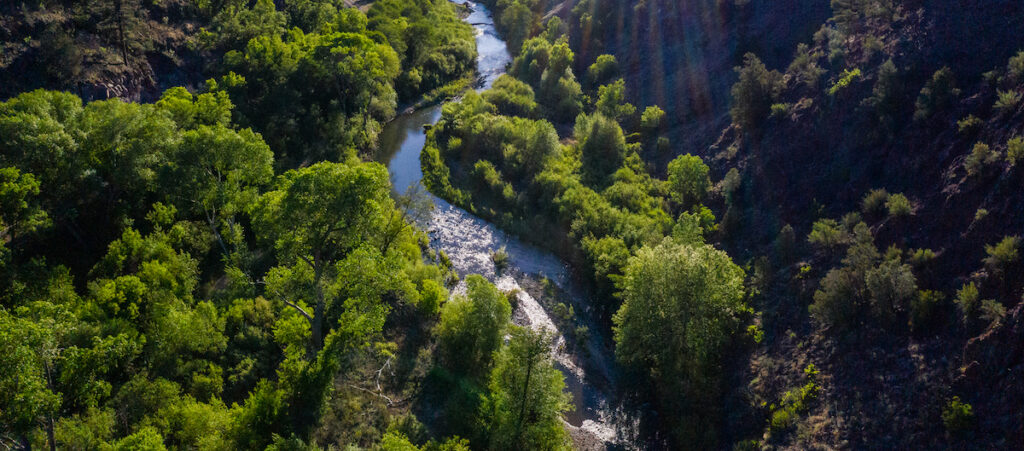
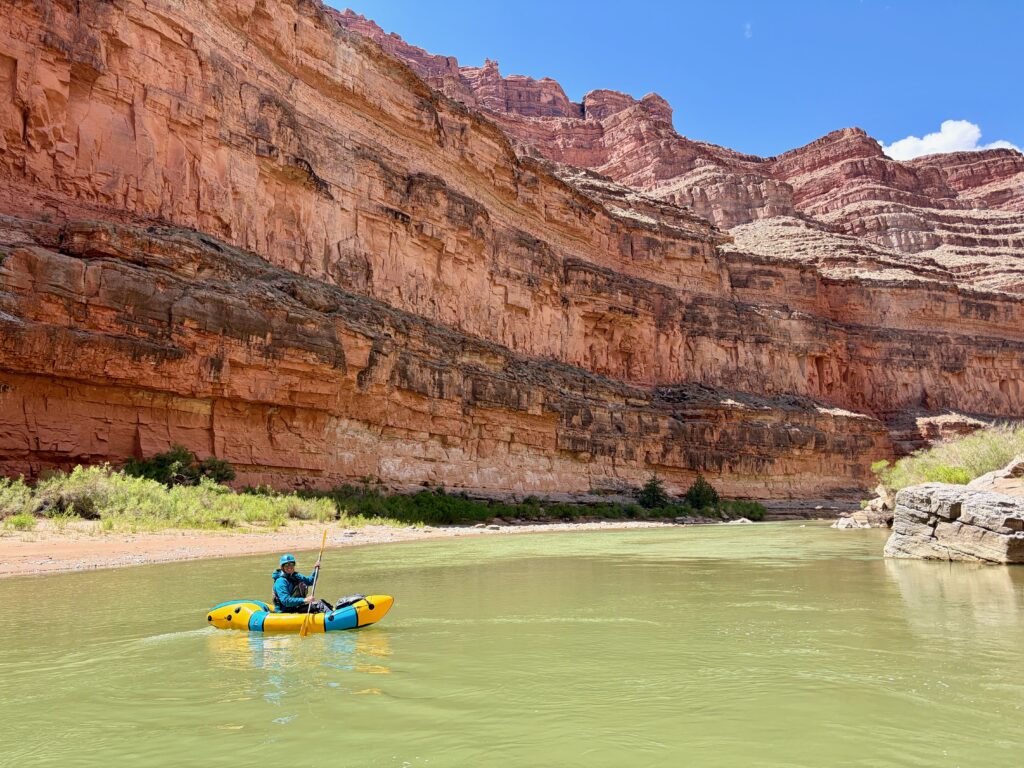
Sometimes a trip down a wild river is all that’s needed to make the world right again. I first paddled the Gila River headwaters in 2020 when, during the depths of COVID, my friend Pete (who made a film during the trip), and I packrafted the storied wilderness section of the river. We met up in Gila Hot Springs, NM, and slept out under the stars on our friend John’s deck the night before we launched. Over the next five days, the little river did what protected areas always seem to do for me when I need them to: it provided a respite from our modern world, which at the time was in the throes of a pandemic.
Overhanging groves of old growth sycamores gives the Gila River Canyon an intimate feel, and its free-flowing nature ensures that there is always a comfortable gravel bar for two river rats to sleep out on each night. Water levels were low on our trip, necessitating long days of paddling, but that just gave us an excuse not to rush. I left that trip convinced that the Gila River, with its intact landscape, robust and diverse wildlife populations, and jaw-dropping scenery, is exactly the type of river that the framers of the Wild and Scenic Rivers Act envisioned protecting when they passed the law in 1968.
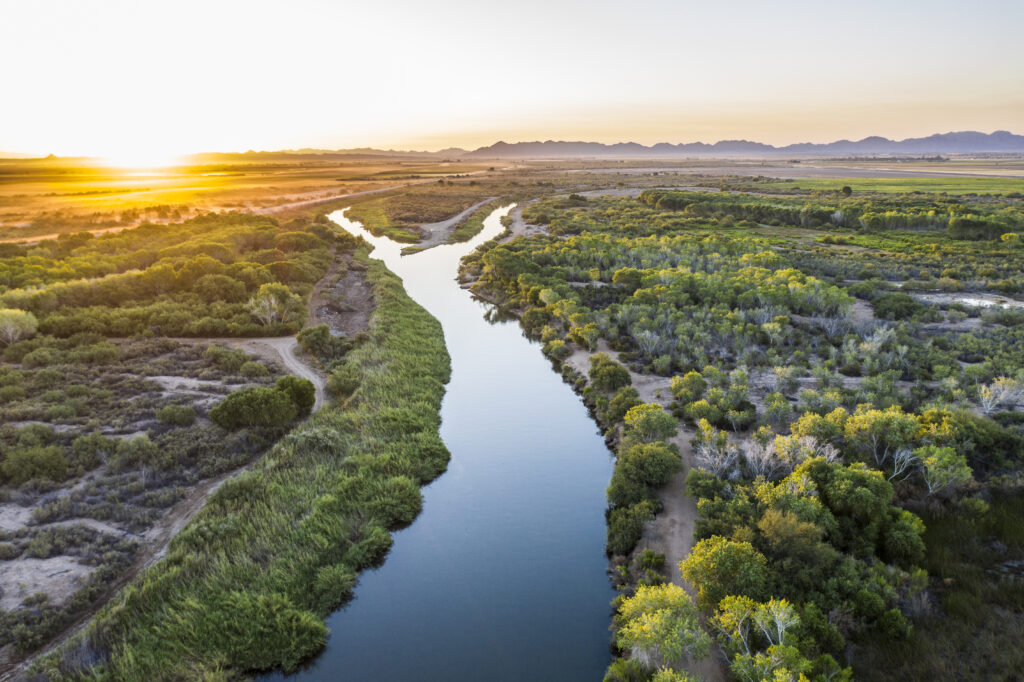
The southernmost tributary of the Colorado River, the 650-mile-long Gila River is the backbone of a massive, 60,000-square-mile watershed that includes tributaries like the San Franciso, San Pedro, Santa Cruz, Salt (and the Salt’s largest tributary, the Verde), the Agua Fria, and Hassayampa rivers. This river system gave rise to the large, complex, agricultural civilizations of the Hohokam and Mogollon peoples. For Indigenous and non-indigenous peoples alike, this continues today, with the clean water provided by the Gila River supporting communities and farms like Silver City, NM and the fields of the Gila River Indian Community, to the greater urban metropolis of Phoenix, AZ, and 180,000 acres of leafy greens grown in Yuma County. All this civilization extracts a cost though: the lower Gila regularly runs dry in a number of places and struggles to retain its natural character on its long trek across Arizona to the Colorado River.
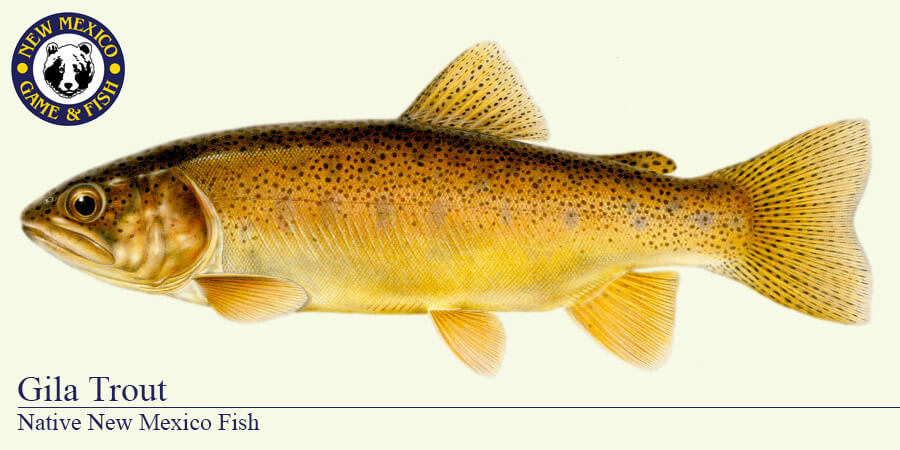
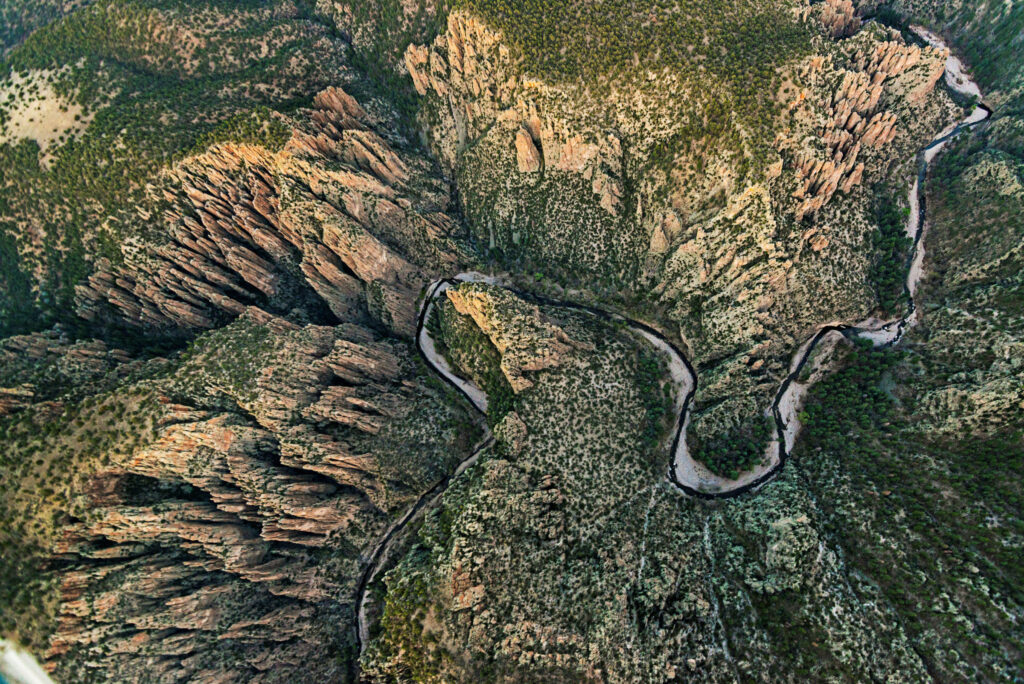
This hasn’t been the fate of the Gila’s headwaters in southwest New Mexico, though – at least not yet. Emanating from the Continental Divide in the Black Range and cutting a series of canyons through the Gila Mountains, the forks of the Gila and San Francisco rivers constitute the largest free-flowing headwaters system remaining in the Southwest U.S. These headwater ecosystems are a stronghold of Gila trout, elk, mule deer, black bears, and Mexican wolves; the area is also the home of the reclusive Gila monster, soaring peregrine falcon, and lyrical canyon wren. Deep, shaded grottos drain the volcanic slopes and high-altitude forests and meadows that our nation’s first designated wilderness area is known for. The river smells and sounds alive.
At a time of unprecedented water stress in the Colorado River system, the accelerating heat and aridity of the Southwest, and the inexorable grind of development, protecting headwaters systems like the greater Gila River headwaters is an act of care – care for the rivers that are our nation’s natural water towers, care for the wildlife with whom we find kinship and wonder, and care for the future of humanity. Beautiful, intact rivers like the Gila not only support our cities, our agriculture, and our economies, but also our collective spirit.
Faced with a plan to dam and divert the Gila River, and recognizing the immense value of keeping the Gila as it is, a bipartisan group of people worked with Senator Martin Heinrich – and later, Representative Gabe Vasquez – and eventually the whole New Mexico delegation to create and introduce the M.H. Dutch Salmon Greater Gila Wild and Scenic River Act. Named for Maynard Hubbard “Dutch” Salmon, a Silver City-based writer, conservationist, and fierce advocate for the Gila River who passed away in 2019, the bill would protect 450 miles of 30 free-flowing headwaters rivers, and 144,000 miles of riverside lands under the Wild and Scenic Rivers Act – the only federal protection that guarantees that a river will remain free-flowing forever.
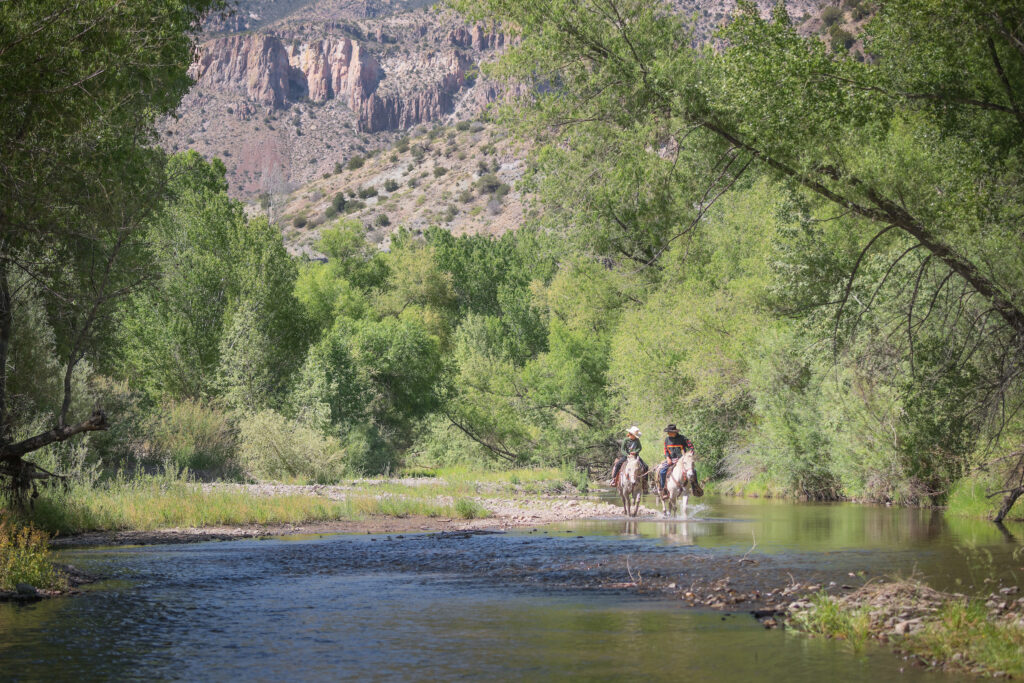
This effort is supported by a wide range of local and state interests, including the Grant County Board of Supervisors, City of Bayard, Town of Silver City, Town of Hurley, the Fort Sill Chiricahua Warm Springs Apache Nation, the All Pueblo Council of Governors, 2 faith-based organizations, 2 veteran’s organizations, 4 outdoor recreation organizations, 7 sportsman’s organizations, 35 conservation organizations, and more than 150 local businesses. From backcountry horse packing and hunting to bird watching and family picnics, New Mexicans see themselves and their values reflected in this bill.
Take Action for Wild and Scenic Rivers
Now is the time to secure the places that provide us with clean water, wildlife habitat, and outdoor recreation opportunities.
The M.H. Dutch Salmon Greater Gila Wild and Scenic River Act has been introduced and had hearings in three different Congresses and is as well positioned for passage as any natural resources bill awaiting Congressional action today. In an era when people are tempted to paint conservation as a dilemma between either protecting wild places or supporting economic growth, we can learn from efforts like the one to protect the Gila River that those values are in fact interdependent, and that we have the wisdom and foresight to do both by protecting the wild landscapes that create our rivers, recharge our groundwater, and provide clean water for communities and agriculture downstream.
The same is true for over a dozen Wild and Scenic River bills that have been introduced and are currently awaiting action by Congress. Some, like the Gila, have been waiting for many years. With Congress’ help, that wait could be over soon.