Protecting Rivers While Managing Forests
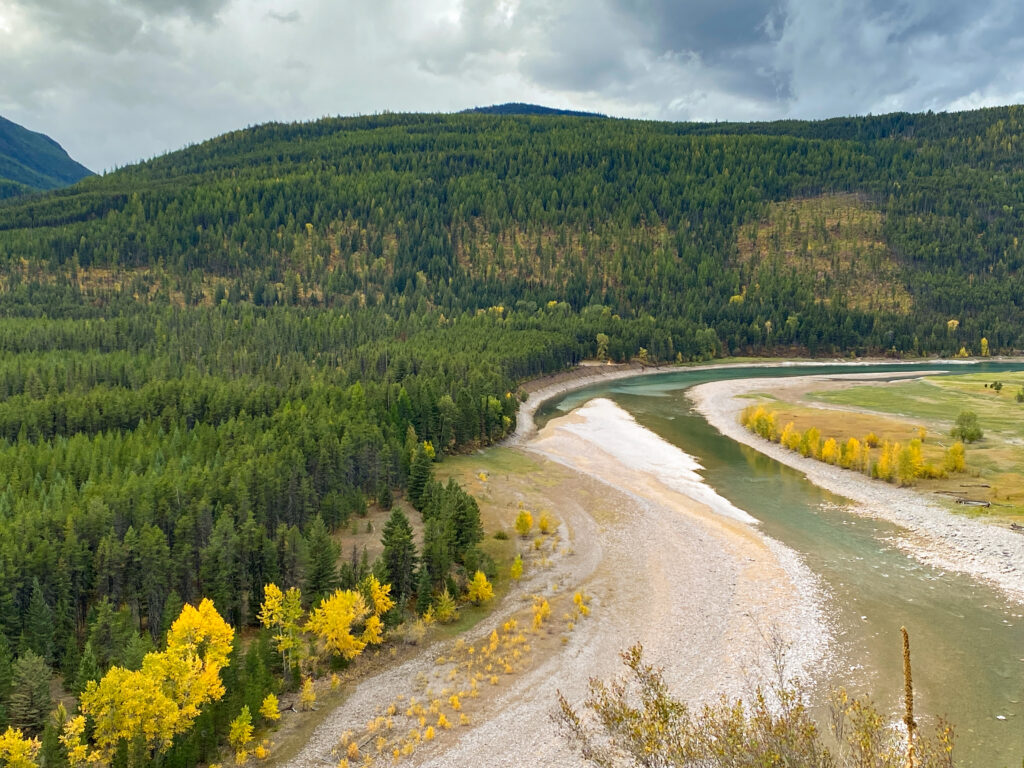
President Theodore Roosevelt created the Flathead National Forest in 1908 as a reserve for multiple-use land management in the public good. Sixty years later, President Lyndon Johnson signed the Wild and Scenic
Rivers Act into law, creating a framework for protecting America’s best remaining free-flowing rivers. Today, there is some debate as to how the provisions of the Wild and Scenic Rivers Act affect the modern management needs facing our national forests.
During forest plan revisions, the Forest Service is legally required to assess whether streams are eligible for inclusion in the National Wild and Scenic Rivers System. In some instances, eligibility determinations have been denied out of concern they may limit land managers’ ability to implement active forest management within river corridors—particularly vegetation treatments, fuels reduction, and timber harvest. This can also hamper new Wild and Scenic River designations, as elected leaders often require rivers to be found eligible as a prerequisite for granting permanent legislative protections.
This report examines 50 years of experience on the Flathead National Forest to evaluate whether those concerns are supported by management history. We selected this forest because it is home to 219 miles of Wild and Scenic Rivers that have been designated for a half century, and 284 additional miles of eligible rivers that were identified in the 2018 Forest Plan. Consequently, it provides a long-term, real-world case study of how the Wild and Scenic Rivers Act operates within a multiple-use national forest.