Resource Type: Project Page
Source: American Rivers
A meadow is an area where shallow groundwater enables grass-like plants and wildflowers to flourish. Although meadows cover only two percent of the Sierra Nevada mountain landscape in California, they are critical to the health and resiliency of the region’s rivers due to the ecosystem benefits they provide. Unfortunately, approximately half of all meadows in the Sierra Nevada are in degraded condition, primarily due to historic human land uses.
Resource: Research and Analysis Report
Source: The Pew Charitable Trusts
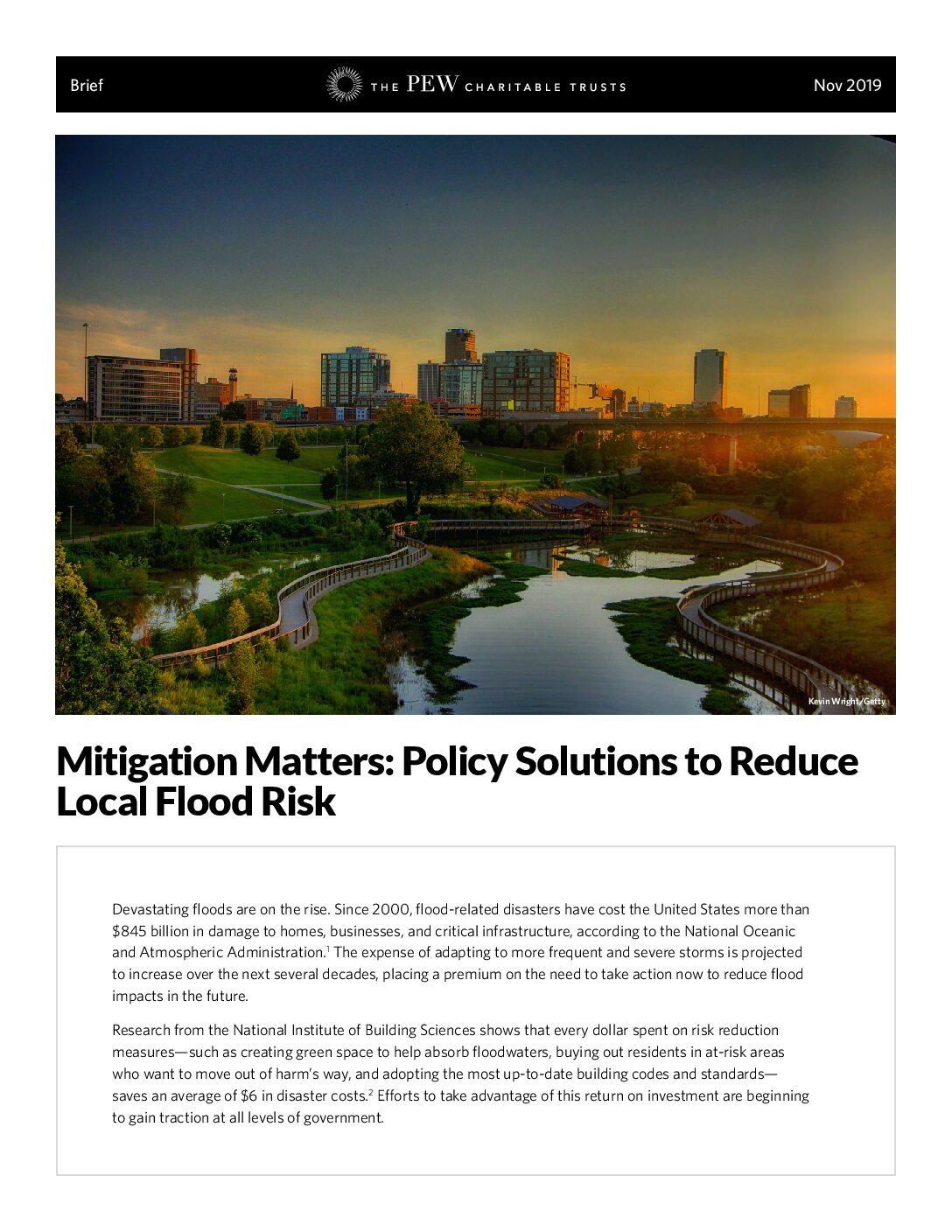
Since 2000, floods have cost the United States more than $845 billion in damage to homes, businesses, and critical infrastructure. The expense of adapting to more frequent and severe storms is projected to rise over the next several decades, placing a premium on the need to take action now to reduce the impacts of future floods.
“Mitigation Matters,” new research from The Pew Charitable Trusts, identifies 13 states or cities that have adopted policies resulting in effective flood mitigation. To learn more, read the overview, which includes lessons from these jurisdictions, or go directly to briefs below about each city or state. The policies are organized into three categories: 1) using existing funds for mitigation by redirecting revenue and spending, 2) creating revenue sources, and 3) establishing smarter regulations.
Resource Type: Storymap
Source: American Rivers
Climate change will mean more epic floods — but the damage doesn’t have to be this bad.
“Flying over Illinois and Missouri in a small plane, I look down on farmland that, by now, should be a carpet of green corn and soybeans. But all I see are brown, empty fields, speckled with standing water and the sun glaring off of silver seas behind broken levees. I am up in the air with Lighthawk to survey the damage — so far — from this record-breaking flood season. In my role as Associate Director of the Upper Mississippi River Basin at American Rivers, I’ve seen plenty of flood damage over the years. My current view from the plane window is devastating.”
Resource Type: Fact Sheet & Blog
Source: American Rivers
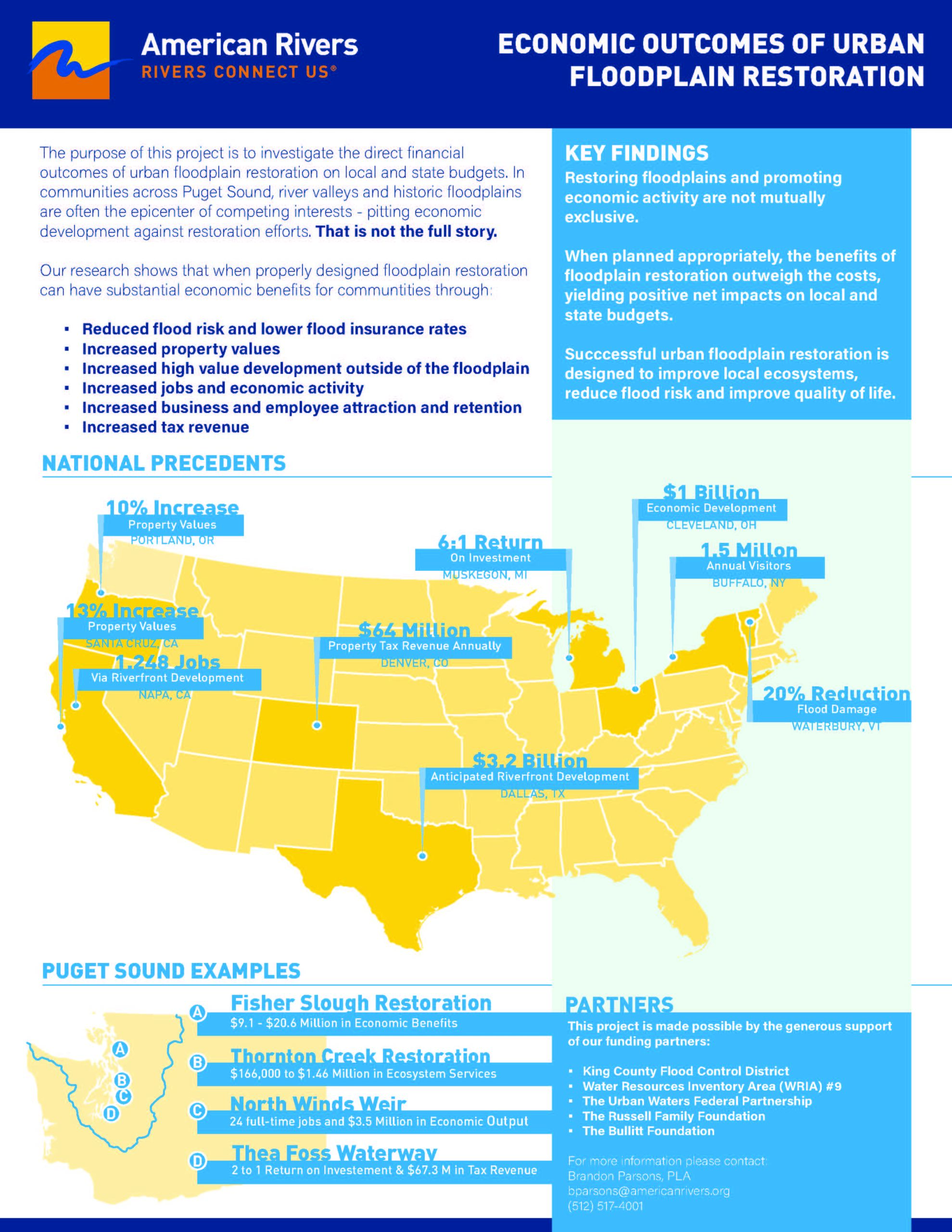
Restoration funding in the Puget Sound and across the country is generated from tax revenue. Over 50% of Washington’s revenue comes from sales, business & occupancy and property taxes. Preliminary estimates show the state could lose $7 billion in revenue due to COVID-19 – potentially resulting in deep cuts across the board, including a decrease in restoration funding as salmon and Southern Resident orca populations continue to decline and flood risk intensifies. While COVID presents unprecedented challenges, funding shortfalls are common in the state budget, and competition for funding is fierce. Moving forward, it will be even more essential for policymakers to understand the revenue implications of their funding decisions and invest in programs that will accomplish multiple benefits while showing a high return on their investment.
Resource Type: Case Study
Source: U.S. Climate Resilience
Building Smart in the Floodplain
The city of Fort Collins, Colorado, found a win-win solution to the problems it faced with 100 acres of abandoned property. The city now enjoys new green space, improved floodwater management, and a boosted economy.
Resource Type: Natural and Beneficial Functions Committee
Source: Association of State Floodplain Managers
The primary mission of the Natural and Beneficial Functions Committee is to promote, within the public at large, policymakers, and associations, the natural and ecological benefits and functions of our floodplains to reduce flood losses, enhance public safety, and enhance the socioeconomic and environmental sustainability of our communities. The committee will pursue this mission through the promotion and support of education, policies, and activities that protect the natural and beneficial functions of floodplains.

Resource Type: Website
Source: Association of State Floodplain Managers
The Association of State Floodplain Managers (ASFPM) is the nation’s most respected voice in sound floodplain management practices and policy. Your membership ensures exclusive access to resources, training, advocacy, discounts, and a strong network of dedicated professionals.
Resource Type: Video
Source: Rhone Mediterranean Corsica Water Agency
A new type of river management is coming! Restoring our rivers and creating more space for rivers is the best way to reduce flood risk, better protect our communities, and improve water quality for people and wildlife.
In towns and cities, pushing back the embankments widens the river corridor, slowing the flow of the river and better managing water levels, keeping communities protected. In more rural areas, reconnecting natural floodplains allows the rivers to connect to less vulnerable surrounding land and helps protect nearby communities.