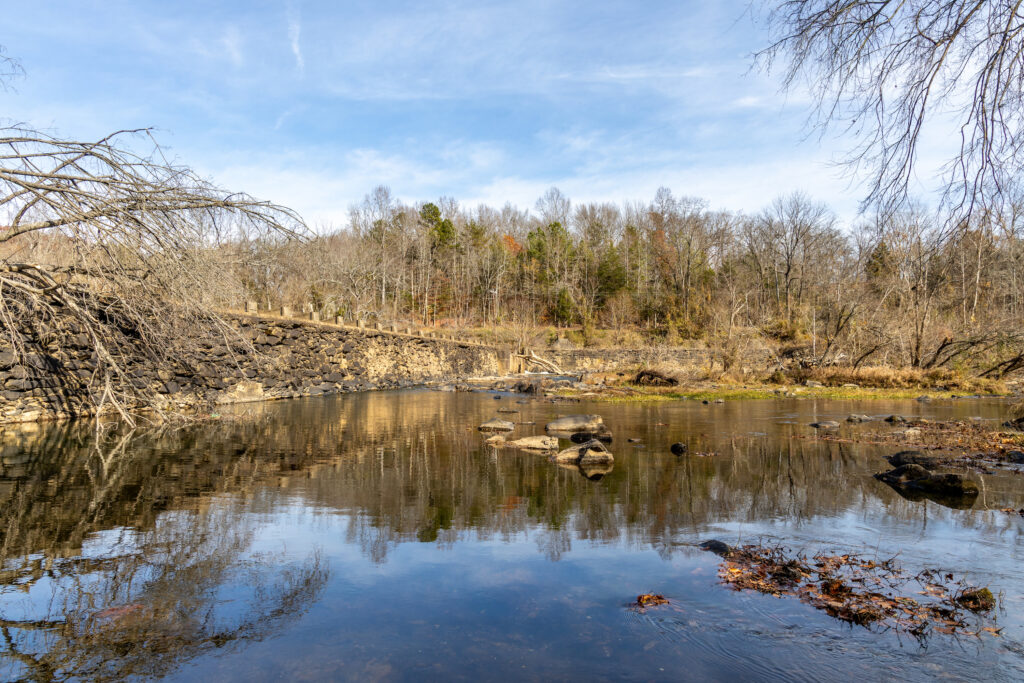
Ramseur Dam Removal
“The river belongs to nature and to the people—to everybody. Dam
removal allows the Deep River to continue its story while looking toward the future.” —Mayor Hampton (Happy) Spivey, Town of Ramseur
Dam removal is one of the most powerful, cost-effective, and efficient tools there is to restore the health of rivers. A free-flowing river supports biodiversity, clean water supplies for communities, and recreation. Sadly, more than half a million dams block our nation’s waterways. Before its removal, Ramseur dam was among 28,000 inventoried dams in the state of North Carolina, many of them obsolete.
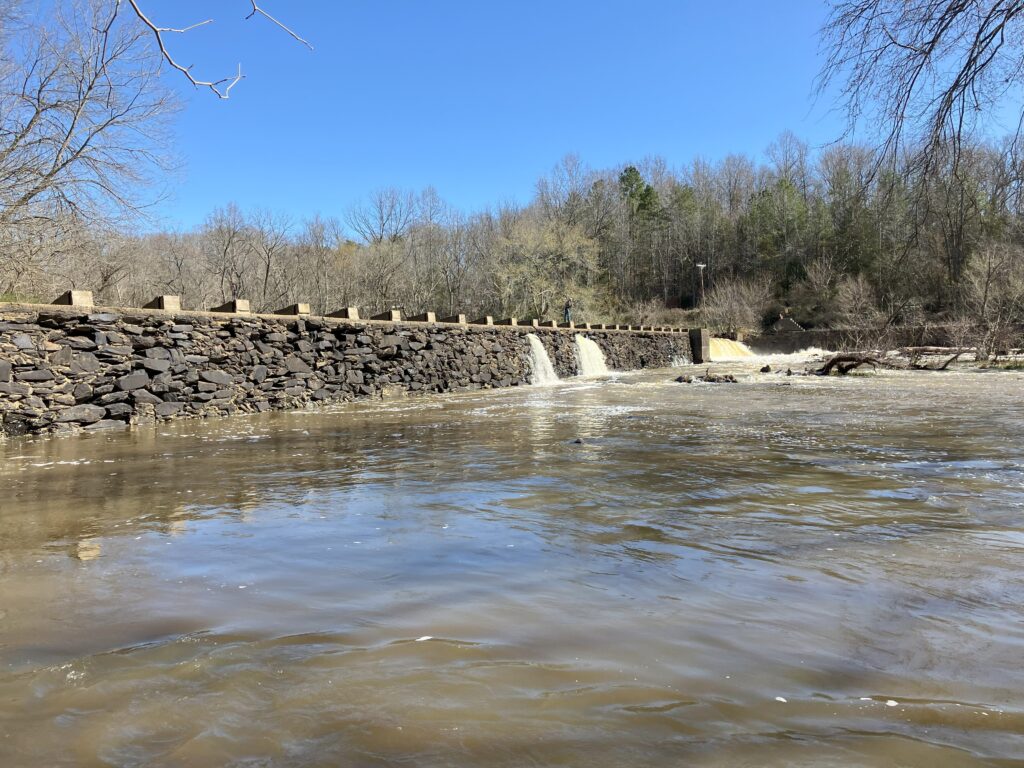
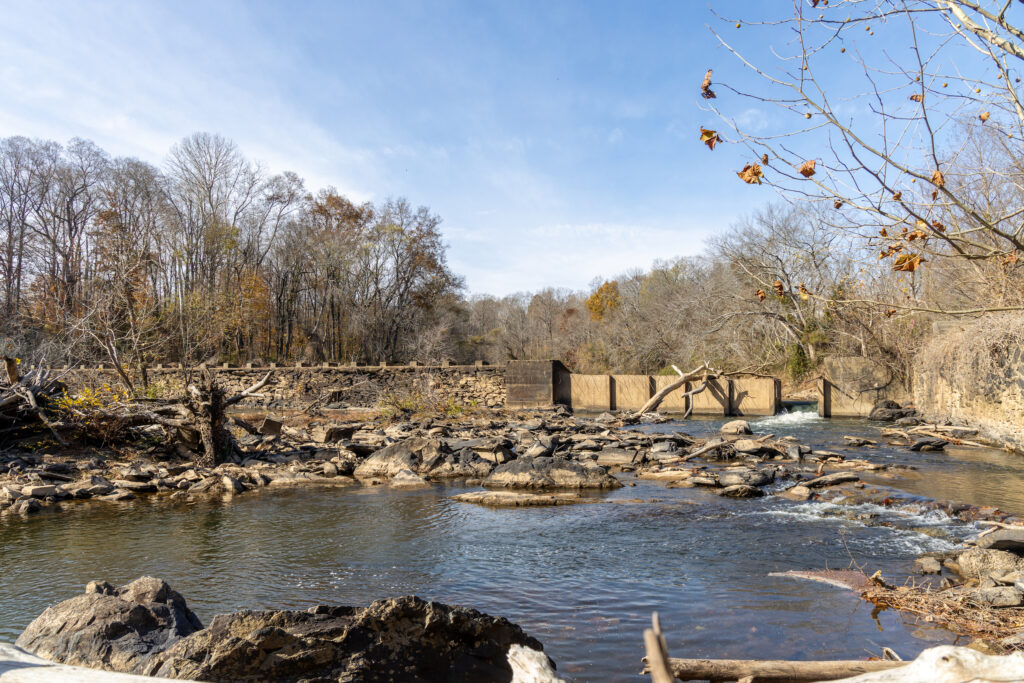
The Ramseur dam was originally constructed in the early 1900s to power a sawmill and later the Columbia Manufacturing Company. Built largely of river rock, time had long since taken its toll: the gates on the dam were broken, water seeped through the structure, and rebar jutted out in places. It no longer produced hydropower or supported manufacturing.
This is a story playing out across the country and likely in your community. Dams are aging, becoming unsafe, and adding liability to towns and even private owners. Nationally, experts estimate that 70 percent of dams have outlived their average design life.
“Ramseur’s next chapter is about reconnecting—to the river, to each other, and to a broader vision of a restored Deep and Cape Fear River system flowing forward together,”
Lizzy Stokes-Cawley, associate director of conservation for American Rivers
The Deep River
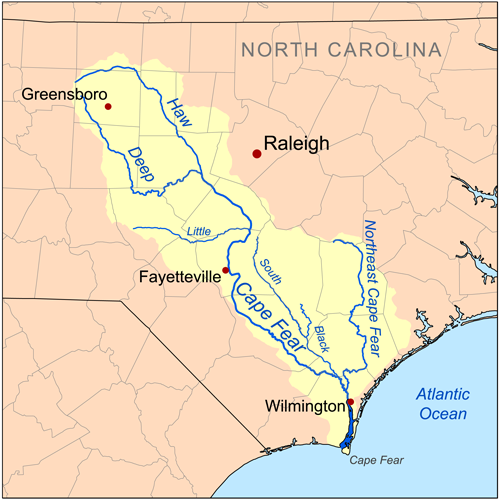
The Deep River is one of two major tributaries—alongside the Haw River—that form the Cape Fear River. Together, these rivers and more than 6,300 miles of connected waterways create the Cape Fear River Basin, one of North Carolina’s most important freshwater systems, supplying drinking water for more than a quarter of a million people.
Historically, the Cape Fear River supported thriving migratory fish populations. American shad, river herring, and Atlantic sturgeon once moved freely upstream, using these rivers for spawning and nursery habitat. Sadly, today, these routes are blocked with more than 8,000 dams in this river basin alone, many of which have long outlived their original purpose.
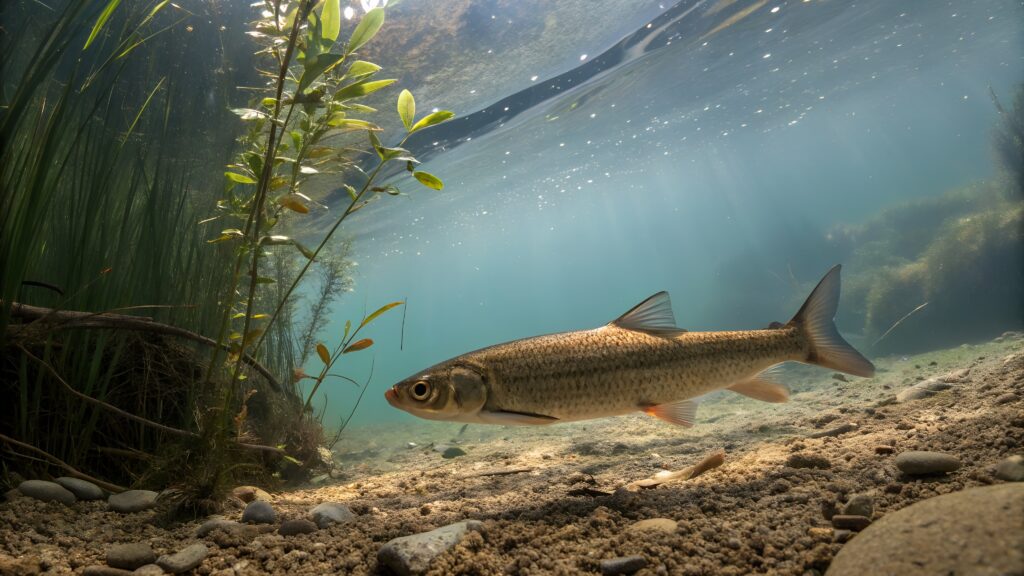
The Deep River and its tributaries are home to the Cape Fear Shiner – a fish found nowhere else on earth. Dams, including the Ramseur dam, have limited the species’ range and habitat and contributed to its decline; the Cape Fear Shiner is now federally endangered. River reconnection is a critical step in saving this fish, and protected freshwater mussels, including the Atlantic pigtoe, Savannah lilliput, and the Yellow lampmussel, from extinction, all species dependent on clean flowing water.
Removing a dam occurs in stages to protect the river’s health and is a construction feat.
Phase 1
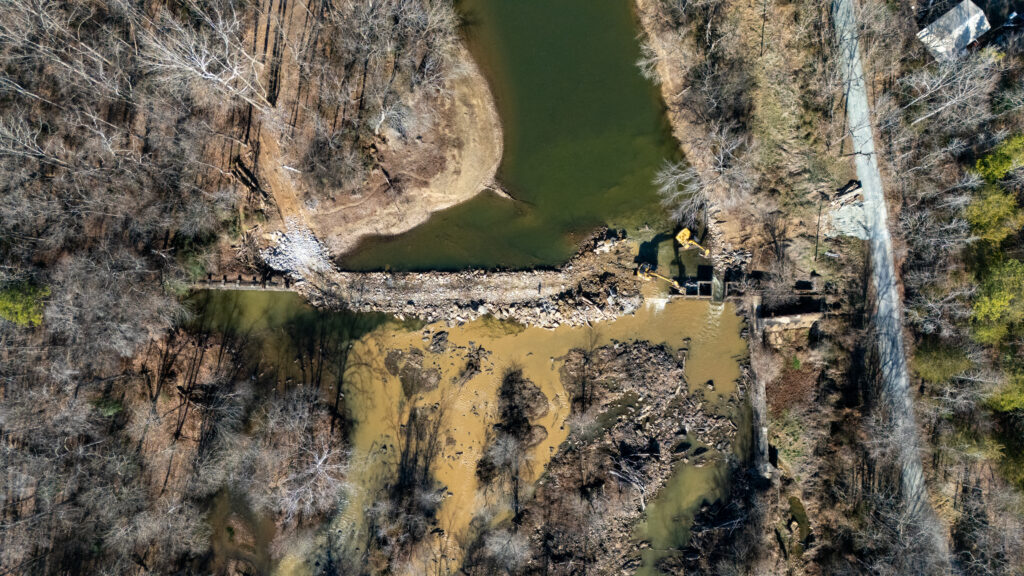
Advance planning for a dam removal can take months—or even years. The process begins with detailed site assessments and data collection on both the dam and the river. In Ramseur’s case, planning started as early as 2023. During this phase, American Rivers also engages the local community to ensure residents understand the scope of the project and the benefits it can bring to the river and the town.
Phase 2
Once the groundwork is laid, engineering experts design a removal plan that prioritizes safety for construction workers, the river ecosystem, and nearby communities. Engineers evaluate key questions such as whether explosives are necessary, how much of the river must be temporarily diverted or blocked during construction, and how sediment and debris from the dam will be safely removed and disposed of.
Phase 3
Project partners coordinate with state and federal agencies throughout the life of the project—including the U.S. Fish and Wildlife Service—to secure the required permits and ensure the project meets environmental and regulatory standards.
Then comes the fun part: Construction!
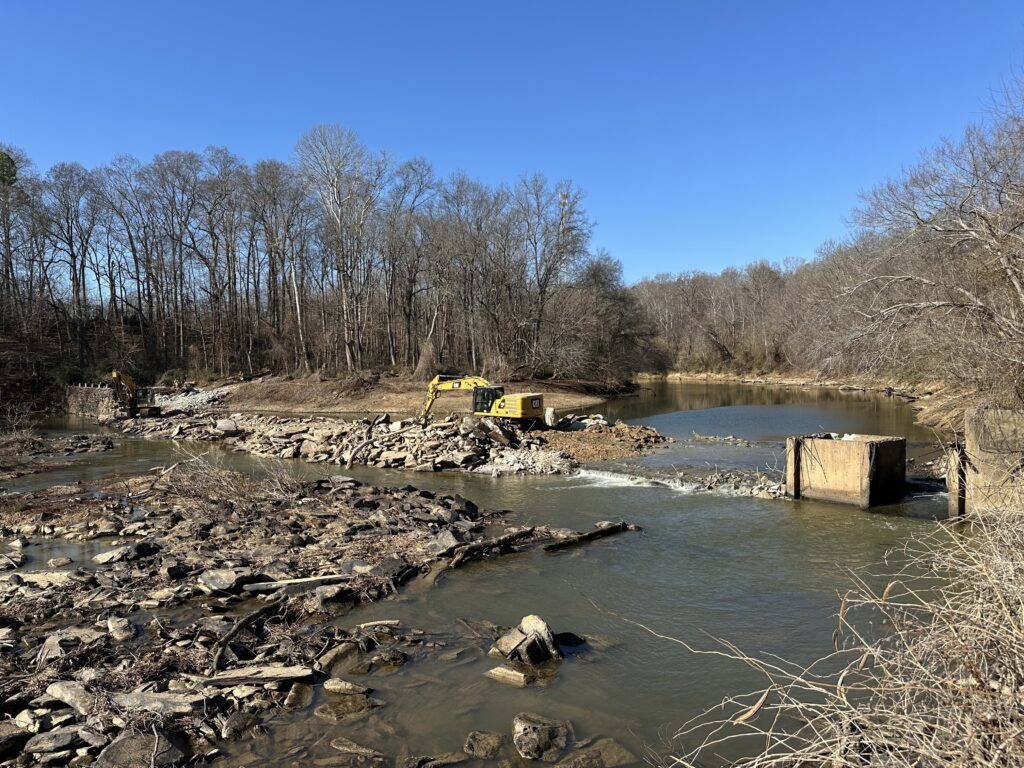
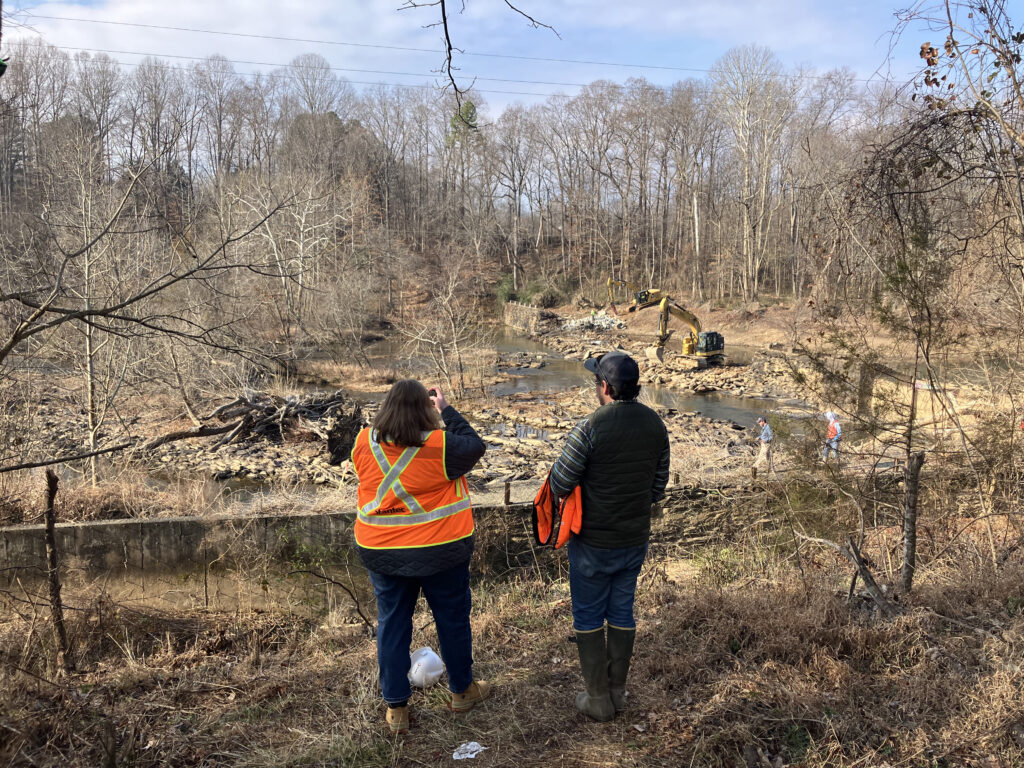
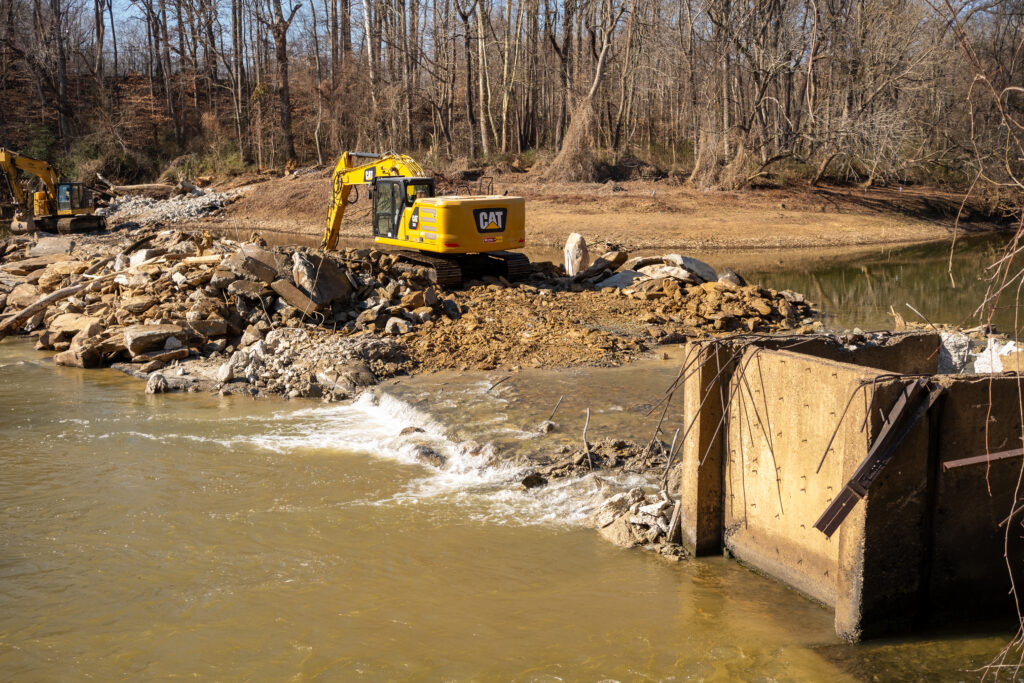
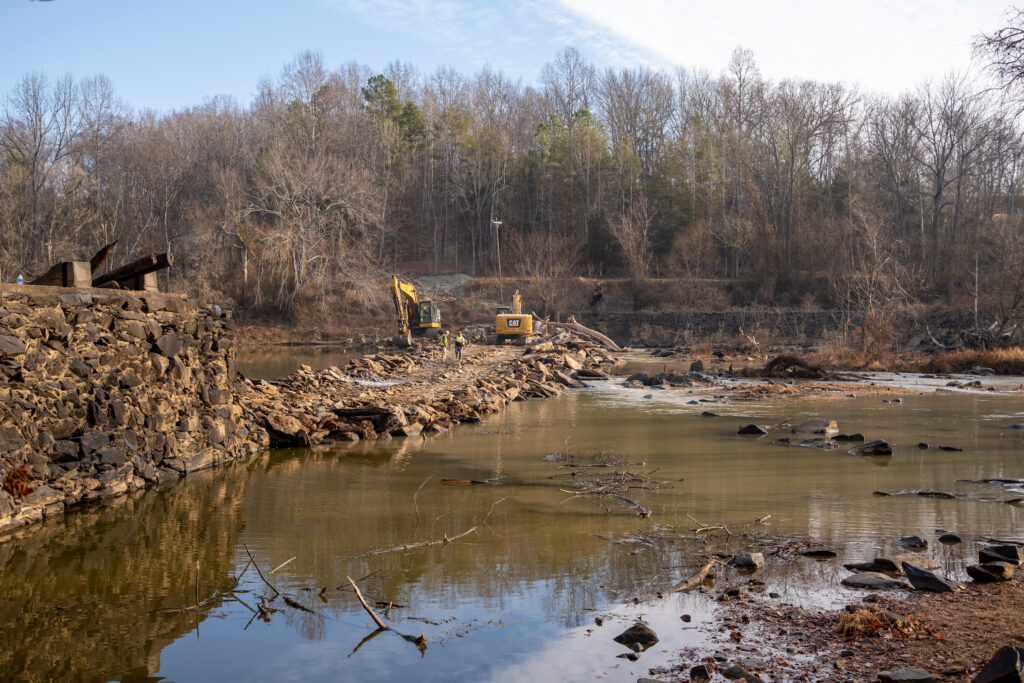
Heavy machinery, like excavators and hydraulic hammers, is mobilized to begin deconstructing the dam.
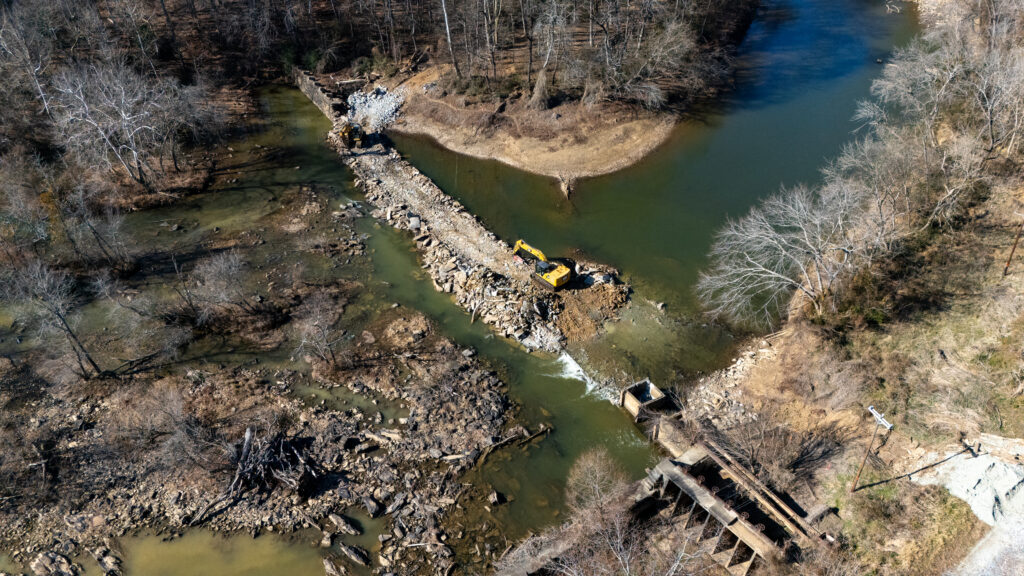
A temporary causeway is built into the river channel to provide access for machinery and workers.
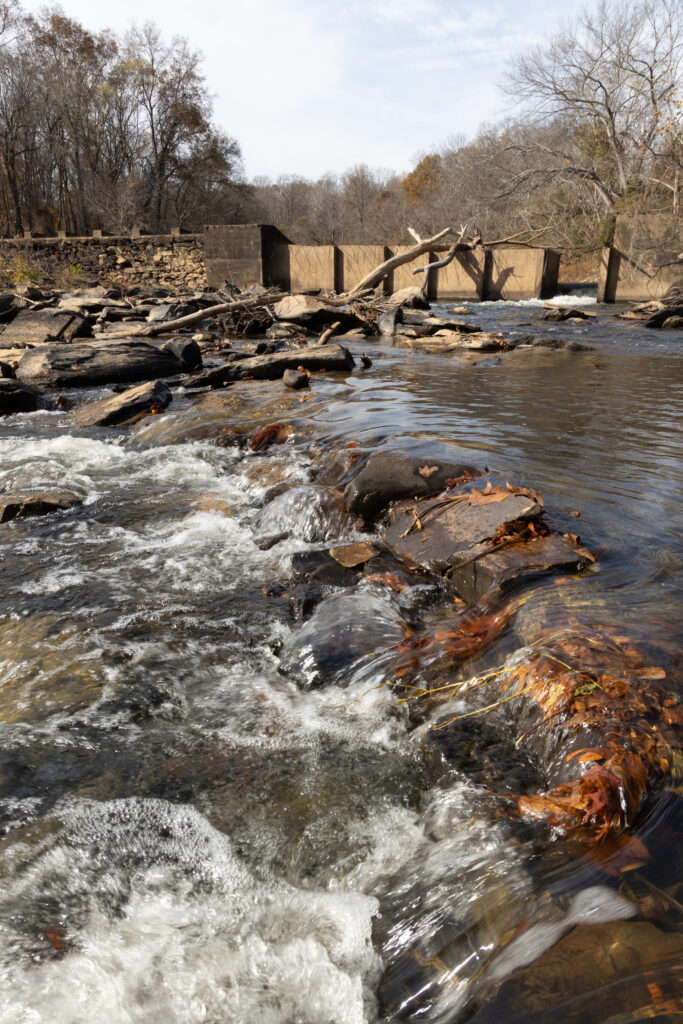
Workers then break apart and remove the dam, piece by piece, all the way down to the natural riverbed. As the dam is taken apart, pieces of the dam are salvaged and strategically placed to fill scour holes and reshape the channel, restoring the river’s natural width and helping stabilize the riverbed as free-flowing conditions return. It is a really amazing site to see the first time a river runs free, especially after being blocked for a century!
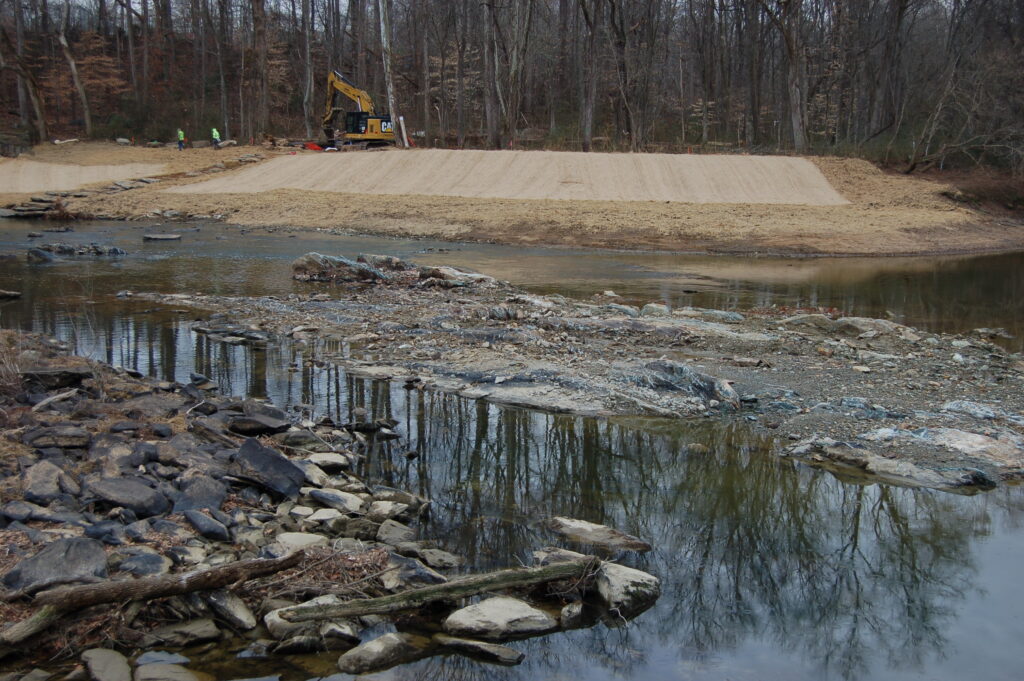
Once the dam has been removed and the site stabilized, native plants and seeds will be spread so that the ecosystem can fully recover.
Key Benefits of the Dam Removal
-
-
-
-
Ramseur Dam Removal, Deep River | Chad Hoffman -
-
Are you an elected leader hoping to remove a dam in your state?
Step 1 – Define the Problem
Find out basic information about dam ownership, age, why it was built, etc and what makes it outdated or obsolete. Have people died at the dam? What fish and wildlife are impacted by the dam blocking the river for passage? Could more people enjoy water recreation if the dam weren’t there?
Step 2 – Define Partners
Determine what local partners you have that support dam removal, and what benefits of dam removal match with their mission.
Step 3 – Define Capacity
If you don’t have in-house expertise for dam removal, do your partners have it? If not, American Rivers convenes Dam Removal Communities of Practice around the country, and we could assist you in identifying potential partners with dam removal capacity. Build an outcome-focused coalition that includes your community and your partners.
Step 4 – Define Resources
Removing a dam costs between 10% and 30% on average of the cost of replacing a dilapidated dam. What funding resources are available to you for this project, or available from partners?
Step 5 – Work the Plan
Dam removal requires design plans and permits from state agencies, or in some cases, federal regulators. Once all permits are in place, work with partners to secure qualified contractors for dam deconstruction.