Dock Street Dam Alternatives Analysis
Understanding the Future of the Susquehanna River
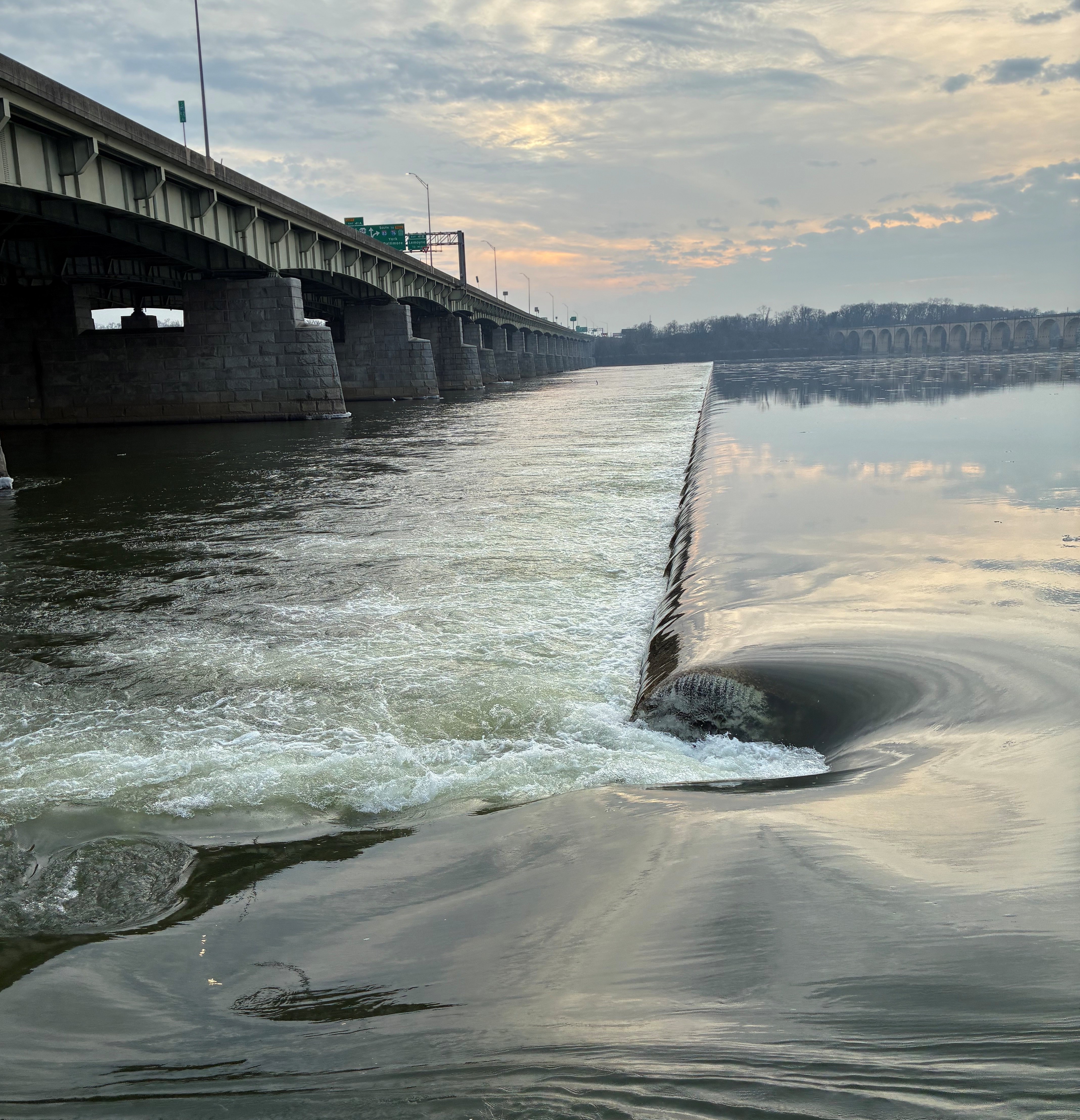
The Dock Street Dam is a low head dam located on the Susquehanna River in Harrisburg, Pennsylvania. Constructed in 1913, the dam has been obsolete since the 1980’s and has become a significant public safety concern due to the dangerous hydraulics it creates immediately downstream. The dam is also an outdated, aging piece of infrastructure that affects river health, fish movement, and water quality.
American Rivers is working with partners to pursue an Alternatives Analysis that will examine potential future options for the Dock Street Dam and help answer an important question:
How can the Susquehanna River better serve the people and wildlife that depend on it while improving public safety?
The Analysis will evaluate the different options there are for the future of the dam, and how they could affect the river, recreation, surrounding communities, and the environment. These options, or “alternatives”, will provide decision-makers and the public with objective information about the opportunities and trade-offs associated with each option.
Why study the Dock Street Dam?
The following issues are examples of why this Alternatives Analysis is an important step in evaluating whether the dam should remain a standing structure in the Susquehanna River or if there are better-suited opportunities to balance public safety, recreation, and the river’s health.
- Dock Street Dam has been associated with numerous drowning incidents because of the powerful recirculating hydraulics that form below the structure. Despite warning signs, buoys, public education efforts, and emergency response measures, the hazard remains.
- The dam is deteriorating, which requires ongoing attention
- The dam alters the natural flow of the Susquehanna River, which limits fish movement, affects aquatic habitat, and influences river processes that support water quality and ecosystem health.
What will the Alternatives Analysis evaluate?
The purpose of the study is to understand how alternatives other than dam removal would affect the river, the Water Trail, and the surrounding community.
Key questions include:
- How does the Dock Street Dam influence public safety today?
- How would alternatives to dam removal change river conditions?
- How could changes affect boating, paddling, fishing, and other recreational uses?
- How might fish passage, water quality, and aquatic habitat improve under different scenarios?
- What engineering or design approaches could reduce negative impacts while maximizing community and environmental benefits?
- What tradeoffs should be considered before future decisions are made?
The study will provide information to help local leaders, agencies, stakeholders, and community members make informed decisions based on science, engineering, and public input.
Keeping recreation top of mind
The Susquehanna River is an important recreational resource for thousands of rivergoers each year. Understanding how alternative plans could affect recreation is a key part of the study.
Some recreational experiences may change depending on which scenario is selected. New opportunities could emerge through a more natural, free-flowing river system, including improved fishing, enhanced paddling experiences, expanded river access, more ecotourism and entrepreneurship opportunities, and healthier aquatic habitat.
The Alternatives Analysis will evaluate potential changes and identify opportunities to preserve valued recreational experiences while enhancing public safety and river health whenever possible.
Why this study matters
Evaluating alternatives for the Dock Street Dam offers an opportunity to better understand how the Susquehanna River can continue to serve the community for generations to come. It will provide information that can guide decision-makers as they consider how to balance safe and accessible river recreation.
The study will examine how future actions could:
- Improve public safety by reducing hazards associated with the existing low head dam.
- Improve water quality and overall river health.
- Restore more natural river processes and improve aquatic connectivity.
- Enhance habitat for fish and other wildlife, in turn improving angling opportunities.
- Identify opportunities to maintain and enhance recreation while reducing risks.
- Provide local decision-makers with objective information about the benefits and tradeoffs of the alternatives being studied.
A community conversation
The future of the Dock Street Dam affects many people, including paddlers, anglers, boaters, nearby residents, businesses, conservation organizations, and visitors to the Susquehanna River.
Community perspectives are an important part of the Alternatives Analysis. Throughout the study, stakeholders will have opportunities to learn about the project, ask questions, share concerns, and provide input that can help shape future decisions.
By evaluating public safety, recreation, river health, engineering considerations, and community priorities together, the Alternatives Analysis will provide a comprehensive understanding of the options available for the Dock Street Dam and help guide thoughtful, informed decision-making for the future of the Susquehanna River.
We want to hear from you
At this time, American Rivers is accepting community comments on your personal experience with Dock Street Dam and surrounding areas.