What is a 100-year Flood?
How is it possible to have multiple 100-year flood events in back-to-back years?
It feels like every year, meteorologists are reporting more and more “100-year floods.” This term is often misunderstood and misrepresented from a scientific perspective.
Meteorologists, floodplain managers, and the media often use the term “100-year flood” as shorthand for an event that has a 1 percent chance of occurring in any given year. It does not mean that the event will occur once every 100 years. Let me explain.
This type of statistical analysis is done by hydrologists — scientists who study the occurrence, distribution, and movement of water. They can predict how frequently a major precipitation event is likely to occur in a specific area.
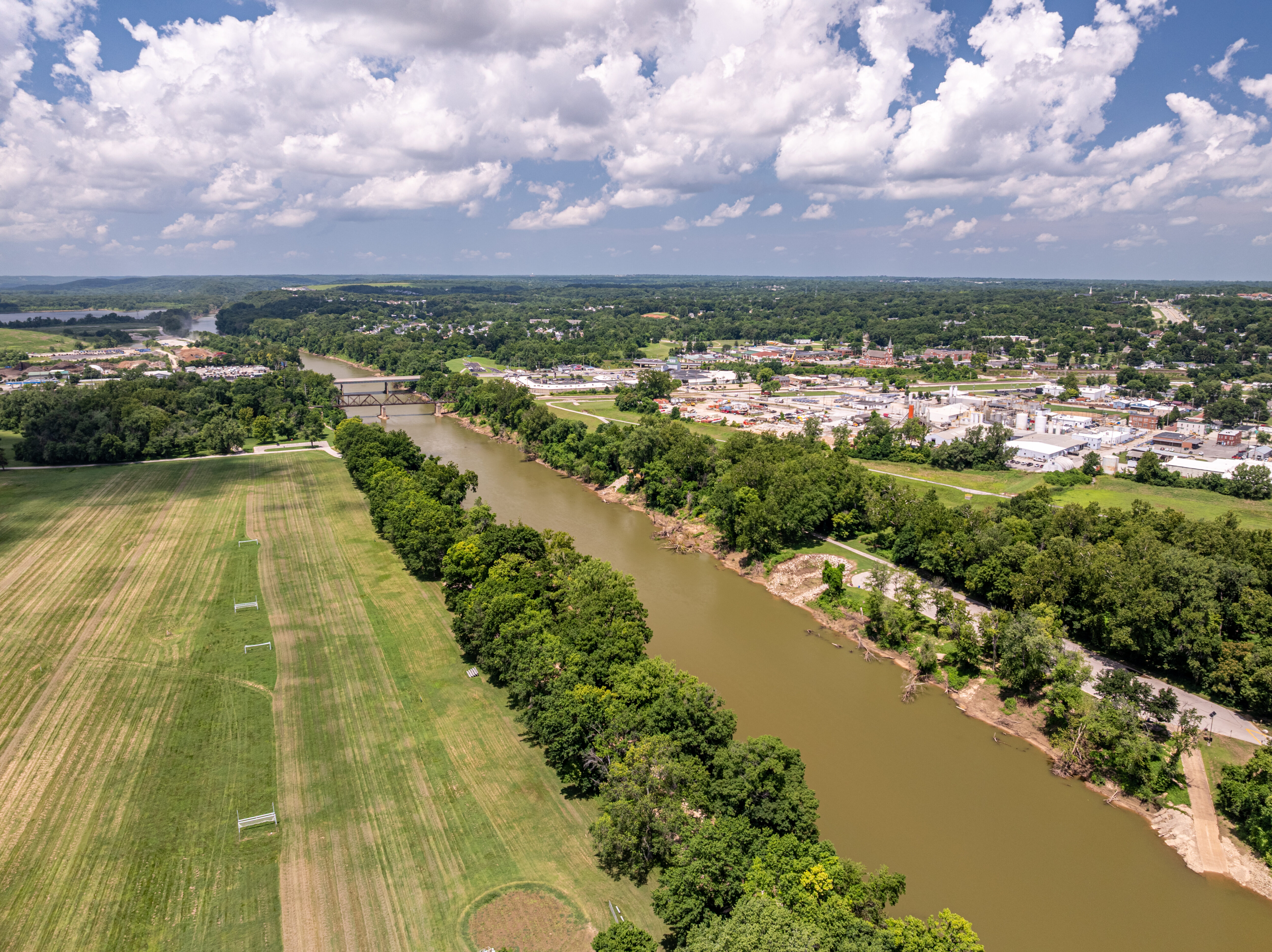
Hydrologists need at least 10 years of data to perform a frequency analysis in locations to predict how often a major precipitation event can cause significant flooding. The more historical data available over a longer period, the more accurate the prediction.
Let’s look at a hypothetical river — the Pretend River — for which a hydrologist gathers historical rainfall patterns and stream data and finds that there is a 1 percent chance of a flood cresting 20 feet above its normal level each year at river mile 4.5. A flood of that size, at that location on the Pretend River, is determined to be the “100-year flood” for that river. Our hydrologist also determines that a flood cresting at 23 feet has a 0.5 percent chance of occurring each year, so that size flood is determined to be a “200-year flood,” while a flood cresting at 25 feet has a 0.2 percent chance of occurring each year and is determined to be a “500-year flood,” and so on.
Help End the Cycle of Dangerous Flooding
Floods belong in rivers. American Rivers rehabilitates river ecosystems to support healthy communities. Join the effort to restore rivers and protect our communities from flooding.
Just because a 100-year flood occurs doesn’t mean it won’t happen again for another 100 years. The risk of these different-sized events reoccurring remains the same every year, statistically.
The reason why more “100-year floods” seem to be occurring is that many areas are seeing larger floods more frequently. Let’s say our hydrologist redoes her flood study ten years later and she now finds that there’s actually a 1 percent chance of a flood cresting at 25 feet every year. What was once a “500-year flood” is now a “100-year flood.”
Why is this shift happening? One of the main reasons is global warming, which causes major precipitation events to occur more frequently because global warming causes the atmosphere to hold more moisture, which translates into more extreme rainstorms repeatedly producing record-breaking events. This is increasing the likelihood that a 100-year flood event can happen two years in a row.
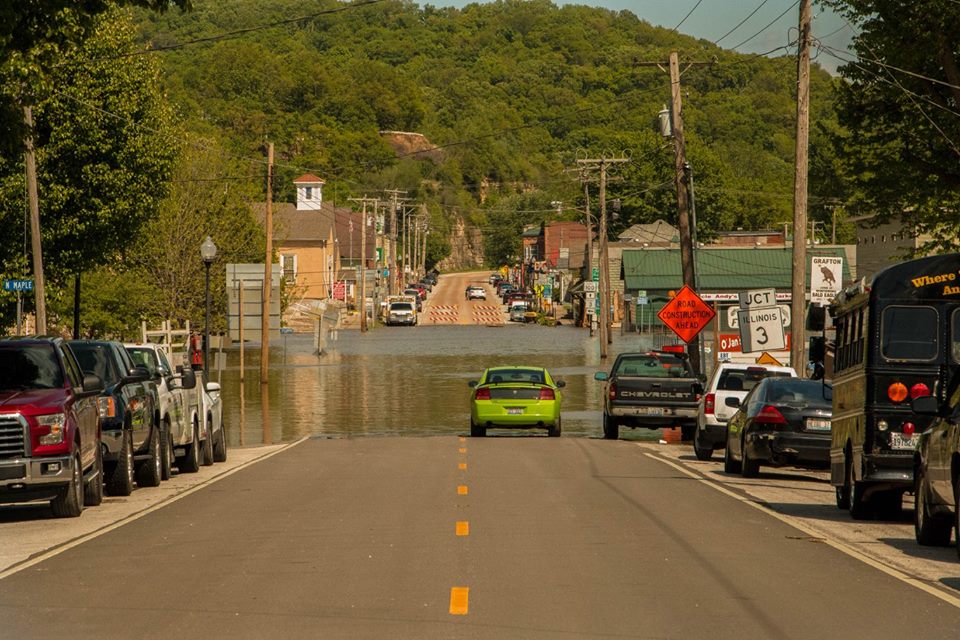
Take Houston, Texas, where the city experienced 500-year floods three years in a row. The first was produced on the Memorial Day holiday in 2015 and 2016, then again by Hurricane Harvey in 2017.
Researchers from Princeton University published a paper in 2019 that determined 100-year floods could become annual occurrences in New England by the late 21st century due to increased storm surge, coastal sea level rise, and more frequent tropical storms.
So the question before us is not will a 100-year storms occur, the question is how can we mitigate the impacts to people, property, and our communities? Learn how protecting and restoring floodplains can help communities adapt to increasing flood risk.