Grand Canyon Escalade – How could this happen?
A member of the Navajo Nation Council submitted legislation that could authorize the $65 million start to construct the Grand Canyon Escalade. Here’s what you need to know.
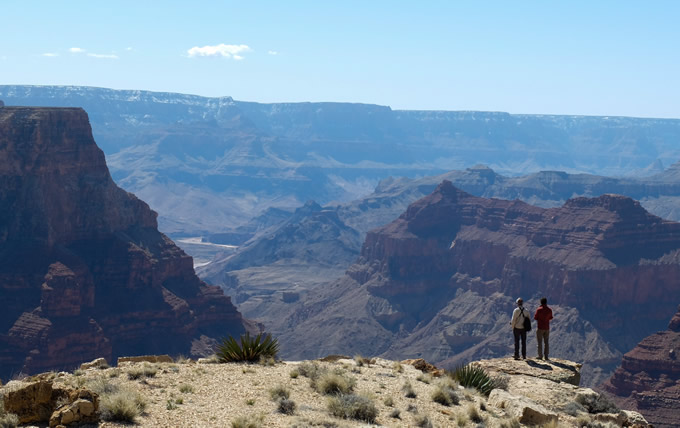
On Monday, a member of the Navajo Nation Council submitted legislation that would authorize $65 million to start construction of the Grand Canyon Escalade. This project is a massive proposed resort development on the east rim of the Grand Canyon. The site itself is within the western Navajo Nation, on the border of Grand Canyon National Park, and above one of the most sacred sites in Native American culture – the confluence of the Colorado and Little Colorado Rivers.
But how could this happen, when the sitting President of the Navajo Nation, Russell Begaye, has stated his outright opposition to the project? Let’s go through the details.
Tribal Government
Like the United States Government, the Navajo Nation has an Executive Branch (President’s office), and a Legislative Branch (like our US House and Senate). But in the Navajo government, there is only one legislative body, the Navajo Nation Council (like a combination of our House and Senate). A bill is introduced into the Navajo Nation Council, then if approved it goes to the President’s desk to be signed into law or vetoed.
Could the Escalade legislation pass?
Yes. Under tribal law, if the Council has enough votes to pass, it could over-ride a veto from the President’s office, with a two-thirds majority. There are 23 members of the Navajo Nation council, and to be “veto-proof” the bill would have to have 16 supporters. It is hard to know how many votes the bill currently has, but it is going to be close regardless.
Is this really urgent?
Yes. Under Navajo law, there is only a 5-day public comment period, which started Monday, August 29. The comment period (and time when your comments would be filed into the official record) ends September 3rd. If you care about the canyon, you need to speak up now.
How are we working with the Navajo people directly?
American Rivers is collaborating with the Flagstaff-based organization, Grand Canyon Trust, as well as the local, Navajo organization Save the Confluence. The Save the Confluence group is an on-the-ground, Navajo-led grassroots organization working within the Navajo Nation to oppose the project. Our three organizations collaborated extensively when we listed the Colorado River in the Grand Canyon as America’s Most Endangered River in 2015, and we continue to work closely together today.
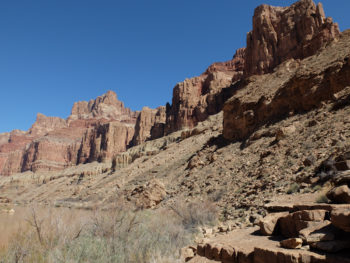
View from the Colorado River. The gondola would extend down from the point upper left on the rim to lower right by the river, 1.4 miles total. | Sinjin Eberle
How could they build this? Isn’t inside the Grand Canyon National Park land?
Yes and no. The current interpretation is that the National Park service boundary includes the Colorado River, up to the high-water mark. The Navajo Nation boundary extends from the east rim of the canyon, down to that high-water mark line. The developers have proposed that there would be a resort development on the east rim, and terminate down in the canyon just above the high-water boundary line, connected by a 1.4-mile long gondola, all on the Navajo Reservation lands. The development would permanently impact the experience of park visitors and boaters. What is now a wild part of the landscape would become industrialized and crowded.
What about the confluence? Isn’t it sacred?
The confluence of the Colorado and Little Colorado rivers is considered sacred by a number of tribes, including the Navajo. The Navajo do consider the confluence a place of deep spiritual significance, and the Hopi, Paiute, Zuni and other tribes and pueblos revere this place as well. As such, the Intertribal Council unanimously opposed this project in 2015 based on these values.
Exactly HOW could they build it?
That is a good question, since the area is extremely steep, rugged, and remote. Think about it – how would you get equipment staged to build a project like this? How do you get bulldozers and cranes and other heavy equipment into an area like this? A helicopter could not land there, since the only flat spot is in the National Park, which would never allow this. Whatever the developers are thinking, there would be impacts to the river and surrounding lands.
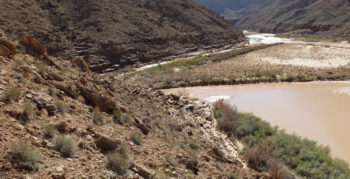
This view depicts where the lower development would sit. Construction equipment would have to build a lower gondola station, restaurant, restroom facility and elevated walkways here. Confluence with the Little Colorado River is seen in the background. | Sinjin Eberle
Don’t the Navajo need economic development?
Absolutely, and one of the main objections to this project is on an economic basis. The developers have stated that the project would create 3,500 jobs, but that figure has been argued for some time. The likely construction and infrastructure jobs would overwhelmingly come from outside the reservation, as would most of white collar jobs to run the resort. Some jobs, certainly, could be held by Navajo people, but all 3,500? Not likely.
The other argument is about revenue. Revenues from the resort to the Navajo people start at a mere 8% of the profit, and only increases as more and more people pay to ride the gondola, and tops out at 18% (assuming at least 2 million people pay to ride the gondola per year). Consider for a moment that the main Grand Canyon National Park saw its biggest year ever in 2015, with 5.5 million visitors – would 2 million people ever visit this resort destination 28 miles from highway 89? And how many of them would actually pay (upwards of $40-50 each) to ride the gondola?
This is a really bad deal for the Navajo people, especially those who live in the local area, as the Bodaway Gap chapter would get none of the tax revenue from the project, as well as the Nation being required to pay the $65-million dollar start-up bill to even get the project going.
But, what about people who can’t hike to the bottom of the canyon? Don’t they deserve to experience it as well?
Certainly, and Grand Canyon National Park already provides a world-class visitor experience today. Everyone can experience the canyon in their own way already – you can hike it, you can float it, you can ride a mule, and you can fly over it. And maybe most importantly, anyone can come to the rim of the canyon, sit in the quiet contemplation, and enjoy the view. Smell the air. Watch a raven glide overhead. The Grand Canyon belongs to all of us, for all time, and it should not be diminished..
So what can be done?
Most urgently, sign the petition, and then stay tuned as this saga continues to develop. There will invariably be more ways that your voice can be heard. Thank you for standing up for the Grand Canyon.
44 responses to “Grand Canyon Escalade – How could this happen?”
What a terrible idea. Hopefully it can be stopped from becoming a reality!
I agree with you Richard. The Grand Canyon belongs to Mother Earth! One of the 7 wonders of the world! This gondola/tram idea needs to be buried! If money is a factor with the Native Americans with this project then my personal respect is gone and I know many others who feel this way!
Thanks, JC – I think we can all understand where you are coming from, and hopefully we can agree to disagree. I look forward to your article.
Those in agreement with this fund-raising campaign by American Rivers are a tribute to White Privilege. This is project is on Navajo lands, where there is enormous suffering – no running water, no electricity. We don’t get to have a say in this, especially given our ongoing abuses of First Nations. As with many environmental groups, American Rivers doesn’t care about the human suffering here; they care about a view — their view of what Nature should be. “Sacred lands?” while people suffer. Who determines that “sacredness” in a secular society of any landscape and why is that privileged over human suffering? Those who determine sacredness are the people in relationship – daily, historical, economic, personal – relationship to this landscape. Not the privileged tourist who imagine it from afar, while turning on water and electricity in OUR homes. If First Nations are conflicted about this problem, I entirely believe that they have the right and the ability to exercise their authority and sovereignty here without the REPUGNANT interferences of outside environmentalists and day dreamers. Nature is more than a pretty picture. It is history and home to indigenous people. Leave them to sort his our for themselves. SHAME YOU. Now I am enraged by this and seriously considering an article on it. Shame you.
JC –
Please re-read this paragraph from above:
American Rivers is collaborating with the Flagstaff-based organization, Grand Canyon Trust, as well as the local, Navajo organization Save the Confluence. The Save the Confluence group is an on-the-ground, Navajo-led grassroots organization working within the Navajo Nation to oppose the project. Our three organizations collaborated extensively when we listed the Colorado River in the Grand Canyon as America’s Most Endangered River in 2015, and we continue to work closely together today.
As that paragraph says, we are in close communications with the local groups, who live in the exact area where the project is proposed to be built, on what they want. What they want their future to be. They are the local voices here and have asked for our assistance against outside interests trying to force this project upon them. I personally have given presentations and talks (including one coming up next week) with the people who live out there and have requested our help.
I’m sorry you disagree with the goals of what we are collectively trying to do here.
It is for them to work out – your interference is not useful. You are raising money from this while they suffer. How dare you say that they have a right to “economic development” – while you have paid not attention to their suffering previously and are using this to raise money for yourselves. White privilege never dies. A view versus jobs, running water, electricity???? If they choose not to go with the project – fine. If they choose to go with the project – fine. This is their land.
Are you kidding me with that? They do not have RUNNING WATER AND ELECTRICITY IN THAT AREA FOR TRIBE MEMBERS. They have as much right as we do to jobs. People have been making money off of the Disney land attitude that whites brings to views for centuries – it’s their turn.
That is a LIE. I work on these issues all the time. American Rivers plays the divisive card. Period. You go in and triangulate for the sake of YOUR values not theirs. Running water versus a protecting a view???? Are you kidding me with that. You know that you play that card and only support local views when it is agreement with yours. You are playing a rotten game here.
This is ONLY their land. Certainly not OURS. The conflict other First Nations should be worked out between them. This is a part of the Navajo lands without running water or electricity – they are DESPERATE.
No, you don’t. This is not “public lands”; this is Navaho Nation lands. This is THEIR land not ours.
Even though it’s not only their land? The Confluence is sacred to other tribes. And what about the waste? The trash? That affects others down river. We appreciate the need for economic development for the Navajo and support those efforts. But this is the wrong project and not sustainable.
Actually, all U.S. citizens have legal standing in this issue. Under the Public Trust Doctrine we each are beneficiaries of the public lands held in trust for us. We have the legal right to state our views about the impact of this proposed development on our public lands. And we each have standing to legally oppose the development.
Here is one reference:
Susan D. Baer, Boston College Environmental Law Review, 1988, “ThePublic Trust Doctrine – A Tool to Make Federal Administrative Agencies Increase Protection of Public Land and Its Resources.”
The Navajo Nation is a nation…a sovereign government. The Nation also has the right to self-determination. I agree with Derek. Who are we, having developed our portion of the Canyon to the hilt, to dare to show our outrage at the rightful owners wishing to have some share of the revenue from the 5.5 million visitors? This is a thoughtful body of people. Let them decide what is appropriate on their lands. It’s time for us to stop treating the Navajo as if they cannot think for themselves.
Thanks for your involvement and article!
While I appreciate that environmental justice is important to all of us, it sounds like much of the opposition to the opposition to this project is along racial justice lines – that the Navajo should be allowed to decide for themselves what to do with the land.
And while I agree that we need to balance people’s use of the land with preservation of the land, is there something of a disconnect in our assessment of exactly who we’re preserving this land for?
I’ve enjoyed this spot several times as a river runner, and I expect that some hardy souls do hike down to enjoy the spot. But when we say that we need to preserve this spot for our children to enjoy, exactly how many of who’s children get to enjoy this spot? What are the racial demographics of visitors to this spot? Who’s privilege are we trying to protect?
Thanks!
It’s just plain wrong to desecrate this beautiful and sacred land!!!!!!!
The Navajo may resent all these comments and outcry from outside the res but you know who will listen to it? Other clients of the development company. Find out who they are and start calling their phone lines. Send tweets. Get some media coverage on how they are connected to this monstrosity. Do a petition for boycott until they change developers. Make sure new clients know they will get the same treatment. They are determined and one vote defeat may not be enough to make them stop … Impact the bottom line and they will go away.
I am unequivically against an escalade to the confluence of the Little Colorado and the Colorado River. I visited there this summer while rafting the Grand Canyon. I found the area beautiful and pristine. Such a development would ruin one of our nation’s national treasures. I am reading John Wesley Powell’s account of his exploration of the Colorado River and associated canyons. Not only is this area valuable as a natural resource, but it has historical significance as well. There are already plenty of opportunities to visit remote areas in the south west with relative ease. There is no need to continue to expand human’s footprint into the this unique wilderness.
PLEASE PROTECT/SAVE SACRED LANDS AGAINST GREED! PLEASE HELP SAVE THE GRAND CANYON!!
Well said Sinjin! Thank You for your clear and concise explanation. I share your opposition to this convoluted idea! I pray that The Navajo people also realize the empty promises of this project. Save sacred land and the Grand Canyon!!
The fact that this is even considered is so wrong on so many levels. Stop making this planet look like a trash pile. Preserve nature.
Agreed 100%
I’m not necessarily excited about more development in a pristine area that I used to live near, and recreate at. That said, I do find it ironic that they originally inhabited the area, we stole it from them, then developed it to suit our own needs (hotels on the rim, Phantom ranch, mule tourism, helicopter tourism). Now that the they want to develop it, “we” are all outraged.
If the native collective truly wants this, and the majority is represented, how can we judge them for it? It is, after all, their land (what little they were offered when we took it from them).
Is this any different that running ski resorts? The feds lease land for ski resorts, investors put money forward to develop said land, industry is created.
Maybe, just maybe, this could influence and divert the main economic driver of the land (coal) to tourism. Maybe it could provide work for locals, maybe it could somehow reduce alcoholism and the horrific 40+% unemployment rate.
Nobody wants to lose more natural, beautiful places, but I think we need to look at ourselves and our practice of utilizing our lands for the same recreational, profiteering purposes.
Where does all the sewage and garbage go? And how much of the mountain and slope will they have to blast and grade to get equipment down there? And if it’s anything like watching the tribes put in huge casino/hotel facilities around Washington state, there will be marginal money, outside employment, and tribe infighting. And if the tribe has 65$million dollars, why are they not investing it in a lot of things to benefit their communities directly, or keep doing what they are doing that got them the 65$million.
We have already ruined countless pristine and incredible natural landscapes in so many parts of this country. We don’t need development like this, we need to preserve and protect these areas to be able to connect with what is real and wild. Our kids need the untouched outdoors to explore. Please don’t don’t build this.
We thirst for beauty
Not more money, more power
not more talking heads
We are nourished by nature
Please give back to our land instead of always taking from it
Cheers, Hannah!
Vote to stop development.
Haha….if built. it is over 30 miles from the area most people visit….no one lives for miles near it. Well many 5.6 people. It will not mess up any thing as it is in a out of the way area. Maybe some of you need to go there and see for yourself instead of listening to so Pearson that don’t no what there talking about…it is the Navajo and only the Navajo that has a say in this
Developers are a problem for anyone wanting to preserve space. They will not give up. You say no and then they come back again and again until they get the answer they want.
I don’t think preserving “our environment, our land” is their interest.
Actually, American Rivers IS working with the Navajo on this and support President Begaye’s effort to stop this. We’re also working with local organizations in the area to make sure everyone’s interests are heard. While the project may be physically on Navajo land, the Navajo both have agreements with the National Park Service, as well as with a number of other tribes in the area. This area is sacred to the Navajo but also to Hopi, Paiute, Zuni, Havasupai and others. Shouldn’t they have a say in this, too?
To your point about “outside influence,” this is being driven by outside developers influencing politics through strong-arm tactics at the central, tribal government.
As Sinjin mentioned, if this were an idea that was supported by the the broad range of locals who live on the reservation and wanted this project to move forward, nobody would be outright opposing their desire to do this. We support creating a sustainable, profitable, and appropriate development. But this project is none of those.
YES, I agree.
We have enough theme parks, what we need is unadulterated beauty for our children to see. This would ruin all of that. Children(and adults) growing up these days need to see nature in its truest form to know that not everything can be built on and so that nature can be preserved and not just manipulated for our use.
I agree with JC Houilihan, who are we to tell the Navajo Nation anything. We have nearly killed an entire Culture and way of life and forced the Native Americans off of good land onto barren waste land and we still have the arrogance and audacity to try and force our way of life and our view points onto them. It is truly embarrassing how we act as “Western” civilization. I am 1/4 Cherokee. We need to STOP any and all influence to the Navajo people and only offer help and advice. Work with the people, if they want our help. Stop being so presumptuous that you think they want what you want. This Nation lives well below the poverty level, far from amenities, and this would be approximately 3500 jobs created and a revenue stream largely needed for this Nation. If the Navajo Nation wants to build this, I support them and I will spend some of my money there.
Thanks, Jason – much appreciated.
Thank you, Ravennah – we appreciate your comments, and that you are engaged in this issue.
Before I go much further, I would like to introduce you to another organization, called Save the Confluence. Save the Confluence is a group of Navajo tribal members and local residents, who forcefully oppose the Escalade project. You can see their website at http://www.savetheconfluence.com. Not only are the people who have joined and supported Save the Confluence mostly Native Americans who are firmly against the project, many of them, and all of the leaders of the group, live in the exact, local area where the project is being proposed to be put upon them by developers from OFF the reservation and away from Northern Arizona. We have been working closely with Save the Confluence, as well as the Grand Canyon Trust, a Flagstaff-based organization who has been active on the Colorado Plateau for decades, most notably when we teamed up in 2015 to list the Colorado River in the Grand Canyon as America’s Most Endangered River due to three significant threats, the main one being this exact project. So as you can see, this is a case where a national group (American Rivers) teamed up with a regional group working in the area (Grand Canyon Trust) who is also working with a local, tribal, grassroots group (Save the Confluence) to defeat this terrible project.
While you are correct that the project may be physically on Navajo land, the Navajo have agreements with both the National Park Service, as well as with a number of other tribes in the area (Hopi, Paiute, Zuni, Havasupai and others) to protect and manage this land with the highest regard. You might know that the Sipapu, the place where the Hopi believe that their people emerged from the previous world into this world, is nearby and of utmost importance to them. There is both a legal and spiritual reason for all of these people to work together, and honor each other’s sacred spaces, and the confluence is no exception. This project is being pushed by outside, off-reservation developers, and not by the local people in the area.
Again, thank you for your comments – your involvement is much appreciated.
Good morning, JC –
Let me respond to both of your comments in this email. First, thank you for your comments and your passion for the issue. Great to have you engaged, even if we may not agree on this issue. Before I go any further, I want to correct one point in both of your emails, which is the reference to Bobby Kennedy’s organization, which is called the Riverkeeper Alliance, not American Rivers. We are our own organization, founded more than 40 years ago, with a very different mission, so let’s not get those two groups confused, as we are very different.
Next, I would like to introduce you to another organization, called Save the Confluence. Save the Confluence is a group of Navajo tribal members and local residents, who forcefully oppose the Escalade project. You can see their website at http://www.savetheconfluence.com. Not only are the people who have joined and supported Save the Confluence mostly Native Americans who are firmly against the project, many of them, and all of the leaders of the group, live in the exact, local area where the project is being proposed to be put upon them by developers from OFF the reservation and away from Northern Arizona. We have been working closely with Save the Confluence, as well as the Grand Canyon Trust, a Flagstaff-based organization who has been active on the Colorado Plateau for decades, most notably when we teamed up in 2015 to list the Colorado River in the Grand Canyon as America’s Most Endangered River due to three significant threats, the main one being this exact project. So as you can see, this is a case where a national group (American Rivers) teamed up with a regional group working in the area (Grand Canyon Trust) who is also working with a local, tribal, grassroots group (Save the Confluence) to defeat this terrible project.
Now, on to other subjects in your comments – “locally driven.” One of the main problems with this Grand Canyon Escalade project, is that it has been rammed down the throats of the local people, in the Bodaway Gap area of the reservation, by outside developers influencing politics and strong-arm tactics at the central, tribal government. Do you think there are outside interests influencing our government in Washington DC, maybe like the Saudi’s or the Chinese? This is a similar example. If this were an idea, supported by the locals who have lived out on the reservation for generations who wanted this project to move forward, nobody would be outright opposing their desire to do this, but working to help create a sustainable, profitable, and appropriate development – this project is none of those three.
Lastly, while the project may be physically on Navajo land, the Navajo both have agreements with the National Park Service, as well as with a number of other tribes in the area (Hopi, Paiute, Zuni, Havasupai and others) to protect and manage this land with the highest regard. You might know that the Sipapu, the place where the Hopi believe that their people emerged from the previous world into this world, is nearby and of utmost importance to them. There is both a legal and spiritual reason for all of these people to work together, and honor each other’s sacred spaces, and the confluence is no exception.
So, again, thank you very much for your comments. We appreciate your engagement in the issue.
i think everyone commenting forgot to read this part
HOW ARE WE WORKING WITH THE NAVAJO PEOPLE DIRECTLY?
American Rivers is collaborating with the Flagstaff-based organization, Grand Canyon Trust, as well as the local, Navajo organization Save the Confluence. The Save the Confluence group is an on-the-ground, Navajo-led grassroots organization working within the Navajo Nation to oppose the project. Our three organizations collaborated extensively when we listed the Colorado River in the Grand Canyon as America’s Most Endangered River in 2015, and we continue to work closely together today.
We did not ask for this project, we don’t want it. We don’t want the dirty tricks of our politicians, or the genocide (convincing people their land isnt sacred and then convincing them to destroy it for outside profit.. is genocide) of the Developers. As Native people, we have the right to preserve snd protect our lands as we see fit.
So much propaganda language on your part. My first comment should have you should NOT be creating a national campaign on this to overwhelm their sovereign rights on Navajo land. We have done enough harm to them. PERIOD. When you write, it is not “locally driven.” What exactly do you support is locally driven. You support actions throughout the West that overwhelm local opposite, such as recent Monument proposals. You don’t ever include people in the equation. Yet you had an Executive Director, Founder, who fought to keep his privileged view clear of a windmill project that would have beneficial in terms of getting off shore wind to our country and lowering our carbon footprint. You are privileged viewshed. Shame on you for undertaking this and making money off of it.
This is Navajo land. Period. It is for them to work out, you should be creating a national campaign – whereby you make money and the Navajo in that area continue to suffer – no running water, no electricity, no jobs. Stop imposing your sense of white privileged landscape onto them. It’s not Bobby Kennedy’s Martha’s Vineyard where he helped shut down a vital wind mill project to protect his view!
Why would anyone “tell the Navajo tribes anything”? How arrogant! Unbelievable that you think you get to do that.
PLEASE! NO ESCALADE!! The proposed tramway would take away all the Grand Canyon is.
Please do not allow one of the gems of our natural world to be developed and ruined for corporate greed! Once it is torn up it will never heal to its original grandure and beauty to say nothing of the flora and fauna that are protected. Revere our mother the earth.
NATIVE AMERICANS – WHAT ARE YOU DOING? – YOU ARE ACTING LIKE GREEDY WHITE PEOPLE – DEVELOPING FOR TOURIST (MOSTLY WHITE TOURIST) – your hypocrisy is showing – stopping oil pipelines from potentially causing water pollution – if you develop a tourist attraction to finance you tribal government – it will only be a short time that you will be selling the water and other resources – is the land sacred as you declare – or do you want an amusement park like Disneyland and Disney World – we have believed that Native Americans are people of integrity and have respect for the land in its natural setting – perhaps the god Mammon has blinded you to the white man greed for money – it is a comprise of centuries of honoring the land – now it has become just another playground for white tourist to bring money with the pictures of white men printed it – this is a sad day for ‘sell out’ Indians
Please do not develop this site. Some things need to be untouched.
AS much as I don’t LIKE the idea… the land ultimately belongs to the tribe…. and if the tribe chooses to develop the land to improve their economic situation… I can’t argue with that. Do i think it’s a good idea?? No! It sounds extremely damaging to the environment…. But I cannot fault a group of individuals for wanting to improve the status of their lives and futures in a way that has, in a lot of places, proven to be effective. If i was asked to come help with a protest to help change minds… i would do it in a heartbeat. Until then.. It IS a tribal issue and I’m not in a position to influence that myself.