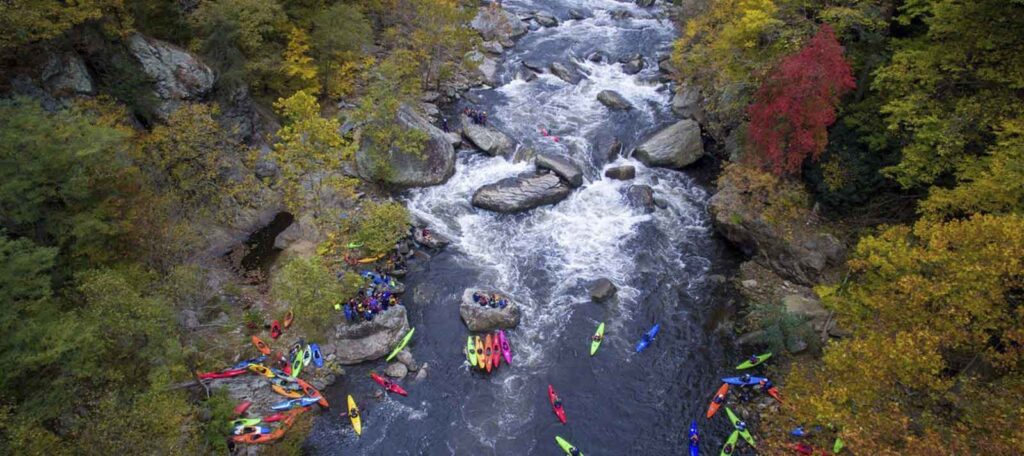
American Rivers' River Restoration Projects
Rivers in the United States are littered with dams, culverts, and other barriers that impede fish passage, degrade water quality, and damage rivers. The map below depicts a subset of the hundreds of restoration projects that have or are being undertaken around the country in an effort to heal our rivers and strike a balance between human need and the natural environment. These projects represent the hard work of many state and federal agencies, local municipalities, watershed groups, and other partners, often including American Rivers, and involve dam removals, retrofitting or replacing culverts, and innovative fish passage solutions. We encourage you to explore the map and learn more about these fascinating projects. |
|
Lower Montsweag Dam Removal Project
http://www.americanrivers.org/our-work/restoring-rivers/dam-removal-map/lower-montsweag-dam-removal.html
Montsweag Brook, Back River/Sheepscot River System
The Chewonki Foundation will remove Lower Montsweag Brook Dam to restore native diadromous and resident fisheries resources. Dam removal will open 3 miles of fish passage and allow for restoration of approximately 20 acres of riparian habitat currently flooded by the impoundment. This project was funded in part through a partnership between the NOAA Community-based Restoration Program and American Rivers.
43.968611
-69.720278
In 1968, Maine Yankee Atomic Power Company built a concrete dam on lower Montsweag Brook in Wiscasset and Woolwich to supply emergency water for their facility on Bailey Point. Since the closure of Maine Yankee in 1997, this dam and its impoundment no longer serve a beneficial purpose. Located about ¼ mile above head of tide, lower Montsweag Dam (“the dam”) acts as an impassable barrier for diadromous and resident fish in the brook. As a component of a Natural Resources Damages Plan and Settlement Agreement (NRD) between Maine Yankee and the State of Maine, the Chewonki Foundation was given the dam and an easement along the east side of the brook that stretches three miles upstream to a smaller dam owned by Central Maine Power. The Chewonki Foundation will remove Lower Montsweag Brook Dam to restore native diadromous and resident fisheries resources, including American eel, river herring, and brook trout. Dam removal will open 3 miles of fish passage and allow for restoration of approximately 20 acres of riparian habitat currently flooded by the impoundment. This project was funded in part through a partnership between the NOAA Community-based Restoration Program and American Rivers.
Marsh Creek Fish Passage Restoration
http://www.americanrivers.org/our-work/restoring-rivers/dam-removal-map/marsh-creek-fish-passage-restoration.html
Marsh Creek
The fish ladder on Marsh Creek, upstream from Dutch Slough in the Bay Delta, enables salmon to bypass a 6-foot high dam and access 7 miles of salmon habitat upstream.
37.9581
-121.6874
The fish ladder installed on Marsh creek enables fall run Chinook salmon to pass over a 6-foot high dam on Marsh Creek and access 7 miles of upstream spawning habitat. Marsh Creek is the first tributary encountered by salmon returning from the ocean through the Sacramento-San Joaquin Delta. Salmon spawned in Marsh Creek will enter the Delta in a prime location: adjacent to Dutch Slough, one of the largest habitat restoration projects in the Delta. This project was funded by the California Coastal Conservancy, the California Department of Water Resources, the Contra Costa County Flood Control and Water Conservation District, and a partnership between the NOAA Community-based Restoration Program and American Rivers, among others.
Bear Creek Fish Passage Project
http://www.americanrivers.org/our-work/restoring-rivers/dam-removal-map/bear-creek-fish-passage-project.html
South Fork Bear Creek, Mattole River Watershed
Two undersized culverts were replaced with new pre-fabricated bridges. These bridges were constructed in the headwaters of South Fork Bear Creek. The bridges are a quarter of a mile apart from each other and open up 2.5 miles of anadromous fish habitat. These bridges were constructed in the headwaters of South Fork Bear Creek. The bridges are a quarter of a mile apart from each other and open up 2.5 miles of anadromous fish habitat. This project was funded in part through a partnership between the NOAA Community-based Restoration Program and American Rivers.
40.029
-124.015
Two undersized culverts were replaced with new pre-fabricated bridges. These bridges were constructed in the headwaters of South Fork Bear Creek. The bridges are a quarter of a mile apart from each other and open up 2.5 miles of anadromous fish habitat. This project was funded in part through a partnership between the NOAA Community-based Restoration Program and American Rivers. As a result of the barrier removal, coho salmon, Chinook salmon, and steelhead now have access to critical spawning and rearing habitats at all life cycle stages.
Squaw Creek Culvert Replacement Project
http://www.americanrivers.org/our-work/restoring-rivers/dam-removal-map/squaw-creek-culvert-replacement-project.html
Squaw Creek
This project involved the removal of an existing culvert, which is undersized and perched above the creek, that is a partial to full fish passage barrier and replacing it with an open-bottom, arch structure. Replacement of the existing culvert will restore access to approximately 3.6 miles of upstream spawning and early rearing habitat. This project was funded in part through a partnership between the NOAA Community-based Restoration Program and American Rivers.
Idaho
45.42
-116.36
This project involved the removal of an existing culvert, which is undersized and perched above the creek, that is a partial to full fish passage barrier and replacing it with an open-bottom, arch structure. Replacement of the existing culvert will restore access to approximately 3.6 miles of upstream spawning and early rearing habitat. This project was funded in part through a partnership between the NOAA Community-based Restoration Program and American Rivers.
Unnamed Dam Removal
http://www.americanrivers.org/our-work/restoring-rivers/dam-removal-map/unnamed-dam-removal.html
Jordan Creek
This dam was owned by GEO Specialty Chemicals and was built in 1920 for industrial purposes. The 3-foot tall by 70-foot long concrete dam was removed in 2009 and has resulted in restoration of two river miles for aquatic species and improved water quality. This project was funded in part through an American Rivers-PA DEP Growing Greener grant.
40.634479
-75.532574
This dam was owned by GEO Specialty Chemicals and was built in 1920 for industrial purposes. The 3-foot tall by 70-foot long concrete dam was removed in 2009 and has resulted in restoration of two river miles for aquatic species and improved water quality. This project was funded in part through an American Rivers-PA DEP Growing Greener grant.
Pennypack Creek Restoration
http://www.americanrivers.org/our-work/restoring-rivers/dam-removal-map/pennypack-creek-restoration.html
Pennypack Creek
The Frankford and Rhawn Street dams were removed as part of a watershed effort to improve fish passage for migratory species. This project was funded in part through an American Rivers-PA DEP Growing Greener grant.
Frankford Ave. Dam
40.044799
-75.020623
Frankford Dam, owned by the City of Philadelphia, was approximately 10 to 15-foot high by approx. 150-foot long. Although storms created breaches in the dam, the remaining debris continued to impede fish migration. The dam was removed in 2006, but some portions of the dam were left in place to preserve the historical integrity of the remaining infrastructure. The project allows fish passage and helps restore the ecological health of Pennypack Creek. This project was funded in part through an American Rivers-PA DEP Growing Greener grant.
West Branch Little Conestoga Restoration
http://www.americanrivers.org/our-work/restoring-rivers/dam-removal-map/west-branch-little-conestoga-restoration.html
West Branch Little Conestoga Creek
This 2-foot tall by 10-foot long dam was removed as part of a 2,500 foot riparian and instream habitat improvement project featuring the removal of 2 small dams and the replanting of riparian vegetation. Funding was provided in part by an American Rivers-PA DEP Growing Greener grant.
Mann Dam Upper
40.001174
-76.406659
This 2-foot tall by 10-foot long dam was removed as part of a 2,500 foot riparian and instream habitat improvement project featuring the removal of 2 small dams and the replanting of riparian vegetation. Funding was provided in part by an American Rivers-PA DEP Growing Greener grant.
Howell Dam Removal
http://www.americanrivers.org/our-work/restoring-rivers/dam-removal-map/howell-dam-removal.html
Tributary of Little Sewickley Creek
This 23-foot tall by 837-foot long earten dam was originally built in 1910 for water supply for coke production. No longer in use, the removal of this high-hazard structure has improved water quality and includes the restoration of several acres of riparian habitat. The project was funded in part through an American Rivers-PA DEP Growing Greener grant.
40.2856231
-79.7088073
This 23-foot tall by 837-foot long earten dam was originally built in 1910 for water supply for coke production. No longer in use, the removal of this high-hazard structure has improved water quality and includes the restoration of several acres of riparian habitat. The project was funded in part through an American Rivers-PA DEP Growing Greener grant.
Graceland Dam Removal
http://www.americanrivers.org/our-work/restoring-rivers/dam-removal-map/graceland-dam-removal.html
trib. Neshannock Creek
This 17-foot by 30-foot dam was removed to eliminate a public safety hazard and provide access to several miles of habitat for fish and other aquatic species. The project was funded in part through an American Rivers-PA DEP Growing Greener grant.
41.022454
-80.323764
Originally 17-foot high by 30-foot long, the dam was breached to 4 feet in height by several storms and high water events. Built in the 1930s out of earth and stone with concrete, the dam was originally meant to create an ornamental pool. The dam exacerbated localized flooding and erosion, causing degradation of the streambank near the dam. At an estimated cost of $30,000 for removal, taking out the dam eliminated a public safety hazard caused by the highly unstable and partially breached structure and opened several miles of habitat to fish and other aquatic species. The project was funded in part through an American Rivers-PA DEP Growing Greener grant.
Reedsville Dam Removal
http://www.americanrivers.org/our-work/restoring-rivers/dam-removal-map/reedsville-dam-removal.html
Tea Creek
This 14-foot high by 47-foot long dam was removed to eliminate erosion and restore the ecological health of the stream by creating a more stable channel. The project was funded in part through an American Rivers-PA DEP Growing Greener grant.
40.666459
-77.599055
Constructed as a mill dam in the 1970s, the Reedsville Milling Company Dam was 14-foot high by 47-foot long. It had a timber crib and a body of rock and concrete and had been reinforced and updated several times. The primary objective of the removal was to restore the ecological health of the stream by stabilizing the stream channel. This dam had already been drawn down under an emergency permit. The impoundment had significant sedimentation, and the project required extensive stream restoration. The dam removal was completed in October 2004. Estimated costs for the removal were $70,000. The project was funded in part through an American Rivers-PA DEP Growing Greener grant.
Smethport Reservoir Dam Removal
http://www.americanrivers.org/our-work/restoring-rivers/dam-removal-map/smethport-reservoir-dam-removal.html
Blacksmith Run
Originally built in 1881, this 21-foot tall by 105-foot long, high hazard dam was removed in 2009. The removal restored 1.9 river miles for wild reproducing brook trout. The project was funded in part through an American Rivers-PA DEP Growing Greener grant.
41.809786
-78.494337
Originally built in 1881, this 21-foot tall by 105-foot long, high hazard dam was removed in 2009. The removal restored 1.9 river miles for wild reproducing brook trout. The project was funded in part through an American Rivers-PA DEP Growing Greener grant.
Cedar Creek Culvert Replacement
http://www.americanrivers.org/our-work/restoring-rivers/dam-removal-map/cedar-creek-culvert-replacement.html
Cedar Creek in the Molalla River Watershed
The Native Fish Society, in cooperation with land owner Weyerhaeuser Company, will remove the two metal culverts and one wood culvert at the Cedar Creek crossing on S. Molalla Forest Road and replace it with a double-lane bridge. The project will reestablish wild winter steelhead access to 2.5 miles of historically important spawning and rearing habitat. Cedar Creek is also a tributary to the Molalla River, where we are working with the Molalla River Alliance to pursue Wild and Scenic designation for almost 22 miles of the river. This project is funded in part through a partnership between the NOAA Community-based Restoration Program and American Rivers.
45.100278
-122.523889
The Native Fish Society, in cooperation with land owner Weyerhaeuser Company, will remove the two metal culverts and one wood culvert at the Cedar Creek crossing on S. Molalla Forest Road and replace it with a double-lane bridge. The project will reestablish wild winter steelhead access to 2.5 miles of historically important spawning and rearing habitat. Cedar Creek is also a tributary to the Molalla River, where we are working with the Molalla River Alliance to pursue Wild and Scenic designation for almost 22 miles of the river. This project is funded in part through a partnership between the NOAA Community-based Restoration Program and American Rivers.
Mill River Restoration
http://www.americanrivers.org/our-work/restoring-rivers/dam-removal-map/mill-river-restoration.html
Mill River
The Southeastern Regional Planning and Economic Development District (SRPEDD) is leading a partnership to restore river connectivity and habitat, provide fish passage, and improve public safety at four dams (Taunton State Hospital, West Brittania, Whittenton Pond and Morey’s Bridge dams) on the Mill River, in Taunton, MA. This study was funded in part through a partnership between the NOAA Community-based Restoration Program and American Rivers.
41.919003
-71.101467
The Southeastern Regional Planning and Economic Development District (SRPEDD) is leading a partnership to restore river connectivity and habitat, provide fish passage, and improve public safety at four dams (Taunton State Hospital, West Brittania, Whittenton Pond and Morey’s Bridge dams) on the Mill River, in Taunton, MA. With the exception of Morey’s Bridge Dam at Lake Sabbatia, the dams are no longer serving their intended purposes and are candidates for removal. Morey’s Bridge Dam, at Lake Sabbatia, is not a removal candidate as Lake Sabbatia is a high use, recreational resource for Taunton and surrounding communities, but is in the planning stages for alternative fish passage. This Mill River study was funded in part through a partnership between the NOAA Community-based Restoration Program and American Rivers.
Koinonia Culvert Retrofit Project
http://www.americanrivers.org/our-work/restoring-rivers/dam-removal-map/koinonia-culvert-retrofit.html
Shingle Mill Gulch
This project involves the removal of one failing undersized culvert and replace it with a bridge. The implementation of this bridge project will allow full access for South-Central California Coast steelhead to approximately 1.3 miles of potential spawning and rearing habitat. This project was funded in part through a partnership between the NOAA Community-based Restoration Program and American Rivers.
37.045108
-121.809431
This project involves the removal of one failing undersized culvert and replacing it with a bridge. The implementation of this bridge project will allow full access for South-Central California Coast steelhead to approximately 1.3 miles of potential spawning and rearing habitat. The current entrance to the property has been reduced due to failure of the existing culvert. The narrow and incorrectly aligned entrance to the property makes access challenging for large school and emergency vehicles. The installation of the bridge will allow for increased access for the purposes of these vehicles, thus improving public safety. This project was funded in part through a partnership between the NOAA Community-based Restoration Program and American Rivers.
Sharrer Mill Dam Removal
http://www.americanrivers.org/our-work/restoring-rivers/dam-removal-map/sharrer-mill-dam-removal.html
Conewago Creek
This 6.5-foor high by 260-foot long dam was removed in order to eliminate a safety hazard and restore natural riverine function. The project was funded in part through an American Rivers-PA DEP Growing Greener grant.
39.906321
-77.100712
Sharrer's Mill Dam was originally constructed for use by a flour mill. The dam was no longer in operation, but the mill building is still used to mix livestock feed. The dam was 6.5-foot high and 260-foot long. In recent years the Conewago Creek breached the south side of the dam, causing safety and ecological concerns that prompted the proposal to remove the dam. The project removed the portion of the dam that lies across the stream channel, leaving the abutments in place on either side of the bank for stability and posterity. The removal took place in 2005. The project was funded in part through an American Rivers-PA DEP Growing Greener grant.
West Henniker Dam Removal
http://www.americanrivers.org/our-work/restoring-rivers/dam-removal-map/west-henniker-dam-removal.html
Contoocook River
This 10-foot high by 130-foot long concrete dam was removed to restore access to 15 miles of habitat for juvenile Atlantic salmon, American eel and trout. The project was funded in part through a national partnership between the NOAA Community-based Restoration Program and American Rivers.
43.1666
-71.8418
This 10-foot by 130-foot concrete gravity dam was originally built for a paper mill. Since the early 1980s, however, the dam had not served any purpose. Because the site, which was owned by the town of Henniker, is heavily contaminated, it is considered a Brownfield by the U.S. Environmental Protection Agency and thus requires emergency action. Removal of the dam occurred during summer 2004. The project restored 15 miles of Contoocook River from Hillsborough to Hopkinton to free-flowing condition, which is expected to benefit juvenile Atlantic salmon, American eel, and trout. The project was funded in part through a national partnership between the NOAA Community-based Restoration Program and American Rivers.
Plymco and Off-Billington St. Dam Removals
http://www.americanrivers.org/our-work/restoring-rivers/dam-removal-map/plymco-and-off-billington-st.html
Town Brook
The project will result in the restoration and enhancement of self-sustaining populations of migratory fish through the removal of Off Billington Street and Plymco Dams. The project will restore high quality upstream habitat and will be significant with respect to the length of total stream miles made accessible along Town Brook. This project was funded in part through a partnership between the NOAA Community-based Restoration Program and American Rivers.
41.949
-70.6742
The project will result in the restoration and enhancement of self-sustaining populations of migratory fish through the removal of Off Billington Street and Plymco Dams. The project will restore high quality upstream habitat and will be significant with respect to the length of total stream miles made accessible along Town Brook. The removal of the two dams is part of the Town Brook Herring Run Restoration Program, a comprehensive effort to restore the anadromous fish runs and functional values of Town Brook. This program will directly benefit alewife, blueback herring, white perch and American eel, as well as resident species. The removal of the Off Billington Street Dam and the Plymco Dam will result in 0.75 miles of unobstructed river (half of the rivers total length). Dam removal will also allow for increased migration within the river system and potentially improve fishery-related ecological functions of bordering vegetated wetlands and other riparian habitats such as detritus breakdown and export and de-nitrification processes. The project will also have significant social and recreational benefits through its contributions to the Town Brook Greenway. This project was funded in part through a partnership between the NOAA Community-based Restoration Program and American Rivers.
Nestle Dam
http://www.americanrivers.org/our-work/restoring-rivers/dam-removal-map/nestle-dam.html
trib. Pigeon Creek
This small dam was removed in fall 2007 to reconnect aquatic habitat and restore native riparian vegetation. The project was funded in part through an American Rivers-PA DEP Growing Greener grant.
40.198171
-75.683283
This small dam was removed in fall 2007 to reconnect aquatic habitat and restore native riparian vegetation. The project was funded in part through an American Rivers-PA DEP Growing Greener grant.
Lower and Upper Shannock Falls Diadromous Fish Passage Restoration
http://www.americanrivers.org/our-work/restoring-rivers/dam-removal-map/lower-upper-shannock-falls-restoration.html
Pawcatuck River
This project entailed studying feasibility and design of removing the Lower Shannock Falls Dam in order to provide access to spawning habitat for migratory fish species. This project was funded in part through a partnership between the NOAA Community-based Restoration Program and American Rivers.
41.4482
-71.6445
This project entailed studying feasibility and design of removing the Lower Shannock Falls Dam in order to provide access to spawning habitat for migratory fish species. It is part of multi phased approach to restoring diadromous fish passage to the Upper Pawcatuck River and allowing access by these migratory species to nearly 1300 acres of upstream spawning and nursery habitat. This project was funded in part through a partnership between the NOAA Community-based Restoration Program and American Rivers.
Horse Creek Dam Removal
http://www.americanrivers.org/our-work/restoring-rivers/dam-removal-map/horse-creek-dam-removal.html
Horse Creek
This 9-foot high dam was originally built in 1968 to capture debris and was removed to improve habitat for steelhead. The project was funded in part through a national partnership between the NOAA Community-based Restoration Program and American Rivers.
34.8374
-120.0165
This 9-foot high dam was originally built in 1968 to capture debris and was removed to improve habitat for steelhead. The project was funded in part through a national partnership between the NOAA Community-based Restoration Program and American Rivers.
Hemlock Dam Removal
http://www.americanrivers.org/our-work/restoring-rivers/dam-removal-map/hemlock-dam-removal.html
Trout Creek
Hemlock Dam, a 26-foot high, 183-foot long concrete structure was removed in order to improve passage for Lower Columbia River steelhead, a fish listed as Threatened under the Endangered Species Act. This project will provide unobstructed passage to over 15 miles of excellent habitat upstream of the dam. This project was funded in part through a partnership between the NOAA Community-based Restoration Program and American Rivers.
45.8023
-121.9315
Hemlock Dam, a 26-foot high, 183-foot long concrete structure was removed in order to improve passage for Lower Columbia River steelhead, a fish listed as Threatened under the Endangered Species Act. This project will provide unobstructed passage to over 15 miles of excellent habitat upstream of the dam, will reduce water temperatures by eliminating the reservoir, and will restore natural channel processes throughout lower Trout Creek by restoring movement of substrate and woody debris. This project was funded in part through a partnership between the NOAA Community-based Restoration Program and American Rivers.
Heischman's Mill Fish Passage Demonstration Project
http://www.americanrivers.org/our-work/restoring-rivers/dam-removal-map/heischman-s-mill-fish-passage-demonstration-project.html
Conodoguinet Creek
Approximately 6-foot tall by 162-foot wide, the rock-filled timber crib dam was constructed in approximately 1800 to provide power for a gristmill. Because removal was not an option at this site, a nature-like bypass channel was constructed to provide fish passage. This project was funded in part through a partnership between the NOAA Community-based Restoration Program and American Rivers.
40.2557
-76.9278
Approximately 6-foot tall by 162-foot wide, the rock-filled timber crib dam was constructed in approximately 1800 to provide power for a gristmill. Because of historic interests in the Heishman Mill Dam and the owner’s desire to retain the structure, the option of removing the dam was taken off the table. A variety of fish passage alternatives were assessed during the preliminary weeks of the project with a strong emphasis (and interest) in pursuing a more nature-like approach to fish passage. While the short-term objectives of the project were to provide fish passage for the target species listed above, long-term project objectives included the desire to restore some form of natural riverine function to this portion of Conodoguinet Creek.This project was funded in part through a partnership between the NOAA Community-based Restoration Program and American Rivers.
Harry Pursel Dam Breach
http://www.americanrivers.org/our-work/restoring-rivers/dam-removal-map/harry-pursel-dam-breach.html
Lopatcong Creek
This 15-foot high dam was removed in order to remove a liability for the owner and restore access to 10 miles of habitat for migratory species. This project was funded in part through a partnership between the NOAA Community-based Restoration Program and American Rivers.
40.6772
-75.17
This 15-foot high dam was originally built in 1925 to provide water for a working mill owned by Henry Pursel. By 1945, the mill was converted into a local Agway store. More recently, the mill dam was in a state of disrepair, having been listed as a significant hazard by New Jersey dam safety officials. Because the dam outlived its original purpose and was a liability, the owner agreed to remove most of the structure. The dam was the only blockage on Lopatcong Creek, and its removal opened up 10 miles of additional spawning habitat for American shad and other migratory species. Since its removal, flooding impacts have also decreased at the site. This project was funded in part through a partnership between the NOAA Community-based Restoration Program and American Rivers.
Green River Restoration
http://www.americanrivers.org/our-work/restoring-rivers/dam-removal-map/green-river-restoration.html
Green River
The goal of the Green River Restoration Project is to remove the Wiley & Russell and Mill Street Dams and install fishways at the Greenfield Swimming Pool and Water Supply Dams. Removal of the lower two dams will open up 2.5 miles of migratory fisheries habitat. This study was funded in part through a partnership between the NOAA Community-based Restoration Program and American Rivers.
42.5808
-72.5997
The overall goal of the Green River Ecosystem Restoration Project is to remove the Wiley & Russell and Mill Street Dams and install fishways at the Greenfield Swimming Pool and Water Supply Dams. Removal of the lower two dams will open up 2.5 miles of migratory fisheries habitat. However, this project is in the context of the whole Green River Ecosystem Restoration Project which will provide fish passage at the upper two dams as well, resulting in 19.1 miles of mainstream Green River plus additional tributary spawning habitat for an estimated total of 94 miles. This study was funded in part through a partnership between the NOAA Community-based Restoration Program and American Rivers.
Frenchman's Creek Fish Passage Project
http://www.americanrivers.org/our-work/restoring-rivers/dam-removal-map/frenchman-s-creek-fish-passage-project.html
Frenchman's Creek
The project removed a perched culvert at an agricultural creek crossing and replaced it with a clearspan bridge and boulder weir pools. Steelhead and other species now have access to 4.4 miles of additional spawning habitat. This project was funded in part through a partnership between the NOAA Community-based Restoration Program and American Rivers.
37.5014
-122.4371
The project removed a perched culvert at an agricultural creek crossing and replaced it with a clearspan bridge and boulder weir pools. Previous conditions prevented all steelhead migration above the culvert, eliminating access to the upper 2.1 miles of the creek – the most valuable spawning and rearing habitat within this stream system. Steelhead and other species now have access to 4.4 miles of additional spawning habitat. This project was funded in part through a partnership between the NOAA Community-based Restoration Program and American Rivers.
Easton and Chain Dams Fish Passage Feasibility Study
http://www.americanrivers.org/our-work/restoring-rivers/dam-removal-map/easton-chains-fish-passage-feasibility-study.html
Lehigh River
The goal of the Billington Street Dam removal was the restoration of fish passage and improved habitat and stream function. This project was funded in part through a partnership between the NOAA Community-based Restoration Program and American Rivers.
40.688958
-75.205156
This project will examine the feasibility of further improving fish passage and enhancing riverine habitat at these two dams on the Lehigh. Monitoring at Easton Dam and Chain Dam fishways has determined that shad passage is insufficient to support the restoration effort and all options to improve fishway efficiency from an engineering and operations perspective have been exhausted. It has been determined that full dam removal or partial dam removal with a redesigned fishway (rock ramp) are the approaches with the highest likelihood of success to improve fish passage to levels that will support return of a healthy American shad population to the Lehigh watershed. This project is necessary to fully explore the last available fish passage alternatives while maintaining primary services of the dams. This project is funded in part through a partnership between the NOAA Community-based Restoration Program and American Rivers.
Chico Creek Instream Habitat Restoration
http://www.americanrivers.org/our-work/restoring-rivers/dam-removal-map/chico-creek-instream-habitat-restoration.html
Chico Creek
The goal of the Chico Creek restoration project was to remove artificial weirs blocking passage for salmon and other species and to improve the natural stream gradient. Installation of large woody debris as a component of this project served to increase channel complexity and improve available habitat. This project was funded in part through a partnership between the NOAA Community-based Restoration Program and American Rivers.
47.5842
-122.7222
The goal of the Chico Creek restoration project was to remove artificial weirs blocking passage for salmon and other species and to improve the natural stream gradient. Installation of large woody debris as a component of this project served to increase channel complexity and improve available habitat. This project was funded in part through a partnership between the NOAA Community-based Restoration Program and American Rivers.
Benbow Dam Removal Design Project
http://www.americanrivers.org/our-work/restoring-rivers/dam-removal-map/benbow-removal-design-project.html
Eel River
Benbow Dam is a 15 foot tall flashboard dam that is operated seasonally as a recreational facility. Its removal is being designed to alleviate a liability for California State Parks and to restore access to upstream habitat for chinook salmon, coho and steelhead. This project is funded in part through a partnership between the NOAA Community-based Restoration Program and American Rivers.
40.066667
-123.791667
Benbow Dam is a 15 foot tall flashboard dam that is operated seasonally as a recreational facility. Its removal is being designed to alleviate a liability for California State Parks and to restore access to upstream habitat for chinook salmon, coho and steelhead. The design will also attempt to assess new recreational opportunities, including development of deep holes for use as both fish habitat and swimming holes. A goal of the project being to improve fishing opportunities, access for kayaks, canoes, drift boats. This project is funded in part through a partnership between the NOAA Community-based Restoration Program and American Rivers.
York Creek Fish Passage
http://www.americanrivers.org/our-work/restoring-rivers/dam-removal-map/york-creek-fish-passage.html
York Creek
The goals of this project were to remove the York Creek Diversion Dam in order to restore 2 miles of habitat for steelhead and other migratory species. This project was funded in part through a partnership between the NOAA Community-based Restoration Program and American Rivers.
38.509
-122.496
The goals of this project were to remove the York Creek Diversion Dam in order to restore 2 miles of habitat for steelhead and other migratory species. This project was funded in part through a partnership between the NOAA Community-based Restoration Program and American Rivers.
West Winterport Dam Removal
http://www.americanrivers.org/our-work/restoring-rivers/dam-removal-map/west-winterport-dam-removal.html
Marsh Stream, Penobscot River Watershed
The Maine Council of the Atlantic Salmon Federation will remove the West Winterport Dam on Marsh Stream, a tributary of the lower Penobscot River. The project will restore a 4.5 mile long impoundment to its natural riverine condition and restore access to more than 20 miles of river habitat for a variety of native sea-run fish species. This project is funded in part through a partnership between the NOAA Community-based Restoration Program and American Rivers.
44.622222
-68.95
The Maine Council of the Atlantic Salmon Federation will remove the West Winterport Dam on Marsh Stream, a tributary of the lower Penobscot River. The project will restore a 4.5 mile long impoundment to its natural riverine condition and restore access to more than 20 miles of river habitat for a variety of native sea-run fish species. The North Branch of Marsh Stream has suitable spawning and nursery habitat for a number of anadromous fish species, including Atlantic salmon, sea-run brook trout, alewives, blueback herring, sea lamprey, rainbow smelt and American shad, as well as adult habitat for the catadromous American eel. This project is funded in part through a partnership between the NOAA Community-based Restoration Program and American Rivers.
Willamette River Fish Passage
http://www.americanrivers.org/our-work/restoring-rivers/dam-removal-map/willamette-river-fish-passage.html
Willamette River
This project will remove three partial fish passage barriers, open up two-miles of historic side-channel, and provide cold water, off-channel refugia to native salmonids. Specifically, we plan to breach the inlet and outlet dikes on Mission Slough and replace three failing corrugated pipe culverts with a bottomless arch culvert. This project was funded in part through a partnership between the NOAA Community-based Restoration Program and American Rivers.
45.0521
-123.0235
This project will remove three partial fish passage barriers, open up two-miles of historic side-channel, and provide cold water, off-channel refugia to native salmonids. Specifically, we plan to breach the inlet and outlet dikes on Mission Slough and replace three failing corrugated pipe culverts with a bottomless arch culvert. This project was funded in part through a partnership between the NOAA Community-based Restoration Program and American Rivers.
Strawberry Creek Fish Passage Restoration Project
http://www.americanrivers.org/our-work/restoring-rivers/dam-removal-map/strawberry-creek-fish-passage-restoration.html
Strawberry Creek
Pacific Coast Fish, Wildlife and Wetlands Restoration Association will engineer the removal and replacement of the County Transfer Station Culvert, which is an undersized and elevated box culvert, with a bridge that fully spans the natural channel bottom at grade. The project will re-establish access and habitat use to 1.6 stream miles for migratory species. It will also improve the capacity of the road to weather storm events. This project is funded in part through a partnership between the NOAA Community-based Restoration Program and American Rivers.
41.28668
-124.07866
Pacific Coast Fish, Wildlife and Wetlands Restoration Association will engineer the removal and replacement of the County Transfer Station Culvert, which is an undersized and elevated box culvert, with a bridge that fully spans the natural channel bottom at grade. The project will re-establish access and habitat use to 1.6 stream miles for threatened salmonids, including coho salmon, Chinook salmon, steelhead, as well as unlisted cutthroat trout. It will also improve the capacity of the road to weather storm events. This project is funded in part through a partnership between the NOAA Community-based Restoration Program and American Rivers.
Shear Dam Removal Project
http://www.americanrivers.org/our-work/restoring-rivers/dam-removal-map/shear-dam-removal-project.html
Calapooia River
The removal of Shear Dam is part of a watershed-wide effort to restore access for anadromous fish (winter steelhead, spring run chinook, cutthroat trout, pacific lamprey), restoring over 70 miles of barrier-free tributaries and the mainstem Calapooia Channel. Removing the Shear Dam and restoring the Calapooia-Sodom system will provide in-stream channel habitat within the complex and open the headwaters spawning grounds. This project is funded in part through a partnership between the NOAA Community-based Restoration Program and American Rivers.
44.4098456
-123.0448127
The removal of Shear Dam is part of a watershed-wide effort to restore access for anadromous fish (winter steelhead, spring run chinook, cutthroat trout, pacific lamprey), restoring over 70 miles of barrier-free tributaries and the mainstem Calapooia Channel. The removal of the Brownsville Dam in 2007 kicked off this effort and will be followed by the removal of the Sodom Dam sometime in 2010/2011. Oregon Parks and Recreation Dept (OPRD) purchased the Thompson’s Mills in 2004. The sale included a permanent easement for operating and managing the three dams associated with diverting water to the Mills: Sodom Dam, Shear Dam and Spillway Dam (Spillway Dam is not a fish passage barrier). OPRD intends to go off-line with their demonstration milling water needs and develop a plan for some other mechanism rather than depend on surface water from the diverted Calapooia River flows. This decision by OPRD means that the diversion dams are no longer necessary and these barriers to passage for two ESA threatened species, winter steelhead and spring Chinook, can be addressed. The removal of Shear Dam will also affect the greater Calapooia River’s connectivity with its floodplain. It has created a several mile long backwater in the Calapooia River that has caused sediment to deposit and raise the channel’s bed. The Calapooia channel is currently perched at an elevation several feet above the surrounding floodplain, exacerbating local flooding when the river comes out of bank. Every one-year rain event comes out of the Calapooia River banks within the Calapooia/Sodom complex due to the loss of channel capacity. This project is anticipated to alter channel conditions leading to a reduction in flooding from small, frequent storm events.
McLane and Goldman Dams Removal Study
http://www.americanrivers.org/our-work/restoring-rivers/dam-removal-map/mclane-goldman-dams-removal-study-1.html
Souhegan River
The Town of Milford and the Estate of Helen Goodwin are preparing to undertake a Feasibility Study to determine the impact of removing the McLane and Goldman dams. The development of the study is an important step and will provide the dam owners and the community an opportunity to assess the associated resources and costs. Removal of the dams would result in improving the overall ecology and removing barriers to diadromous and resident fish species. This project was funded in part through a partnership between the NOAA Community-based Restoration Program and American Rivers.
42.836778
-71.649017
The Town of Milford and the Estate of Helen Goodwin are preparing to undertake a Feasibility Study to determine the impact of removing the McLane and Goldman dams. The development of the study is an important step and will provide the dam owners and the community an opportunity to assess the associated resources and costs. If the Feasibility Study for the removal of the McLane and Goldman Dams proves feasible and economically viable, then the dam removals would restore the Souhegan River and eliminating the insufficient dissolved oxygen concentrations and build up of E.coli bacteria in the river at these two locations. Both impoundments are on the Removal of the dams would also result in improving the overall ecology and removing barriers to diadromous and resident fish species. This project will link up to the 14 miles of recently restored Souhegan River downstream of this location realized through the removal of the Merrimack Village Dam and create an unobstructed fish passage habitat through Milford, Amherst, and Merrimack to the Merrimack River. This project was funded in part through a partnership between the NOAA Community-based Restoration Program and American Rivers.
Heistand Sawmill Dam Removal
http://www.americanrivers.org/our-work/restoring-rivers/dam-removal-map/sawmill-dam-removal.html
Chiques Creek
Marietta Gravity Water Company is pursuing the future removal of the Heistand Sawmill Dam for the purpose of restoring fish passage and access to over 3.1-miles of Chiques Creek, 4.5-miles of Donegal Creek, and 4.8-miles of Little Chiques Creek. The Heistand Sawmill Dam is the first blockage on the Chiques Creek and is located approximately 611-feet upstream from the confluence with the Susquehanna River. This project is funded in part through a partnership between the NOAA Community-based Restoration Program and American Rivers.
40.055303
-76.526759
Marietta Gravity Water Company is pursuing the future removal of the Heistand Sawmill Dam for the purpose of restoring fish passage and access to over 3.1-miles of Chiques Creek, 4.5-miles of Donegal Creek, and 4.8-miles of Little Chiques Creek. The Heistand Sawmill Dam is the first blockage on the Chiques Creek and is located approximately 611-feet upstream from the confluence with the Susquehanna River. In addition to the above, there is much to be gained by removing the Heistand Sawmill Dam for the betterment of the Chiques Creek Watershed; and specifically the Donegal Creek Sub-watershed. Back in the mid 1990’s, the Donegal Fish and Conservation Association, Donegal Chapter of Trout Unlimited and the Lancaster County Conservation District undertook a major restoration effort in the Donegal Creek Watershed. This work has proven to be very successful to the point the PFBC now designates the Donegal as a wild trout stream. However the first section of Donegal Creek near the confluence with Chiques Creek never received any restoration improvements because it is within the backwater influence of the Heistand Sawmill Dam. Removing the dam will in turn remove the backwater condition thus allowing this last remaining section of the Donegal to properly recover. This project is funded in part through a partnership between the NOAA Community-based Restoration Program and American Rivers.
Willimantic Fish Passage Restoration - Boland Dam
http://www.americanrivers.org/our-work/restoring-rivers/dam-removal-map/willimantic-fish-passage-restoration.html
Willimantic River
This project involved the study of removal of the Bridge Street Dam, which blocked passage for migratory fish and is an obstacle for paddlers. This study was funded in part through a partnership between the NOAA Community-based Restoration Program and American Rivers.
41.7116
-72.2185
This project involved the study of removal of the Bridge Street Dam, which blocked passage for migratory fish and is an obstacle for paddlers. This study was funded in part through a partnership between the NOAA Community-based Restoration Program and American Rivers.
Soldier Creek Fish Passage Barrier Removal
http://www.americanrivers.org/our-work/restoring-rivers/dam-removal-map/soldier-creek-barrier-removal.html
Soldier Creek
This project removed two culverts on Soldier Creek that historically blocked access to approximately 2.1 miles of anadromous fishery habitat upstream of Evans Bar Road in Junction City, California. This project was funded in part through a partnership between the NOAA Community-based Restoration Program and American Rivers.
40.6901
-123.0293
This project removed two culverts on Soldier Creek that historically blocked access to approximately 2.1 miles of anadromous fishery habitat upstream of Evans Bar Road in Junction City, California. Both barriers are County maintained culverts that were replaced with aluminum arches. The old culvert structures did not allow for the passage of bedload and debris associated with the high flows on Soldier Creek and flooding at both sites was a common occurrence during winter storm events. This project was funded in part through a partnership between the NOAA Community-based Restoration Program and American Rivers.
Tucker Road Fish Passage Project
http://www.americanrivers.org/our-work/restoring-rivers/dam-removal-map/tucker-road-fish-passage-project.html
West Branch Soquel Creek
The goal of the Tucker Road Ford project was to remove this barrier to migratory fish, providing access to 2.5 miles of habitat and reduce sedimentation. This project was funded in part through a partnership between the NOAA Community-based Restoration Program and American Rivers.
37.0881
-121.9612
The goal of the Tucker Road Ford project was to remove this barrier to migratory fish, providing access to 2.5 miles of habitat and reduce sedimentation. Additionally, this project improved salmonid instream and rearing habitat and increased native riparian vegetation. This project was funded in part through a partnership between the NOAA Community-based Restoration Program and American Rivers.
Parson Creek Fish Passage Barrier Removal
http://www.americanrivers.org/our-work/restoring-rivers/dam-removal-map/parson-creek-fish-passage-barrier-removal.html
Parson Creek
The project corrected a fish passage problem on a logging road that crosses halfway up Parson Creek. The pre-existing culvert consisted of an undersized 4-foot diameter corrugated metal pipe that was perched 3.5 feet above the stream bed. It was replaced with a bottomless arch culvert. This project was funded in part through a partnership between the NOAA Community-based Restoration Program and American Rivers.
48.5853
-122.2864
The project corrected a fish passage problem on a logging road that crosses halfway up Parson Creek. The pre-existing culvert consisted of an undersized 4-foot diameter corrugated metal pipe that was perched 3.5 feet above the stream bed. It was replaced with a bottomless arch culvert. Removal of this barrier enabled access to nearly 2,568 feet of high quality spawning habitat favorable to coho and steelhead in the upper watershed. The Lower part of Parson Creek is also known to support Chinook, chum, and pink salmon. This project was funded in part through a partnership between the NOAA Community-based Restoration Program and American Rivers.
McGaheysville Dam Removal
http://www.americanrivers.org/our-work/restoring-rivers/dam-removal-map/mcgaheysville-dam-removal.html
South Fork of the Shenandoah River
This project involved the removal of a delapidated dam that was blocking habitat for migratory and resident fish, as well as serving as a documented safety hazard. This project was funded in part through a partnership between the NOAA Community-based Restoration Program and American Rivers.
38.3372
-78.7288
This project involved the removal of a delapidated dam that was blocking habitat for migratory and resident fish, as well as serving as a documented safety hazard. This project was funded in part through a partnership between the NOAA Community-based Restoration Program and American Rivers.
Lower Ox Pasture Brook Dam Removal
http://www.americanrivers.org/our-work/restoring-rivers/dam-removal-map/lower-ox-pasture-brook.html
Ox Pasture Brook
This project involved the removal of the 6-foot high Lower Ox Pasture Brook Dam in order to improve passage for American eel, rainbow smelt and other aquatic species. This study was funded in part through a partnership between the NOAA Community-based Restoration Program and American Rivers.
42.74
-70.8882
This project involved the removal of the 6-foot high Lower Ox Pasture Brook Dam in order to improve passage for American eel, rainbow smelt and other aquatic species. The dam's removal restored connectivity and ecological integrity for this coastal stream, restoring vital fish habitat. This study was funded in part through a partnership between the NOAA Community-based Restoration Program and American Rivers.
Mountain Charlie Gulch Instream Habitat Restoration
http://www.americanrivers.org/our-work/restoring-rivers/dam-removal-map/mountain-charlie-gulch-restoration.html
Mountain Charlie Creek
The objective of the project was to improve anadromous fish habitat in Mountain Charlie Creek by improving fish passage, and stabilizing streambanks. Specifically, this project addressed barriers comprised primarily of debris from historic logging. This project was funded in part through a partnership between the NOAA Community-based Restoration Program and American Rivers.
37.1007
-122.0448
The objective of the project was to improve anadromous fish habitat in Mountain Charlie Creek by improving fish passage, and stabilizing streambanks. Specifically, this project addressed barriers comprised primarily of debris from historic logging. This project was funded in part through a partnership between the NOAA Community-based Restoration Program and American Rivers.
Patapsco River Restoration
http://www.americanrivers.org/our-work/restoring-rivers/dam-removal-map/patapsco-river-restoration-simkins.html
Patapsco River
This 11-foot high dam is being removed in order to restore access to habitat for American eel and other species, improve water quality and to remove a potential safety hazard. This project is being removed thanks to ARRA stimulus funds provided to American Rivers by NOAA.
Simkins Dam
39.252561
-76.768556
The removal of the Simkins Dam is one of four removals anticipated on the Patapsco River and will provide more than 25 miles of mainstem habitat for migratory species such as American eel. This 11-foot high dam was originally built in the 1900s to supply water power to a textile plant. The dam currently serves no purpose after a fire destroyed the associated mill structure several years ago. Removal of the dam will occur in fall 2010 and is expected restore previously buried fish habitat, improve water quality, remove a potential safety hazard. This project is being removed thanks to ARRA stimulus funds provided to American Rivers by NOAA.
Peconic River Fishway
http://www.americanrivers.org/our-work/restoring-rivers/dam-removal-map/peconic-river-fishway.html
Peconic River
This project entails installing a rock ramp fishway at the Grangebel Park Dam. Restoration of fish passage over the Grangebel Park earthen dam on the Peconic River would re-open approximately 25 acres of prime spawning and maturation habitat for river herring and American eels, respectively. This project was funded in part through a partnership between the NOAA Community-based Restoration Program and American Rivers.
40.9158
-72.6624
This project entails installing a rock ramp fishway at the Grangebel Park Dam. Restoration of fish passage over the Grangebel Park earthen dam on the Peconic River would re-open approximately 25 acres of prime spawning and maturation habitat for river herring and American eels, respectively. This project was funded in part through a partnership between the NOAA Community-based Restoration Program and American Rivers.
Pittsburgh Plate & Glass (PPG) Dam Removal
http://www.americanrivers.org/our-work/restoring-rivers/dam-removal-map/pittsburgh-plate-glass-dam-removal.html
Potomac River
The PPG dam was a small run-of-the-river rubble dam targeted for removal to improve fish passage, increase recreational opportunities, remove liability, and restore the river to a natural free-flowing condition. This project was funded in part through a partnership between the NOAA Community-based Restoration Program and American Rivers.
39.5643
-78.7234
The PPG dam was a small run-of-the-river rubble dam originally built to provide water for the Pittsburgh Plate Glass manufacturing facility. I was removed to improve fish passage, increase recreational opportunities, remove liability, and restore the river to a natural free-flowing condition. This project was funded in part through a partnership between the NOAA Community-based Restoration Program and American Rivers.
Queseria Creek Fish Passage
http://www.americanrivers.org/our-work/restoring-rivers/dam-removal-map/queseria-creek-fish-passage.html
Queseria Creek
This project involved removal of an undersized pipe culvert and replacing it with a bottomless, arch culvert specifically designed for fish passage and a variety of flow conditions. This project was funded in part through a partnership between the NOAA Community-based Restoration Program and American Rivers.
37.044
-122.2219
This project involved removal of an undersized pipe culvert and replacing it with a bottomless, arch culvert specifically designed for fish passage and a variety of flow conditions. This project was funded in part through a partnership between the NOAA Community-based Restoration Program and American Rivers.
Reading Museum Dam Removals
http://www.americanrivers.org/our-work/restoring-rivers/dam-removal-map/reading-museums-dam-removals-1.html
Wyomissing Creek
This 3-foot high by 45-foot long upper dam was removed to relieve a financial and maintenance burden for the owner. The removal also restored access spawning habitat for migratory fish species. The project was funded in part through a partnership between NOAA Community-based Restoration Program and American Rivers, as well as an American Rivers-PA DEP Growing Greener grant.
Mirror Lake Dam
40.328333
-75.951666
Two dams on the grounds of the Reading Public Museum were removed in September 2004. The upper dam was 3-foot high and 45-foot long and was built around the turn of the century. The project was funded in part through a partnership between NOAA Community-based Restoration Program and American Rivers, as well as an American Rivers-PA DEP Growing Greener grant.
Red Brook Restoration
http://www.americanrivers.org/our-work/restoring-rivers/dam-removal-map/red-brook-restoration.html
Red Brook
The goals of the Red Brook Restoration are the long-term goal of naturalizing Red Brook and restoring its function by removing man-made structures, eliminating sources of unnatural sedimentation, and enhancing habitat for anadromous fishes, specifically salter brook trout. This project was funded in part through a partnership between the NOAA Community-based Restoration Program and American Rivers.
41.7675
-70.6358
The goals of the Red Brook Restoration are the long-term goal of naturalizing Red Brook and restoring its function by removing man-made structures, eliminating sources of unnatural sedimentation, and enhancing habitat for anadromous fishes, specifically salter brook trout. Robbins Dam was successfully removed in September 2006 by a number of partners and because of the generous contributions of cranberry bog owner, A.D. Makepeace. In 2008 and 2009, project partners returned to Red Brook to restore the remainder of the stream by removing three abandoned dams known as Lower Flume, Upper Flume, and New Way Dam. Since the Robbins Dam removal, the state’s regional fisheries manager informed project partners that he found the largest native brook trout he had ever seen in the region in Red Brook. This project was funded in part through a partnership between the NOAA Community-based Restoration Program and American Rivers.
Van Auken Culvert Removal
http://www.americanrivers.org/our-work/restoring-rivers/dam-removal-map/van-auken-culvert-removal.html
Van Auken Creek
This project involved replacing an outdated culvert with a bridge in order to facilitate fish passage and improve stream conditions. This project was funded in part through a partnership between the NOAA Community-based Restoration Program and American Rivers.
40.0537
-123.9493
This project involved replacing an outdated culvert with a bridge in order to facilitate fish passage and improve stream conditions. This resulted in improved migration for salmonids in Van Auken Creek and help prevent the catastrophic delivery sediment into this outstanding headwaters salmon spawning tributary. This project was funded in part through a partnership between the NOAA Community-based Restoration Program and American Rivers.
Saunders Creek Culvert Replacement
http://www.americanrivers.org/our-work/restoring-rivers/dam-removal-map/saunders-creek-culvert-replacement.html
Saunders Creek
The purpose of this project was to replace the existing concrete arch culvert, under Mattole Road at PM 4.5, with a new bottomless metal arch culvert on concrete grade beams that allows unobstructed fish migration. This project was funded in part through a partnership between the NOAA Community-based Restoration Program and American Rivers.
40.2515
-124.1827
The purpose of this project was to replace the existing concrete arch culvert, under Mattole Road at PM 4.5, with a new bottomless metal arch culvert on concrete grade beams that allows unobstructed fish migration. The project removed an existing migration barrier, making the upper reach of Saunders Creek available to salmonids, and provides juvenile fish migration capability as the creek dries up in the spring. In addition, the new culvert was designed to pass a 100-year flood. This will insure the passage of high flows and debris thereby reducing the potential for sediment inputs resulting from culvert failure.This project was funded in part through a partnership between the NOAA Community-based Restoration Program and American Rivers.
Satus Creek Dam Removal
http://www.americanrivers.org/our-work/restoring-rivers/dam-removal-map/satus-creek-dam-removal.html
Satus Creek
Satus Dam was an abandoned, low-head irrigation dam that was removed to facilitate fish passage for steelhead. This project was funded in part through a partnership between the NOAA Community-based Restoration Program and American Rivers.
46.2676
-120.2847
Satus Dam was an abandoned, low-head irrigation dam that was removed to facilitate fish passage for steelhead. The project improved downstream migration for steelhead and allowed juveniles access to quality summering habitat. This project was funded in part through a partnership between the NOAA Community-based Restoration Program and American Rivers.
Rockland Mill Dam Removal and Streambank Restoration
http://www.americanrivers.org/our-work/restoring-rivers/dam-removal-map/rockland-mill-dam-removal-streambank-restoration.html
South Fork of the Shenandoah River
The removal of the Rockland Mill Dam, a small, concrete mill dam, benefits both migratory American Eel and resident fish (White Sucker). This project was funded in part through a partnership between the NOAA Community-based Restoration Program and American Rivers.
38.3064
-78.8948
The removal of the Rockland Mill Dam, a small, concrete mill dam, benefits both migratory American Eel and resident fish (White Sucker). This project was funded in part through a partnership between the NOAA Community-based Restoration Program and American Rivers.
Lower Millstone River Fish Passage Project
http://www.americanrivers.org/our-work/restoring-rivers/dam-removal-map/lower-millstone-river-fish-passage-project.html
Lower Millstone River
This study will examine the feasibility of restoring American shad and other diadromous fish in the lower Millstone River in central New Jersey. Specifically, project will explore the possibility of removing Blackwell Mills Dam on the lower Millstone River which would open an additional 9.4 miles of the river to diadromous fish. This project was funded in part through a partnership between the NOAA Community-based Restoration Program and American Rivers.
40.4751
-74.5762
This study will examine the feasibility of restoring American shad and other diadromous fish in the lower Millstone River in central New Jersey. Specifically, project will explore the possibility of removing Blackwell Mills Dam on the lower Millstone River which would open an additional 9.4 miles of the river to diadromous fish. This project was funded in part through a partnership between the NOAA Community-based Restoration Program and American Rivers.
Lake Cleone Restoration
http://www.americanrivers.org/our-work/restoring-rivers/dam-removal-map/lake-cleone-restoration.html
Mill Creek
A roadway and former railroad trestle and causeway were constructed across the mouth of the lagoon; creating a barrier to fish movement and allowing an artificial freshwater lake to form. The Lake Cleone restoration sought to develop alternative project designs that would allow for natural breaching of the barrier beach. This project was funded in part through a partnership between the NOAA Community-based Restoration Program and American Rivers.
39.4891
-123.7956
A roadway and former railroad trestle and causeway were constructed across the mouth of the lagoon; creating a barrier to fish movement and allowing an artificial freshwater lake to form. Because the railroad causeway and road have become more frequently subject to coastal erosion and overtopping, State Parks is considering alternatives that would remove or replace these structures while providing restoration to the historic coastal lagoon conditions. The Lake Cleone restoration sought to develop alternative project designs that would allow for natural breaching of the barrier beach, promote natural development of channels near the mouth of the lagoon, and remove barriers to fish passage between the ocean, the lake, and Mill Creek. This project was funded in part through a partnership between the NOAA Community-based Restoration Program and American Rivers.
Kellogg Creek Dam and Culvert Design
http://www.americanrivers.org/our-work/restoring-rivers/dam-removal-map/kellogg-creek-dam-and-culvert-design.html
Kellogg Creek
Removal of the stream barrier will restore the natural riverine function of Kellogg Creek, while opening 9 river miles of upstream habitat for several threatened diadromous species. This project was funded in part through a partnership between the NOAA Community-based Restoration Program and American Rivers.
45.44
-122.64
Removal of the stream barrier will restore the natural riverine function of Kellogg Creek, while opening 9 river miles of upstream habitat for several threatened diadromous species. In addition to restoring access to upstream habitat, the project looks to improve water temperatures for several salmon species. This project was funded in part through a partnership between the NOAA Community-based Restoration Program and American Rivers.
Iron Mine Run Dam Removal
http://www.americanrivers.org/our-work/restoring-rivers/dam-removal-map/iron-mine-run-dam-removal.html
Swatara Creek
This 4-foot high by 500-foot long dam was removed to increase available habitat for migratory fish species. The project was funded in part through a partnership between NOAA Community-based Restoration Program and American Rivers, as well as an American Rivers-PA DEP Growing Greener grant.
40.206056
-76.714604
This 4-foot high by 500-foot wide dam was the first blockage across Swatara Creek upstream from the creek's confluence with the Susquehanna River and was removed in February 2006 at a cost of $83,000 to eliminate a liability and to promote migratory fish passage. The dam was owned by a private trust, but is its removal was coordinated closely with the borough of Middletown. The borough hopes to improve access for boaters and for hikers with a greenway along the creek. The project was funded in part through a partnership between NOAA Community-based Restoration Program and American Rivers and through an American Rivers-PA DEP Growing Greener grant.
Homestead Mill Dam Removal
http://www.americanrivers.org/our-work/restoring-rivers/dam-removal-map/homestead-mill-dam-removal.html
Ashuelot River
The removal of the Homestead Woolen Mills Dam would restore 27 miles of free-flowing Ashuelot River and result in numerous biological, chemical, physical and recreational benefits. The study for this removal was funded in part through a partnership between the NOAA Community-based Restoration Program and American Rivers.
42.8744
-72.3361
The removal of the Homestead Woolen Mills Dam would restore 27 miles of free-flowing Ashuelot River and result in numerous biological, chemical, physical and recreational benefits. The removal of the Homestead Dam is a critical part of the larger Ashuelot River restoration plan. Two downstream dams have already been removed (the McGoldrick and Winchester dams). The study for this removal was funded in part through a partnership between the NOAA Community-based Restoration Program and American Rivers.
Goldsboro Dam Removal
http://www.americanrivers.org/our-work/restoring-rivers/dam-removal-map/goldsboro-dam-removal.html
Fishing Creek
The dam at Goldsboro was the only blockage on the entire length of this 19-mile tributary, and was located approximately 1 mile upstream from its confluence with the Susquehanna. Its removal resulted in elimination of a fish barrier and improvement of upstream habitat. This project was funded in part through a partnership between the NOAA Community-based Restoration Program and American Rivers.
40.1531
-76.7544
The dam at Goldsboro was the only blockage on the entire length of this 19-mile tributary, and was located approximately 1 mile upstream from its confluence with the Susquehanna. Its removal resulted in elimination of a fish barrier and improvement of upstream habitat. This project was funded in part through a partnership between the NOAA Community-based Restoration Program and American Rivers.
Waterman Dam Removal
http://www.americanrivers.org/our-work/restoring-rivers/dam-removal-map/waterman-dam-removal.html
Waterman Creek
This 12-foot high, 100-year old log dam was removed to facilitate passage for migratory fish species. This project was funded in part through a partnership between the NOAA Community-based Restoration Program and American Rivers.
37.003653
-122.00288
This 12-foot high, 100-year old log dam was removed to facilitate passage for migratory fish species. This project was funded in part through a partnership between the NOAA Community-based Restoration Program and American Rivers.
Cannavina Road Culvert Replacement Project
http://www.americanrivers.org/our-work/restoring-rivers/dam-removal-map/cannavina-road-culvert-replacement-project.html
unnamed tributary to the Wind River
The goal of the project is to enable fish passage and provide habitat for Lower Columbia River Steelhead by replacing two partial culvert barriers with bottomless culverts or bridges. This project was funded in part through a partnership between the NOAA Community-based Restoration Program and American Rivers.
45.8327
-121.9303
The goal of the project is to enable fish passage and provide habitat for Lower Columbia River Steelhead by replacing two partial culvert barriers with bottomless culverts or bridges. This project was funded in part through a partnership between the NOAA Community-based Restoration Program and American Rivers.
Brandywine Fish Passage Analysis
http://www.americanrivers.org/our-work/restoring-rivers/dam-removal-map/brandywine-fish-passage-analysis.html
Brandywine River
The goal of this project is to determine the best method of restoring fish passage at Dam #1 by conducting an alternatives analysis of two possible fish passage options: a rock ramp and dam removal, coupled with either burying two water lines that are currently encased in the dam, or attaching the lines to an overhead structure such as a pedestrian bridge. This project was funded in part through a partnership between the NOAA Community-based Restoration Program and American Rivers.
39.751406
-75.547636
The goal of this project is to determine the best method of restoring fish passage at Dam #1 by conducting an alternatives analysis of two possible fish passage options: a rock ramp and dam removal, coupled with either burying two water lines that are currently encased in the dam, or attaching the lines to an overhead structure such as a pedestrian bridge. This project was funded in part through a partnership between the NOAA Community-based Restoration Program and American Rivers.
Ralph Stover Dam Removal
http://www.americanrivers.org/our-work/restoring-rivers/dam-removal-map/ralph-stover-dam-removal.html
Tohickon Creek
This 5-foot high by 70-foot long dam was removed to relieve financial and liability concerns over maintenance and upkeep costs. The project also improved habitat for aquatic species along this stream segment. The project was funded in part through an American Rivers-PA DEP Growing Greener grant.
Ralph Stover State Park
40.436257
-75.100379
In 1935, the most recent dam in Ralph Stover State Park was rebuilt at the site of a late 18th century water-powered grist mill. The 1935 dam was rebuilt for swimming and the impoundment and "beach" were maintained until the 1970s. The dam removal reconnects fragmented aquatic habitats along Lower Tohickon Creek and its tributaries and restores dynamic processes to the former impoundment area. The project is expected to benefit migratory species such as herring and American eel, as well as resident warm water fish and stocked trout. The project included funding from the Department of Conservation and Natural Resources, the FishAmerica Foundation, NOAA and an American Rivers-PA DEP Growing Greener grant.
Steeles Mill Dam Removal
http://www.americanrivers.org/our-work/restoring-rivers/dam-removal-map/steeles-mill-dam-removal.html
Hitchcock Creek
This 15-foot tall by 100-foot long dam in Rockingham, North Carolina was originally built in the late 1800s as a hydropower dam. It was removed to restore access to historic spawning habitat for American shad and American eel. This project was funded in part through a partnership between the NOAA Community-based Restoration Program and American Rivers.
34.920141
-79.82882
This 15-foot tall by 100-foot long dam in Rockingham, North Carolina was originally built in the late 1800s as a hydropower dam. It was removed to restore access to historic spawning habitat for American shad and American eel. This project was funded in part through a partnership between the NOAA Community-based Restoration Program and American Rivers.
Conococheague Creek Dam Removals
http://www.americanrivers.org/our-work/restoring-rivers/dam-removal-map/conococheague-creek-dam-removals.html
Conococheague Creek
This dam was removed in order to improve water quality and improve habitat for resident fish species. The project was funded in part through an American Rivers-PA DEP Growing Greener grant.
Siloam Dam
39.961193
-77.647886
Siloam Dam was owned by the City of Chambersburg. The dam had not been used by the city for decades and was considered a liability and an impediment to water quality and resident fish species. It was removed in June 2005, and the Conococheague Watershed Association has conducted a citizen-led monitoring effort and several stream clean-ups. The project was funded in part through an American Rivers-PA DEP Growing Greener grant.
Quarry Bridge Restoration Project
http://www.americanrivers.org/our-work/restoring-rivers/dam-removal-map/quarry-bridge-restoration-project.html
Fuller Creek
This project involved the replacement of a 48-inch culvert with a manufactured bridge along the Little North Fork Fuller Creek, Gualala River watershed. This project was funded in part through a partnership between the NOAA Community-based Restoration Program and American Rivers.
38.7101
-123.3325
This project involved the replacement of a 48-inch culvert with a manufactured bridge along the Little North Fork Fuller Creek, Gualala River watershed. The culvert was undersized for the 100-year runoff event and prone to failure, but more importantly it was a barrier to steelhead migration at most flows. This project was funded in part through a partnership between the NOAA Community-based Restoration Program and American Rivers.
Woolen Mills Dam Removal
http://www.americanrivers.org/our-work/restoring-rivers/dam-removal-map/woolen-mills-dam-removal.html
Rivanna River
The Woolen Mills Dam was removed to restore migratory fish passage for American shad and other species, opening up approximately 16.5 miles of habitat. It also provided safe passage for recreators on this popular boating river. This project was funded in part through a partnership between the NOAA Community-based Restoration Program and American Rivers.
38.0203
-78.4546
The Woolen Mills dam was built in 1830 to power a textile mill. The mills closed in 1964 and since then the dam continued to deteriorate. It is the first impediment to migratory fish traveling up the Rivanna from the James River. The Woolen Mills Dam was removed to restore migratory fish passage for American shad and other species, opening up approximately 16.5 miles of habitat. It also provided safe passage for recreators on this popular boating river. This project was funded in part through a partnership between the NOAA Community-based Restoration Program and American Rivers.
McLane and Goldman Dams Removal Study
http://www.americanrivers.org/our-work/restoring-rivers/dam-removal-map/mclane-goldman-dams-removal-study.html
Souhegan River
The Town of Milford and the Estate of Helen Goodwin are preparing to undertake a Feasibility Study to determine the impact of removing the McLane and Goldman dams. The development of the study is an important step and will provide the dam owners and the community an opportunity to assess the associated resources and costs. Removal of the dams would result in improving the overall ecology and removing barriers to diadromous and resident fish species. This project was funded in part through a partnership between the NOAA Community-based Restoration Program and American Rivers.
42.836019
-71.645506
The Town of Milford and the Estate of Helen Goodwin are preparing to undertake a Feasibility Study to determine the impact of removing the McLane and Goldman dams. The development of the study is an important step and will provide the dam owners and the community an opportunity to assess the associated resources and costs. If the Feasibility Study for the removal of the McLane and Goldman Dams proves feasible and economically viable, then the dam removals would restore the Souhegan River and eliminating the insufficient dissolved oxygen concentrations and build up of E.coli bacteria in the river at these two locations. Both impoundments are on the Removal of the dams would also result in improving the overall ecology and removing barriers to diadromous and resident fish species. This project will link up to the 14 miles of recently restored Souhegan River downstream of this location realized through the removal of the Merrimack Village Dam and create an unobstructed fish passage habitat through Milford, Amherst, and Merrimack to the Merrimack River. This project was funded in part through a partnership between the NOAA Community-based Restoration Program and American Rivers.
Bear Run Dam Removals
http://www.americanrivers.org/our-work/restoring-rivers/dam-removal-map/bear-run-dam-removals.html
Bear Run
This 4-foot high by 50-foot long stone masonry dam was removed by hand along with a larger downstream dam. The removal improves habitat and connectivity for wild reproducing brook trout. Funding was provided in part by the RK Mellon Foundation and also through an American Rivers-PA DEP Growing Greener grant.
Upper Dam
39.899127
-79.45821
This project involved the removal of two dams. The 4-foot high by 50-foot long stone masonry dam was removed by hand along with a larger downstream dam. The removals took approximately 3 days using a crew of 12 people using gas-powered jackhammers and pry bars. The removal improves habitat and connectivity for wild reproducing brook trout. Funding was provided in part by the RK Mellon Foundation and also through an American Rivers-PA DEP Growing Greener grant.
Alameda Park Dam Removal
http://www.americanrivers.org/our-work/restoring-rivers/dam-removal-map/alameda-park-dam-removal.html
Sullivan Run
Built in 1900, this dam was 9-foot tall and 180-foot long. Originally used to feed a swimming pool at an amusement park, the dam was partially breached and in poor condition. The dam's removal allowed for instream and parkland improvements. The project was funded in part through an American Rivers-PA DEP Growing Greener grant.
40.87832
-79.925591
Built in 1900, this dam was 9-foot tall and 180-foot long. Originally used to feed a swimming pool at an amusement park, the dam was partially breached and in poor condition. The dams removal allowed for instream and parkland improvements. The project was funded in part through an American Rivers-PA DEP Growing Greener grant.
Wolf Creek Restoration
http://www.americanrivers.org/our-work/restoring-rivers/dam-removal-map/wolf-creek-restoration.html
Wolf Creek
This 5.5-foot high by 105-foot long dam was removed as part of a larger effort to improve habitat for aquatic species and reduce localized flooding. The project was funded in part through an American Rivers-PA DEP Growing Greener grant.
Unnamed (Grove City) Dam
41.167222
-80.079722
Built in 1885 to power a grist mill, the 5.5-foot high by 105-foot long Upper Dam on Wolf Creek in northwestern Pennsylvania was removed in September 2004. The former impoundment area became a park following restoration, and the project had an active partnership among local businesses, conservation groups and others. The removal was part of a larger restoration effort that included removal of the Main Street dam in downtown Grove City in 2005. The project was funded in part through an American Rivers-PA DEP Growing Greener grant.
State Hospital Dam Removal
http://www.americanrivers.org/our-work/restoring-rivers/dam-removal-map/state-hospital-dam-removal.html
Mill River
The Southeastern Regional Planning and Economic Development District (SRPEDD) is leading a partnership to restore river connectivity and habitat, provide fish passage, and improve public safety at four dams (Taunton State Hospital, West Brittania, Whittenton Pond and Morey’s Bridge dams) on the Mill River, in Taunton, MA. The objective of this phase of work is to remove State Hospital Dam, the first dam fish come to on the Mill River, and open 0.4 miles of river to the next dam. This project was funded in part through a partnership between the NOAA Community-based Restoration Program and American Rivers.
41.9151
-71.097
The Southeastern Regional Planning and Economic Development District (SRPEDD) is leading a partnership to restore river connectivity and habitat, provide fish passage, and improve public safety at four dams (Taunton State Hospital, West Brittania, Whittenton Pond and Morey’s Bridge dams) on the Mill River, in Taunton, MA. By removing three dams, (and with a fish ladder installed concurrently at a fourth dam) the Mill River Habitat Restoration Project will open up access to 37 miles of riverine and natural pond habitat for river herring, American eel, and other resident fish species. The restoration of the Mill River presents an exciting opportunity to look at an entire river system within an urban setting, creating a recreational and scenic amenity for the city and its residents, as well as for the restoration of a local fishery and of the Narragansett Bay Estuary. One of the goals of the Mill River Habitat Restoration project and removal of State Hospital Dam in particular is to improve public safety in the City of Taunton. The Mill River has a long history of causing flooding and near flooding of downtown homes and businesses, due to the disrepair and mismanagement of dams. In 2005, Whittenton Pond Dam nearly failed catastrophically, forcing the evacuation of downtown Taunton. The objective of this phase of work is to remove State Hospital Dam, the first dam fish come to on the Mill River, and open 0.4 miles of river to the next dam. There are no obstructions between State Hospital Dam, the Taunton River, and Narragansett Bay. This project was funded in part through a partnership between the NOAA Community-based Restoration Program and American Rivers.
Springborn Dam Removal Feasibility Study
http://www.americanrivers.org/our-work/restoring-rivers/dam-removal-map/springborn-dam-removal-feasibility-study.html
Scantic River
This project involved the study of removal of the Springborn Dam, which is a barrier to migratory fish and a major obstacle for paddlers. This project was funded in part through a partnership between the NOAA Community-based Restoration Program and American Rivers.
41.9829
-72.5185
This project involved the study of removal of the Springborn Dam, which is a barrier to migratory fish and a major obstacle for paddlers. The present dam was built in 1901 and is no longer used for any manufacturing purposes. By removing the dam, the natural flow of the river will be restored and will help in restoring spawning and rearing habitat for migratory fish. This project was funded in part through a partnership between the NOAA Community-based Restoration Program and American Rivers.
Spring (Bethayres) Dam Removal
http://www.americanrivers.org/our-work/restoring-rivers/dam-removal-map/spring-bethayres-dam-removal.html
Pennypack Creek
This dam was removed in order to alleviate any liability concerns and the financial burden of maintenance and upkeep. Additionally, the removal restored access to 7.5 miles of habitat for migratory fish species. The project was funded in part through a national partnership between the NOAA Community-based Restoration Program and American Rivers.
40.121885
-75.072181
Spring Dam was built in the early 1900s as a water supply dam; however, the dam has not been functional for approx. 60 years. The owner, Aqua Pennsylvania, Inc., decided to remove the structure for economic, liability and environmental reasons.Its removal resulted in restored riverine function, including natural sediment transport and improved stream habitat for aquatic species. The removal opened 7.5 miles of spawning and rearing habitat in the headwaters of Pennypack Creek. Additionally, the removal reduced upstream flooding by improving the stream's storage capacity and also eliminated a public safety hazard. The project was funded in part through a national partnership between the NOAA Community-based Restoration Program and American Rivers.
Octoraro Fish Passage
http://www.americanrivers.org/our-work/restoring-rivers/dam-removal-map/octoraro-fish-passage.html
Octoraro Creek
The removal of the Octoraro Rubble Dam restored more than 14 miles of spawning habitat to migratory fish coming off the Susquehanna River. This project was funded in part through a partnership between the NOAA Community-based Restoration Program and American Rivers.
36.6953
-76.1293
The removal of the Octoraro Rubble Dam restored more than 14 miles of spawning habitat to migratory fish coming off the Susquehanna River. The state of Maryland had a unique opportunity to open an important tributary of the Susquehanna River to migratory fish through removal of a small, deteriorating dam. Built in the 1930s, the Octoraro Creek “rubble dam” was approximately 1 mile north of the confluence of Octoraro Creek and the Susquehanna River. It blocked access to prime spawning habitat for both resident and migratory fish species, as well as many other aquatic and benthic organisms, canoeists, and kayakers. This relatively pristine, wooded watershed serves as spawning and rearing habitat for alewife, blueback herring, hickory shad, and possibly American shad. During the 1980s, U.S. Fish and Wildlife Service staff counted more than 600,000 migratory blueback herring swimming up Octoraro Creek to the base of the rubble dam. With both historic and real-life cases of what an amazing fisheries resource Octoraro Creek could be, Maryland Department of Natural Resources (DNR) fisheries staff considerd it one of their top priorities. This project was funded in part through a partnership between the NOAA Community-based Restoration Program and American Rivers.
Lake Charles Dam Removal Project
http://www.americanrivers.org/our-work/restoring-rivers/dam-removal-map/lake-charles-dam-removal-project.html
Kimages Creek
The goal of this project is to remove the Lake Charles dam on Kimages Creek, Virginia. This will provide significant ecological benefits in two key areas: 1) restoration of three miles of diadromous fish habitat on Kimages Creek, and 2) restoration of approximately 60 acres of freshwater tidal and non-tidal wetlands along Kimages Creek and the James River. This project was funded in part through a partnership between the NOAA Community-based Restoration Program and American Rivers.
37.3275
-77.2035
The goal of this project is to remove the Lake Charles dam on Kimages Creek, Virginia. This will provide significant ecological benefits in two key areas: 1) restoration of three miles of diadromous fish habitat on Kimages Creek, and 2) restoration of approximately 60 acres of freshwater tidal and non-tidal wetlands along Kimages Creek and the James River. This project was funded in part through a partnership between the NOAA Community-based Restoration Program and American Rivers.
Unnamed (City of Chester) Dam Removal
http://www.americanrivers.org/our-work/restoring-rivers/dam-removal-map/unnamed-city-of-chester-dam-removal.html
Ridley Creek
This 12-foot high was removed to eliminate a known safety hazard and improve passage for migratory fish. The project was funded in part through an American Rivers-PA DEP Growing Greener grant.
39.872733
-75.371812
The locally-known Sharpless Dam, a 12-foot high concrete dam co-owned by the city of Chester and a private owner, was removed in 2005. This dam created a popular swimming hole where many documented drownings had occurred over the years. The original purpose of the 150-year-old dam was for water supply. It was the second blockage to be removed on Ridley Creek and its removal opened up an additional three miles of Ridley Creek, which drains into the Delaware River and has historic American shad use. This removal improves fish habitat and fish passage and eliminates a known safety hazard. The project was funded in part through an American Rivers-Growing Greener grant.
Sippican River Revitalization Initiative
http://www.americanrivers.org/our-work/restoring-rivers/dam-removal-map/sippican-river-revitalization-initiative.html
Sippican River
This project involves a feasibility study to assess the potential removal of the Hathaway Pond Dam, which is known to be in poor condition and degrading habitat for river herring and other migratory fish species. This project was funded in part through a partnership between the NOAA Community-based Restoration Program and American Rivers.
41.733977
-70.794221
This project involves a feasibility study to assess the potential removal of the Hathaway Pond Dam, which is known to be in poor condition and degrading habitat for river herring and other migratory fish species. This project was funded in part through a partnership between the NOAA Community-based Restoration Program and American Rivers.
Finesville Dam Removal
http://www.americanrivers.org/our-work/restoring-rivers/dam-removal-map/finesville-dam-removal.html
Musconetcong River
The Finesville Dam is a 9-foot high dam that is currently blocking some 3 miles of habitat for migratory fish on the Musconetcong River. This study was funded in part through a partnership between the NOAA Community-based Restoration Program and American Rivers.
40.6058
-75.1706
The Finesville Dam is a 9-foot high dam that is currently blocking some 3 miles of habitat for migratory fish on the Musconetcong River. The first is that that migratory and resident fish passage will be restored. It is expected that the primary migratory species will include American eel, alewife, and blueback herring, with secondary benefits through increased food supply to striped bass within the main stem of the Delaware River. This study was funded in part through a partnership between the NOAA Community-based Restoration Program and American Rivers.
Zemko Dam Fish Passage Restoration
http://www.americanrivers.org/our-work/restoring-rivers/dam-removal-map/zemko-dam-fish-passage-restoration.html
Eightmile River
The Zemko Dam was removed to restore diadromous fish passage on the East Branch of the Eightmile River. This project also prevented the immediate threat of dam failure and the associated environmental damage to downstream fish and stream habitat that would result. This project was funded in part through a partnership between the NOAA Community-based Restoration Program and American Rivers.
41.4937
-72.2832
The Zemko Dam was removed to restore diadromous fish passage on the East Branch of the Eightmile River. This project also prevented the immediate threat of dam failure and the associated environmental damage to downstream fish and stream habitat that would result. This project was funded in part through a partnership between the NOAA Community-based Restoration Program and American Rivers.
Wittlinger Dam Removal
http://www.americanrivers.org/our-work/restoring-rivers/dam-removal-map/wittlinger-dam-removal.html
Yellow Breeches Creek
This 8-foot high dam was removed eliminate a liability, as well as to improve habitat for trout and other coldwater species. This project was funded in part through an American Rivers-PA DEP Growing Greener grant.
40.14061
-77.12711
The remainder of this 8-foot high concrete dam was upstream from Hoffman Dam on the Yellow Breeches in South Middleton Township. The township partnered with American Rivers to remove the dam to eliminate liability and avoid repair costs to a deteriorating breached dam that no longer served an economic purpose. The removal also allowed for improved habitat for resident trout and reduced thermal impacts to a cold water fishery. Post-removal plans may include a water trail. This project was funded in part through an American Rivers-PA DEP Growing Greener grant.
Unnamed (Ward) Dam Removal
http://www.americanrivers.org/our-work/restoring-rivers/dam-removal-map/unnamed-ward-dam-removal.html
Smithtown Creek
This 8-foot high by 50-foot wide dam was privately owned and was removed to restore the creek and eliminate a liability. The approximate cost of both removals is $50,000. The project was funded in part through an American Rivers-PA DEP Growing Greener grant.
40.46
-75.08
Ward Dam, a 8-foot high, 50-foot wide concrete dam downstream of Lochner Dam, was also privately owned and was removed to restore the creek and eliminate a liability. The approximate cost of both removals is $50,000. The project was funded in part through an American Rivers-PA DEP Growing Greener grant.
Unnamed (Lochner) Dam Removal
http://www.americanrivers.org/our-work/restoring-rivers/dam-removal-map/unnamed-lochner-dam-removal.html
Smithtown Creek
Lochner Dam was a 7-foot high stone dam built to provide a swimming hole and was owned by a private citizen who wanted to improve the creek's water quality and fisheries habitat and eliminate a liability. The project was funded in part through an American Rivers-PA DEP Growing Greener grant.
40.458333
-75.08333
Lochner Dam was a 7-foot high stone dam built to provide a swimming hole and was owned by a private citizen who wanted to improve the creek's water quality and fisheries habitat and eliminate a liability. The project was funded in part through an American Rivers-PA DEP Growing Greener grant.
Unnamed (Irving Mill) Dam Removal
http://www.americanrivers.org/our-work/restoring-rivers/dam-removal-map/unnamed-irving-mill-dam-removal.html
Ridley Creek
This 12-foot high by 100-foot long dam was removed as part of a watershed-wide effort to improve migratory fish passage on Ridley Creek. The project was funded in part through an American Rivers-PA DEP Growing Greener grant.
39.8733
-75.3584
This 12-foot high by 100-foot dam long was removed in fall 2004. The dam served no purpose and was in an advanced state of disrepair. The structure was the first dam on Ridley Creek from the confluence of the Delaware River, and its removal opened two miles of spawning habitat for blueback herring, alewife, and possibly American and hickory shad. This project is part of a watershed effort to provide fish passage at the five dams in the Ridley Creek drainage. The project was funded in part through an American Rivers-PA DEP Growing Greener grant.
South Fork Klaskanine River Dam Removal
http://www.americanrivers.org/our-work/restoring-rivers/dam-removal-map/south-fork-klaskanine-river-dam-removal.html
South Fork Klaskanine River
The goal of this project was to remove a fish barrier to provide full time fish passage for adult and juvenile anadromous salmonid species in South Fork Klaskanine River. Removal of the dam also improved sediment delivery and large woody debris transport downstream. This project was funded in part through a partnership between the NOAA Community-based Restoration Program and American Rivers.
46.0801
-123.74
The goal of this project was to remove a fish barrier to provide full time fish passage for adult and juvenile anadromous salmonid species in South Fork Klaskanine River. Removal of the dam also improved sediment delivery and large woody debris transport downstream. This project was funded in part through a partnership between the NOAA Community-based Restoration Program and American Rivers.
Saucon Park Dam Removal
http://www.americanrivers.org/our-work/restoring-rivers/dam-removal-map/saucon-park-dam-removal.html
Saucon Creek
This 4.5-foot tall by 125-foot long concrete dam was originally built for industrial purposes. The removal of the Saucon Park Dam restored habitat for migratory fish, reduced localized flooding and improved water quality. The project was funded in part through a partnership between NOAA Community-based Restoration Program and American Rivers.
40.6009705
-75.3466744
This 4.5-foot tall by 125-foot long concrete dam was originally built for industrial purposes. The removal of the Saucon Park Dam restored habitat for migratory fish, reduced localized flooding and improved water quality. The project was funded in part through a partnership between NOAA Community-based Restoration Program and American Rivers.
Raymond Brook Pond Dam Removal
http://www.americanrivers.org/our-work/restoring-rivers/dam-removal-map/raymond-brook-pond-dam-removal.html
Raymond Brook
This 3-4 foot tall dam was in poor condition and blocking habitat for migratory fish species. Its removed restored access to more than 16 miles of quality spawning habitat. This project was funded in part through a partnership between the NOAA Community-based Restoration Program and American Rivers.
41.6148
-72.3678
The problem was an old 3-4 foot tall dam in poor condition blocking the movement of migratory fish. The dam, built for recreation about 53 years ago, was in disrepair to the point of being partially breached and water was seeping through during low flows. The 0.5 acre impoundment was filled with sediment. The natural riverine functions were inhibited by this obsolete dam. After doing sediment analysis, a freshwater mussel survey, engineering design and baseline fisheries monitoring, the Raymond Brook Pond Dam was removed and the stream channel restored to its pre-dam state of excellent tributary habitat for American eel and atlantic salmon. Connectivity was restored for 16 miles upstream with 25 miles downstream of high quality habitat. This project was in the context of a watershed-wide effort to presereve and restore habitat for migratory fish in the Salmon River watershed.
Lower Currier Creek Fish Passage and Habitat Restoration
http://www.americanrivers.org/our-work/restoring-rivers/dam-removal-map/lower-currier-creek.html
Yakima River
The Pott diversion structure was one of six relic agricultural instream barriers that were removed as part of the project. Removing these barriers to migratory fish migration and restoring the instream habitat to conditions suitable for salmon and steelhead rearing and spawning will contribute meaningfully to recovery of salmon populations in the Yakima River basin. This project was funded in part through a partnership between the NOAA Community-based Restoration Program and American Rivers.
47.005
-120.5819
The Pott diversion structure was one of six relic agricultural instream barriers that were removed as part of the project. Removing these barriers to migratory fish migration and restoring the instream habitat to conditions suitable for salmon and steelhead rearing and spawning will contribute meaningfully to recovery of salmon populations in the Yakima River basin. This project was funded in part through a partnership between the NOAA Community-based Restoration Program and American Rivers.
Palmerton Dam Removal
http://www.americanrivers.org/our-work/restoring-rivers/dam-removal-map/palmerton-dam-removal.html
Lehigh River
This 2.5-foot high by 300-foot long dam was removed to restore migratory fish runs in the Lehigh River. The project was funded in part through a partnership between NOAA Community-based Restoration Program and American Rivers, as well as an American Rivers-PA DEP Growing Greener grant.
40.791818
-75.635591
This 2.5-foot high by 300-foot long dam across the Lehigh River was considered an "orphaned" dam with no owner and was therefore a ward of the state. Its original purpose was industrial water supply. Its removal was part of an ongoing effort to restore migratory fish runs to the Lehigh River and improve fish habitat. Palmerton Dam was taken out in April 2006 at a cost of $83,000. The project was funded in part through a partnership between NOAA Community-based Restoration Program and American Rivers, as well as an American Rivers-PA DEP Growing Greener grant.
Olson Ford Fish Passage Improvement Project
http://www.americanrivers.org/our-work/restoring-rivers/dam-removal-map/olson-ford-fish-passage-improvement-project.html
West Branch Soquel Creek
The project goal is to provide salmonids unobstructed access to 4 miles of habitat by removing the lowest barrier on the West Branch of Soquel Creek. This project is focused on replacing the existing Olson Road ford, which is severely undersized and dilapidated, with an open-bottom structure to pass fish and debris. This project was funded in part through a partnership between the NOAA Community-based Restoration Program and American Rivers.
37.055556
-121.941111
The project goal is to provide salmonids unobstructed access to 4 miles of habitat by removing the lowest barrier on the West Branch of Soquel Creek. This project is focused on replacing the existing Olson Road ford, which is severely undersized and dilapidated, with an open-bottom structure to pass fish and debris. This project was funded in part through a partnership between the NOAA Community-based Restoration Program and American Rivers.
North Fork Mill Creek Culvert Removal
http://www.americanrivers.org/our-work/restoring-rivers/dam-removal-map/north-fork-mill-creek-culvert-removal.html
North Fork Mill Creek
This project involved replacing the existing culvert and replacing it with a larger, open-bottom arch culvert, with a natural bottom. Removal of this culvert ensured fish passage to five miles of high quality steelhead habitat. This project was funded in part through a partnership between the NOAA Community-based Restoration Program and American Rivers.
45.5495
-121.3098
This project involved replacing the existing culvert and replacing it with a larger, open-bottom arch culvert, with a natural bottom. Removal of this culvert ensured fish passage to five miles of high quality steelhead habitat. This project was funded in part through a partnership between the NOAA Community-based Restoration Program and American Rivers.
Mohnton Dam Removal
http://www.americanrivers.org/our-work/restoring-rivers/dam-removal-map/mohnton-dam-removal.html
Wyomissing Creek
This dam was removed in order to restore coldwater habitat for aquatic species. Additionally, the removal created more than an acre of riparian habitat for terrestrial species. The project was funded in part through a partnership between NOAA Community-based Restoration Program and American Rivers, as well as an American Rivers-PA DEP Growing Greener grant.
40.282276
-75.992488
Mohnton Dam was constructed in the mid 1800s to power an iron works mill. In the early 1900s the mill was decommissioned and the dam was converted for use as a public water supply. This second use ended in the 1970s, and the dam remained unused since that time. The dam had caused severe sedimentation of the impoundment. Dam removal restored a cold water stream and created more than an acre of riparian habitat that was planted with trees and shrubs in 2008. The project was funded in part through a partnership between NOAA Community-based Restoration Program and American Rivers, as well as an American Rivers-PA DEP Growing Greener grant.
Mixel Dam Removal
http://www.americanrivers.org/our-work/restoring-rivers/dam-removal-map/mixel-dam-removal.html
Doubling Gap Creek
This 5-foot high, 160-foot long dam spanned Doubling Gap Creek, a tributary to Conodoguinet Creek in Pennsylvania. The dam was the first barrier on Doubling Gap Creek and its removal provided several miles of tributary habitat. The dam removal was completed with a tree planting in fall 2009.
40.199953
-77.41802
This 5-foot high, 160-foot long dam spanned Doubling Gap Creek, a tributary to Conodoguinet Creek in Pennsylvania. The dam was the first barrier on Doubling Gap Creek and its removal provided several miles of tributary habitat. The dam removal was completed with a tree planting in fall 2009.
Merrimack Village Dam Removal
http://www.americanrivers.org/our-work/restoring-rivers/dam-removal-map/merrimack-village-dam-removal.html
Souhegan River.
The Merrimack Village Dam was removed to restore the river and eliminating safety and liability concerns. The removal restored some 14 miles of habitat for migratory fish. This project was funded in part through a partnership between the NOAA Community-based Restoration Program and American Rivers.
42.8622
-71.4895
The dam, which was originally built in 1907 to power a gristmill, had last served as a source of drinking water supply. However, the dam was structurally deficient and in need of repairs. The dam’s owner determined it was more beneficial to remove the dam, restoring the river and eliminating safety and liability concerns. The dam was removed in September 2008 and restored some 14 miles of habitat for migratory fish. This project was funded in part through a partnership between the NOAA Community-based Restoration Program and American Rivers.
McCoy-Linn Dam Removal
http://www.americanrivers.org/our-work/restoring-rivers/dam-removal-map/mccoy-linn-dam-removal.html
Spring Creek
This 25-foot high by 101-foot long dam was removed to restore migratory coldwater habitat for trout and other species, improve water quality and enhance recreational opportunities. The project was funded in part through an American Rivers-PA DEP Growing Greener grant.
40.931023
-77.785478
Approximately 25-foot high and 101-foot long, McCoy-Linn Dam was originally built in 1774 as a source for water power and was subsequently rebuilt several times, most recently in 1936. A run-of-the-river dam, the most recent McCoy-Linn Dam was breached several times in storm events and was in poor condition. Removal of the McCoy-Linn Dam removed a safety hazard, created a recreational area, improved downstream water quality and opened the creek for fish passage. Historical features were retained at the dam removal site. The project was funded in part through an American Rivers-PA DEP Growing Greener grant.
Maxwell Pond Dam
http://www.americanrivers.org/our-work/restoring-rivers/dam-removal-map/maxwell-pond-dam.html
Black Brook
Maxwell Pond Dam on New Hampshire’s Black Brook (a tributary of the Merrimack River) was removed in winter 2009. Multiple partners took innovative steps to remove this outdated dam and restore eight miles of free-flowing river for alewife, blueback herring, Atlantic salmon, and other migratory fish. This project was funded in part through a partnership between the NOAA Community-based Restoration Program and American Rivers.
43.010278
-71.478889
Maxwell Pond Dam on New Hampshire’s Black Brook (a tributary of the Merrimack River) was removed in winter 2009. The City of Manchester, the New Hampshire Department of Environmental Services, and other partners took innovative steps to remove this outdated dam and restore eight miles of free-flowing river for alewife, blueback herring, Atlantic salmon, and other migratory fish. The city is also planning a major park revitalization effort to complement the new free-flowing stream. The stream restoration project will improve overall water quality and get Black Brook removed from the state’s “impaired waters” list. This project was funded in part through a partnership between the NOAA Community-based Restoration Program and American Rivers.
Goff and Thock Culvert Removals
http://www.americanrivers.org/our-work/restoring-rivers/dam-removal-map/goff-and-thock-culvert-removals.html
Mattole River
This project removed two culverts in the upper Mattole River Watershed and replaced them with bridges, opening up 2.1 miles of salmonid habitat. This project was funded in part through a partnership between the NOAA Community-based Restoration Program and American Rivers.
40.033
-123.951
This project removed two culverts in the upper Mattole River Watershed and replaced them with bridges, opening up 2.1 miles of salmonid habitat as well as prevented 1300 cubic yards of sediment from entering the Mattole River watershed. Replacing these culverts with bridges also improved the natural fluvial functions such as spawning gravel transport as well as large woody debris transport. This project benefits Chinook salmon, coho salmon and steelhead trout by opening up prime spawning and rearing habitat. This project was funded in part through a partnership between the NOAA Community-based Restoration Program and American Rivers.
Lower Lloydell Dam Removal
http://www.americanrivers.org/our-work/restoring-rivers/dam-removal-map/lower-lloydell-dam-removal.html
South Fork Little Conemaugh Creek
This 5-foot high by 70-foot long dam was removed to relieve financial and liability concerns over maintenance and upkeep costs. The project also improved habitat for aquatic species along this stream segment. The project was funded in part through an American Rivers-PA DEP Growing Greener grant.
40.275
-78.685
Built around 1900 to 1910, the Lower Lloydell Intake when built was 5-foot high by 70-foot wide. The dam was originally constructed to create a water reservoir to be used by its owner, Lloydell Water Co. (a predecessor to Highland Sewer and Water Authority) to supply water, via pumping, to the coal-mining community of Dunlo/Llanfair. Removal reduces liability concerns and eliminates the financial burden of maintaining the dam. The project, which resulted in a January 2005 removal, allows for habitat restoration on the Little Conemaugh River. The project was funded in part through an American Rivers-PA DEP Growing Greener grant.
Hoffman Dam Removal
http://www.americanrivers.org/our-work/restoring-rivers/dam-removal-map/hoffman-dam-removal.html
Yellow Breeches Creek
The Hoffman Dam, built around the turn of the century to power a mill, was 8-foot high by 130-foot wide. The mill structure was no longer used as a mill, and the dam served no purpose. The dam's removal benefits the coldwater fishery in the creek and eliminates liability concerns in this popular paddling creek. Technical assistance for this project was funded in part through an American Rivers-PA DEP Growing Greener grant.
40.165837
-76.908536
The Hoffman Dam, built around the turn of the century to power a mill, was 8-foot high by 130-foot wide. The mill structure was no longer used as a mill, and the dam served no purpose. The dam's removal benefits the coldwater fishery in the creek and eliminates liability concerns in this popular paddling creek. Technical Assistance for this project was funded in part through an American Rivers-PA DEP Growing Greener grant.
Heilman Dam Removal
http://www.americanrivers.org/our-work/restoring-rivers/dam-removal-map/heilman-dam-removal.html
Mahoning Creek
The 15-foot high dam was removed in order to eliminate a public safety hazard and a liability for the Borough of Lehighton. The project also restored access to 18 miles of habitat for migratory fish species and led to the establishment of a riverfront park. The project was funded in part through a partnership between NOAA Community-based Restoration Program and American Rivers, as well as an American Rivers-PA DEP Growing Greener grant.
40.8247
-75.705
The 15-foot high municipally-owned Heilman Dam was removed in August 2007. Built in 1914 to supply water for steam-powered locomotives, the dam no longer served a purpose yet posed a public safety hazard and liability for Lehighton Borough. Removal of the dam restores fishery access to 18 miles of river upstream and provides safer conditions for the borough to establish a riverfront park. Removal of the dam and resulting water quality improvements will provide additional habitat for trout, as well as migratory fishes such as American shad and herring that are the focus of a long-term restoration effort in the Lehigh River Watershed. The project was funded in part through a partnership between NOAA Community-based Restoration Program and American Rivers, as well as an American Rivers-PA DEP Growing Greener grant.
Endersby Cutoff Culvert Removal
http://www.americanrivers.org/our-work/restoring-rivers/dam-removal-map/endersby-cutoff-culvert-remova.html
Eightmile Creek
This project involved replacing the existing Endersby Cutoff culvert and replacing it with a larger, open-bottom arch culvert, with a natural bottom. Removal of this culvert ensured fish passage to fifteen miles of high quality steelhead habitat, and at least six miles of high quality Pacific lamprey habitat. This project was funded in part through a partnership between the NOAA Community-based Restoration Program and American Rivers.
45.5032
-121.1321
This project involved replacing the existing Endersby Cutoff culvert and replacing it with a larger, open-bottom arch culvert, with a natural bottom. Removal of this culvert ensured fish passage to fifteen miles of high quality steelhead habitat, and at least six miles of high quality Pacific lamprey habitat. This project was funded in part through a partnership between the NOAA Community-based Restoration Program and American Rivers.
Ford Dam Removal
http://www.americanrivers.org/our-work/restoring-rivers/dam-removal-map/ford-dam-removal.html
Pequea Creek
This 5-foot high by 300-foot long dam was removed to reduce localized flooding, improve water quality and provide access to additional habitat for fish and other aquatic species. The project was funded in part through an American Rivers-PA DEP Growing Greener grant.
40.012776
-76.128842
This dam was originally used for water power and was constructed diagonally across the creek to divert water into a headrace. It was 5-foot high by 300-foot long and consisted of dry masonry and some timber. It was a low hazard dam. Its age was unknown, but it was first inspected and photographed by the state in 1919. The impoundment was 4 surface acres, with a maximum depth of 4 feet. A stream restoration project was being planned through a local sportsmen's group when removal was suggested as a means to restore a larger section of the river. This dam was removed in April 2006, at a cost of $46,000. The removal of this dam along with the other restoration work restores over 2 miles of Pequea Creek, reducing localized flooding, improving water quality and allowing passage for fish and other aquatic organisms. The project was funded in part through an American Rivers-PA DEP Growing Greener grant.
Goodrich Dam Removal
http://www.americanrivers.org/our-work/restoring-rivers/dam-removal-map/goodrich-dam-removal.html
Perkiomen Creek
This 12-foot high dam was removed in order to improve access to spawning habitat for migratory fish species, as well as increase boating access. The project was funded in part through a partnership between NOAA Community-based Restoration Program and American Rivers.
40.11938
-75.4581
Goodrich Dam, the first blockage on Perkiomen Creek upstream from the Schuylkill River, was removed in June 2005 as the first of six planned removals on this creek. The 12-foot high concrete and timber-crib dam was originally used to divert water for manufacturing, but its ownership had been contested for the past several years. The Montgomery County Parks Department, Perkiomen Watershed Conservancy, and other groups are working to increase boating access to the creek following these removals and are also discussing extending a hiking-biking trail along the creek to the Schuylkill River. The project was funded in part through a partnership between NOAA Community-based Restoration Program and American Rivers.
Fort Covington Dam Removal
http://www.americanrivers.org/our-work/restoring-rivers/dam-removal-map/fort-covington-dam-remova.html
Salmon River
The Fort Covington Dam was the first barrier on the Salmon River and was located five miles upstream of the Salmon River’s confluence with the St. Lawrence River. Dam removal has reestablished access to more than 37 miles of the Salmon River and tributaries and will benefit several sportfisheries that are important to the regional economy, including smallmouth bass, walleye, northern pike and muskellunge. This project was funded in part through a partnership between the NOAA Community-based Restoration Program and American Rivers.
44.5919
-74.2942
The Fort Covington Dam was the first barrier on the Salmon River and was located five miles upstream of the Salmon River’s confluence with the St. Lawrence River. The effort to remove the Fort Covington Dam began in 2001. Dam removal has reestablished access to more than 37 miles of the Salmon River and tributaries and will benefit several sportfisheries that are important to the regional economy, including smallmouth bass, walleye, northern pike and muskellunge. American eels, which have been closed to recreational fishing, but remain an important commercial fishery in the St. Lawrence/Lake Ontario region will also benefit from the dam’s removal. Lake sturgeon and Atlantic salmon may also benefit from the dam’s removal through possible stocking programs. This project was funded in part through a partnership between the NOAA Community-based Restoration Program and American Rivers.
Fish Creek Culvert Replacement
http://www.americanrivers.org/our-work/restoring-rivers/dam-removal-map/fish-creek-culvert-replacement.html
Fish Creek
This project entailed replacing two corrugated metal pipe culverts that served as a barrier to juvenile fish with a bottomless arch culvert. This project was funded in part through a partnership between the NOAA Community-based Restoration Program and American Rivers.
48.1754
-122.2242
This project entailed replacing two corrugated metal pipe culverts that served as a barrier to juvenile fish with a bottomless arch culvert. This project was funded in part through a partnership between the NOAA Community-based Restoration Program and American Rivers.
Esh Dam Removal
http://www.americanrivers.org/our-work/restoring-rivers/dam-removal-map/esh-dam-removal.html
Mill Creek
The project involved the removal of the Esh dam on Mill Creek near Bird in Hand, PA. The project addressed several problems in the watershed including barriers to fish passage, thermal and nutrient pollution, siltation, and lack of habitat. This project was funded in part through a partnership between the NOAA Community-based Restoration Program and American Rivers.
40.0379
-76.3055
The project involved the removal of the Esh dam on Mill Creek near Bird in Hand, PA. The project addressed several problems in the watershed including barriers to fish passage, thermal and nutrient pollution, siltation, and lack of habitat. Since the dam removal project was completed, additional stream bank fencing and riparian restoration projects have taken place. The predominately Amish areas of Lancaster County in the Mill Creek and Pequea Creek watersheds have seen additional dam removals and interest in dam removal. An EPA 319 project was completed in 2006 which revegetated and excluded livestock from several thousand linear feet of streambanks along Pequea Creek. This project was funded in part through a partnership between the NOAA Community-based Restoration Program and American Rivers.
Detter's Mill Dam Removal
http://www.americanrivers.org/our-work/restoring-rivers/dam-removal-map/detters-mill-dam-removal.html
Conewago Creek
This 7-foot high by 250-foot long dam was removed in order to restore access to 7 miles of spawning habitat for migratory fish species. The project was funded in part through a partnership between NOAA Community-based Restoration Program and American Rivers.
40.014166
-76.926388
Approximately 7-foot high by 250-foot long, this structure was an abandoned mill dam constructed from rock indigenous to the area. The structure was in an advanced state of disrepair that allowed water to flow through. Removal took place in June 2004 and has opened seven miles of spawning habitat for American shad, blueback herring, and American eel. In addition to restoring fish habitat, removal was the most cost effective solution for eliminating the safety concerns at the dam. The project was funded in part through a partnership between NOAA Community-based Restoration Program and American Rivers.
Circle Creek Fish Passage Project
http://www.americanrivers.org/our-work/restoring-rivers/dam-removal-map/circle-creek-fish-passage-project.html
Circle Creek
This project replaced an old pipe-style culvert was perched above the stream channel causing passage obstruction or blockage for adult diadromous fish with a bottomless arch culvert. This project was funded in part through a partnership between the NOAA Community-based Restoration Program and American Rivers.
45.929333
-123.926383
This project replaced an old pipe-style culvert was perched above the stream channel causing passage obstruction or blockage for adult diadromous fish depending on flow level, was impassable for juvenile diadromous fish, and suffered from significant water velocity problems associated with its narrow width. The project stream reach of Upper Circle Creek is widely used by a range of diadromous species, including ESA-listed (T) Oregon coastal coho, winter steelhead, Pacific and Brook lamprey, and sea-run coastal cutthroat. It was replaced with a bottomless arch culvert. This project was funded in part through a partnership between the NOAA Community-based Restoration Program and American Rivers.
Charming Forge Dam Removal
http://www.americanrivers.org/our-work/restoring-rivers/dam-removal-map/charming-forge-dam-removal.html
Tulpehocken Creek
This 7-foot high by 131-foot long dam was removed in order restore the natural flow of sediment and improve habitat for coldwater species, such as trout. Technical assistance for this project was funded in part through an American Rivers-PA DEP Growing Greener grant
40.387222
-76.171388
Built in the 1800s as a source of power for a hammer mill forge, Charming Forge Dam was 7 feet tall by 131 feet long. Its impoundment played host to warm-water fish such as carp and bullhead, and the area below the dam was stocked with trout. The heavy sedimentation caused by the dam had created a dead spot on Tulpehocken Creek. The removal project allowed this section of the Tulpehocken Creek to return to a free flowing state. Rebuilt and modified several times, it was finally removed in 2004. Technical assistance for this project was funded in part through an American Rivers-PA DEP Growing Greener grant.
Butte Creek Culvert Replacement
http://www.americanrivers.org/our-work/restoring-rivers/dam-removal-map/butte-creek-culvert-replacement.html
Butte Creek
This project involved replacing a perched culvert with a bottomless arch culvert in order to facilitate fish passage for juvenile steelhead. This project was funded in part through a partnership between the NOAA Community-based Restoration Program and American Rivers.
44.9969
-120.2117
This project involved replacing a perched culvert with a bottomless arch culvert in order to facilitate fish passage for juvenile steelhead. The long-term goal of Wheeler Soil and Water Conservation District is to open 25 miles of Butte Creek, an important steelhead spawning and rearing stream. This project was funded in part through a partnership between the NOAA Community-based Restoration Program and American Rivers.
Bronson Brook Fish Passage Improvement
http://www.americanrivers.org/our-work/restoring-rivers/dam-removal-map/bronson-brook-fish-passage-improvement.html
Bronson Brook
project was funded in part through a partnership between the NOAA Community-based Restoration Program and American Rivers.
42.4416
-72.9451
The Bronson Brook Fish Passage Improvement and Habitat Restoration project re-established fish passage through two perched culverts on Bronson Brook in Worthington, Massachusetts. Bronson Brook is a high quality coldwater tributary to the East Branch Westfield River, supporting habitat for Atlantic salmon and resident coldwater species such as Eastern brook trout and black nosed dace. Both culverts, on Dingle Road and Cummington Road, were barriers to fish passage because they were perched on their downstream ends, have very low flow depths, and have high flow velocities. In addition, a storm in August 2003 caused Dingle Road to catastrophically fail around its under-sized culvert, causing extensive streambank damage downstream and opening a 4-foot rift between the road and the culvert. Both culverts were replaced with bottomless arch culverts. This project was funded in part through a partnership between the NOAA Community-based Restoration Program and American Rivers.
Bens Creek Intake Dam Removal
http://www.americanrivers.org/our-work/restoring-rivers/dam-removal-map/bens-creek-intake-dam-removal.html
Bens Creek
This 6-foot high by 60-foot long dam was removed to relieve financial and liability concerns over maintenance and upkeep costs. The project also improved habitat for aquatic species along this stream segment. The project was funded in part through an American Rivers-PA DEP Growing Greener grant.
40.395503
-78.613997
Built around 1900 to 1905, the Ben's Creek Intake was approximately 6-foot high by 60-foot wide. The Intake was originally constructed to provide a water source to the steam locomotives along the mainline of the Pennsylvania Rail Road in the Portage and Wilmore areas. Removal reduces liability concerns and eliminates the financial burden of maintaining the dam. The removal, which occurred in 2005, allows for habitat restoration on the Little Conemaugh River. The project was funded in part through an American Rivers-PA DEP Growing Greener grant.
Alder Creek Fish Barrier Removal
http://www.americanrivers.org/our-work/restoring-rivers/dam-removal-map/alder-creek-fish-barrier.html
Alder Creek
The project provides unrestricted fish passage for salmonids by replacing three culverts (86, 87, & 89) with full-spanning bridges. The removal of these fish passage barriers provides an additional two miles of access to quality habitat for salmonids. This project was funded in part through a partnership between the NOAA Community-based Restoration Program and American Rivers.
45.8366
-122.957
Alder Creek is a tributary to North Fork Scappoose Creek in the Scappoose Bay Watershed. Alder Creek provides spawning and rearing habitat for winter steelhead, coho salmon, and cutthroat trout. The project provides unrestricted fish passage for salmonids by replacing three culverts (86, 87, & 89) with full-spanning bridges. The removal of these fish passage barriers provides an additional two miles of access to quality habitat for salmonids. This project was needed to complete a series of seven barrier removals on Alder Creek, opening up over three miles of fish habitat. This project continued the watershed council’s on-going barrier correction effort along Alder Creek by removing the final Alder Creek barriers identified in the barrier assessment. This project was funded in part through a partnership between the NOAA Community-based Restoration Program and American Rivers.
Patapsco River Restoration
http://www.americanrivers.org/our-work/restoring-rivers/dam-removal-map/patapsco-river-restoration-union.html
Patapsco River
This 24-foot high by 355-foot long dam originally breached during Hurricane Agnes in 1972. It is being removed to eliminate a safety hazard for both recreators and local infrastructure, as well as to improve habitat for migratory fish. This project is being removed thanks to Maryland DNR and ARRA stimulus funds provided to American Rivers by NOAA.
Union Dam
39.295367
-76.780121
Built around 1900, Union Dam historically supplied water power for the J.W. Dickey Textile Mills in Baltimore County, across the Patapsco River from Ellicott City. This 24-foot high by 355-foot long concrete buttress dam was breached during Hurricane Agnes in 1972. Since then, bank erosion on the right side of the breach has worsened and water velocities have increased. The erosion is threatening a major sewage line and efforts to stabilize the bank with rip-rap have failed. Removal of the dam, which began in 2009, will improve fish passage and decrease this recreational hazard. This project is being removed thanks to Maryland Department of Natural Resources and ARRA stimulus funds provided to American Rivers by NOAA.
Silver Spring Mill Dam Removal
http://www.americanrivers.org/our-work/restoring-rivers/dam-removal-map/silver-spring-mill-dam-removal.html
Trindle Spring Run
This 9-foot high dam was removed in order to improve fish habitat for migratory species. The project was funded in part through an American Rivers-PA DEP Growing Greener grant.
40.251666
-77.006666
This 9-foot high dam, built of hand-cut stone, was the first blockage on Trindle Spring Run approximately 1/4 mile from its confluence with Conodoguinet Creek, a major tributary of the Susquehanna River near Harrisburg. The creek supports a reproducing population of rainbow trout, and the dam was removed to improve fish habitat as well as to remove a liability to the new dam owner. The dam was over 150 years old and was originally built to power a grist mill, but it had not been used for this purpose for many decades. The project was funded in part through an American Rivers-PA DEP Growing Greener grant.
Kohut Pond Dam Removal
http://www.americanrivers.org/our-work/restoring-rivers/dam-removal-map/kohut-pond-dam-removal.html
Hess Run
This 12-foot high dam was removed to eliminate a safety hazard and to improve habitat for resident fish species, including trout. The project was funded in part through an American Rivers-PA DEP Growing Greener grant.
40.267115
-79.128903
This 12-foot high earthen water-supply dam on private property was part of an emergency action led by the PA Department of Environmental Protection to protect downstream property when heavy rains undercut this dam. The dam failed and was partially rebuilt earlier in 2005, but as a high-hazard dam with potential to cause downstream loss of life or property it was ultimately required to be removed by the state. The dam removal, which was complete in August 2005, should also improve local fish habitat, particularly for trout. The project was funded in part through an American Rivers-PA DEP Growing Greener grant.
Cedar Run Dam Removals
http://www.americanrivers.org/our-work/restoring-rivers/dam-removal-map/cedar-run-dam-removals.html
Cedar Run
Built in 1911 to create a duck pond, this dam is 3-foot high by 30-foot long and made out of concrete with a 2-foot wooden plank opening. Combined with other restoration work on the same tributary, removal of this dam opens fish passage and improves water quality. The project was funded in part through an American Rivers-PA DEP Growing Greener grant
Unnamed Dam
40.227977
-76.920079
Built in 1911 to create a duck pond, this dam is 3-foot high by 30-foot long and made out of concrete with a 2-foot wooden plank opening. Combined with other restoration work on the same tributary, removal of this dam opens fish passage and improves water quality. The project was funded in part through an American Rivers-PA DEP Growing Greener grant
Bear Rock 2
http://www.americanrivers.org/our-work/restoring-rivers/dam-removal-map/bear-rock-2.html
Bear Rock Run
These 30-foot high dams were removed in order to eliminate a liability as well as improve habitat for aquatic species. The project was funded in part through an American Rivers-PA DEP Growing Greener grant.
40.412337
-78.585046
These 30-foot high dams were built from 1903 to 1904 by the Mountain Springs Water Company, later the Summit Water Supply Company (a predecessor to Highland Sewer and Water Authority) to provide a water supply to the Pennsylvania Rail Road in the Cresson/Gallitzin areas. The dams no longer serve their function and are a liability for the owner, the Highland Sewer and Water Authority. The removal of these dams will complete a series of 4 dam removal projects in the greater Johnstown area. The project was funded in part through an American Rivers-PA DEP Growing Greener grant. Contact Ed Englehart, Highland Water and Sewer Authority, (814) 266-3146, eenglehart@highlandwater.net
Bear Rock 1
http://www.americanrivers.org/our-work/restoring-rivers/dam-removal-map/bear-rock-1.html
Bear Rock Run
These 30-foot high dams were removed in order to eliminate a liability as well as improve habitat for aquatic species. The project was funded in part through an American Rivers-PA DEP Growing Greener grant.
40.410166
-78.584149
These 30-foot high dams were built from 1903 to 1904 by the Mountain Springs Water Company, later the Summit Water Supply Company (a predecessor to Highland Sewer and Water Authority) to provide a water supply to the Pennsylvania Rail Road in the Cresson/Gallitzin areas. The dams no longer serve their function and are a liability for the owner, the Highland Sewer and Water Authority. The removal of these dams will complete a series of 4 dam removal projects in the greater Johnstown area. The project was funded in part through an American Rivers-PA DEP Growing Greener grant. Contact Ed Englehart, Highland Water and Sewer Authority, (814) 266-3146, eenglehart@highlandwater.net
Harmony Junction Dam Removal
http://www.americanrivers.org/our-work/restoring-rivers/dam-removal-map/harmony-junction-dam-removal.html
Connoquenessing Creek
This 8.5-foot high by 153-foot long dam was removed in order to reconnect the river to historic floodplain habitat, increase instream storage and improve recreational opportunities. The project was funded in part through an American Rivers-PA DEP Growing Greener grant.
40.797118
-80.104625
This 8.5-foot tall by 153-foot long concrete dam was originally built in 1915 for industrial purposes. The dam was purchased in recent years by the Wild Waterways Conservancy for the purposes of removing the dam, reconnecting the floodplain, increasing instream storage, improving water quality and creating safe recreational conditions for a blue trail. The dam removal results in the reconnection of 15 miles of aquatic habitat. The project was funded in part through an American Rivers-PA DEP Growing Greener grant.
Collapsible Butler Dam Removal
http://www.americanrivers.org/our-work/restoring-rivers/dam-removal-map/collapsible-butler-dam-removal.html
Connoquenessing Creek
This dam was a failed structure and its removal improves safety and ecological conditions. Funding was provided in part from through an American Rivers-PA DEP Growing Greener grant.
40.8549674
-79.8950276
This dam was a failed structure and its removal improves safety and ecological conditions. Funding was provided in part through an American Rivers-PA DEP Growing Greener grant.
Carter's Dam Removal
http://www.americanrivers.org/our-work/restoring-rivers/dam-removal-map/carters-dam-removal.html
Conewango Creek
This concrete dam was built in 1866 for industrial purposes. It was owned by the Commonwealth of Pennsylvania and was 6-foot high by 400-foot long. The Carter's Dam was a deteriorating structure and its removal restored 3.4 river miles of riverine habitat connectivity for mussels and their host species. The project was funded in part through an American Rivers-PA DEP Growing Greener grant.
41.844717
-79.139864
This concrete dam was built in 1866 for industrial purposes. It was owned by the Commonwealth of Pennsylvania and was 6-foot high by 400-foot long. The Carter's Dam was a deteriorating structure and its removal restored 3.4 river miles of riverine habitat connectivity for mussels and their host species. The project was funded in part through an American Rivers-PA DEP Growing Greener grant.
Marsh Creek and Albion River Migration Barrier Removal
http://www.americanrivers.org/our-work/restoring-rivers/dam-removal-map/marsh-creek-and-albion-river.html
Marsh Creek, Albion River
This project focused on replacing the existing circular culverts with open bottom, pre-manufactured concrete arch structures that would allow migratory fish passage at all life stages and restoration of natural river functions. This project was funded in part through a partnership between the NOAA Community-based Restoration Program and American Rivers.
39.2544
-123.5909
This project focused on replacing the existing circular culverts with open bottom, pre-manufactured concrete arch structures that would allow migratory fish passage at all life stages and restoration of natural river functions. Both coho salmon and steelhead will benefit from the project by gaining access to 0.74 miles of historic spawning, rearing, and refuge habitat located upstream of the Marsh Creek culvert crossing and 4.56 miles of same habitat located upstream of the Albion River culvert crossing for a total of 5.3 miles of habitat made accessible. This project was funded in part through a partnership between the NOAA Community-based Restoration Program and American Rivers.
Fife Creek Check Dam Removal
http://www.americanrivers.org/our-work/restoring-rivers/dam-removal-map/fife-creek-check-dam-removal.html
Fife Creek, Russian River Watershed
This project focused on the removal of twelve remaining check dams from within Fife Creek in Armstrong Redwoods State Reserve. Removal of the check dams is a component of a comprehensive program geared toward the restoration of predevelopment processes and biota to the Fife Creek watershed. This project was funded in part through a partnership between the NOAA Community-based Restoration Program and American Rivers.
38.5334
-123.0042
Removal of twelve concrete check dams from within Fife Creek reduced streambank erosion and improved the natural functions of the stream, including, including the long-term goals of improving juvenile fish and spawning habitat, increasing salmonid spawning and rearing habitat, and extending the seasonal flow duration of Fife Creek. This project was funded in part through a partnership between the NOAA Community-based Restoration Program and American Rivers.
Billington Street Dam Removal
http://www.americanrivers.org/our-work/restoring-rivers/dam-removal-map/billington-street-dam-removal.html
Town Brook
The goal of the Billington Street Dam removal was the restoration of fish passage and improved habitat and stream function. This project was funded in part through a partnership between the NOAA Community-based Restoration Program and American Rivers.
41.9505
-70.6735
The goal of the Billington Street Dam removal was the restoration of fish passage and improved habitat and stream function. The project is part of a more comprehensive plan to create a Greenway along the entire nearly 2 mile length of Town Brook between Plymouth Harbor and Billington Sea. One of the future goals is to offer an educational experience incorporating historic sites and natural resources to illustrate their significance for the success of the early Plymouth Colony and the history of the Town. This project was funded in part through a partnership between the NOAA Community-based Restoration Program and American Rivers. |